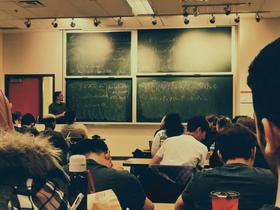

Courses in College

Be inspired by the gamut of community college courses, from the arts to technical training. This section will cover everything from remedial classes to continuing education. Community colleges offer courses for youth and teens, individuals looking for a new hobby or skill, or those behind bars looking for a second chance.

View the most popular articles in Courses in College:

Remedial Math Gets a New Look at Community Colleges Nationwide

Updated
|
Remedial Math Gets a New Look at Community Colleges Nationwide
This article explores innovative approaches to remedial math in community colleges nationwide. It discusses new math pathways that match instruction to students' needs and majors, highlighting successful programs in California, Virginia, and Texas. The piece also examines the "Math Redesign" initiative in Boston, which uses self-guided online courses to improve student outcomes

Remedial Math Gets a New Look at Community Colleges Nationwide

As community colleges across the United States strive to improve dismal completion rates, one factor stands out as a stark obstacle for degree-seeking students – remedial math. Many students need remedial math classes after taking placement tests for community college. However, semesters of remedial math prove to be costly and time-consuming for those students. Sadly, many community college careers both start and end with remedial math. Fortunately, schools nationwide are devising new systems to give students the math instruction they need without jeopardizing their ability to earn the desired degree.

New Math Pathways Match Instruction to Needs

In California, community colleges are trying a new approach to remedial math classes. Instead of requiring students to take courses in subjects they may never need or use, math classes are customized to a student’s specific major and area of interest. For example, aspiring engineers may need remedial algebra to prepare appropriately for the math required in their degree program. However, English or history majors might be just as well suited to a class in statistics that teaches basic math concepts quickly and effectively.

According to a report in the Sacramento Bee, at least 16 community colleges across the state have adopted this approach to remedial math – so far, with great success. The publication reports that students in the new pathways program are completing math classes at a rate two to four times higher

. . .read more

Classes Behind Bars: Community College Takes Courses to Local Inmates

Updated
|
Classes Behind Bars: Community College Takes Courses to Local Inmates
We’ll look at a new program offered by Jackson Community College, as well as other programs around the country, that allow prison inmates to take community college courses to prepare for life after incarceration.

Community college has offered opportunities to many students throughout their history. In recent years, those opportunities have been extended to incarcerated populations, offering inmates the skills and training to find productive lives after prison. By bringing education to those currently in the prison system, the hope is that once they leave the system, they will never return. Does higher education in prison work as intended? Read on about the efforts by some colleges to transform incarcerated individuals for the better.

This video outlines how education for inmates produces beneficial results.

New College Program in Mississippi Aimed at Correctional Facility

A handful of inmates at the G. Robert Cotton Correctional Facility in Jackson, Michigan, are getting a new lease on life. Fifteen prisoners at this institution are enrolled in a pilot program featuring college courses from Jackson Community College. The inmates are enrolled in four rounds of studies from the school, according to a report at mLive. Classes include a computer course, available through a grant from the U.S. Department of Commerce.

The inmates themselves pay for the rest of the classes. Some are using money they saved before incarceration, while others are relying on friends and family to foot the bill until they are released and able to begin earning their living. Most prisoners are ineligible for financial aid from the government, and even those who have some eligibility have

. . .read more

The Benefits of Professional Certification from Your Local Community College

Updated
|
The Benefits of Professional Certification from Your Local Community College
Forget the degree! Many community college students are landing good jobs with just a community college professional certificate.

While many college students today are opting for a two-year degree over four years in school, there is an even shorter option to consider. Community college students are finding that certificate programs can be completed in much less time, yet reap the same employment benefits as a full degree program. Check out these benefits of professional certification from your local community college.

Consider the Statistics

While many are still out of work in the United States, millions of jobs remain unfilled. Why? There are no skilled workers to fill the slots, according to a report at CNN Money. Employers need workers who can come right into a position with the necessary training and experience. However, much of that training is not available through four-year universities. Instead, students must turn to schools that are providing the specific training employers in the community require. This is the important void that community colleges are learning to fill – and often through certification and licensing programs.

This video compares a professional certificate vs. a master's degree.

Fast Turnaround

Community college degree programs typically take around two years to complete, but certification programs can take significantly less time.In addition, coursework for these types of programs is often offered in the evenings or on weekends for students who are trying to juggle current family and professional responsibilities. In some cases, classes can even be taken online, prior to the

. . .read more

10 Great Community College Degree Programs for Introverts

Updated
|
10 Great Community College Degree Programs for Introverts
We’ll explore various degree programs for shy individuals who prefer to work independently, rather than in a team environment.

Plenty of degree programs offer a better fit for those who aren’t cut out for office politics and team-building activities. Introverts will find a wealth of options at their local community college that prepares them for jobs where they can fly solo much of the time. Whether your passion is art or analytics, check out these community college options to launch a career that fits you to a “T.”

Accountant

If crunching numbers is your forte, the job of an accountant may be a good option. This career, which can be launched with an associate degree, provides many opportunities, from balancing the books for small businesses to huge corporations. These professionals keep company ledgers up to date, pay bills, and file taxes annually. It is a job that requires inordinate attention to detail – and plenty of solo office time. According to AOL Jobs, the average annual salary for an accountant is $61,690.

Paralegal

Fascinated by the legal profession? Introverts who love dabbling in law but cringe at the idea of representing a client in a courtroom might enjoy the paralegal role. These professionals often enter the industry with a two-year degree that prepares them to analyze legal documents, conduct research for a specific client, and write briefs. The job can also be a way to get a foot in the door to other interesting positions within the legal profession. The average annual salary for a paralegal as $62,853.

Technical Writer

A degree from

. . .read more

Fast Track Job Training Offered to Displaced Workers through Philadelphia Community Colleges

Updated
|
Fast Track Job Training Offered to Displaced Workers through Philadelphia Community Colleges
We look at how community colleges are using federal grant funding to get displaced Philadelphia workers back to work by training them for jobs that are open and waiting in some local industries.

Pennsylvania is a state with a high unemployment rate and a large number of frustrated displaced workers. It is also a place where numerous industries are unable to fill positions because of the lack of untrained workers. How does the state plan to remedy these two problems quickly and effectively? Thanks to recent federal funding into the state’s community college system, training for in-demand jobs is on the way for Pennsylvania residents that need those jobs the most.

What is JobTrakPA?

JobTrakPA is a new Pennsylvania program created with federal dollars from the Department of Labor. The agency recently awarded the state a $20 million grant through the Department of Labor Trade Adjustment Assistance Community College Career Training (TACT) program. The program allows displaced Pennsylvania workers to train for in-demand jobs within the state by pairing community college course offerings directly with the needs of the community. The program has awarded grants to states across the country that demonstrated a need for job re-training and the necessary resources to provide the right kind of training to displaced workers in the community.

“Pennsylvania employers tell us that they have jobs waiting for workers with career-specific skills in several high-growth industries,” Dr. Alex Johnson, president of the Pennsylvania Commission for Community Colleges, told the Herald Online. “Community colleges are part of a nationwide effort to provide a new skill-set to our workforce that will create career pathways for qualified workers in the shortest possible

. . .read more

Recent Articles

Community College Housing Options for Students
Explore community college housing options in 2026, including apartments, dorms, homestays, and commuter strategies for students.
How Community Colleges Prepare Students for AI Careers
Learn how community colleges are preparing students for AI and technology careers through workforce training, certifications, and employer partnerships.
Community Colleges: A to Z Guide for 2026
Explore the complete 2026 A to Z guide to community colleges, including costs, transfer pathways, online learning, and career programs.

Courses in College

REMEDIAL EDUCATION
60% of community college students need remedial courses. This section covers the classes and new developments to help students who need remedial coursework. Learn why the gap exists, how schools are combatting it and what you can do to avoid remedial classes. Get tips on mastering college math, learn what you can do to prevent repeating a class and hear what the experts have to say about remedial class placement.
KIDS AND TEENS
Community college is not just for adults. Learn about all the programs available to children and teens too. From aiding high school dropouts to ramped up summer school programs, community colleges work hard to encourage the pursuit of higher education to students of all ages.


ONLINE COURSES
Online classes give you the flexibility to learn off-campus, often at times most convenient for your schedule. Identify 10 degrees you can earn online, weigh the pros and cons of online education and find out how you can take online classes for free.
SUPPORT FOR BUSINESSES
Local business are taking advantage of special training programs at community colleges. From OSHA training to a collaboration with Goldman Sachs, community colleges are training employees for small and large businesses across the country.
FUN & ELECTIVE CLASSES
Community colleges offer a gamut of fun and interesting classes, and we give ideas that may strike inspiration for your elective choices. Learn homesteading skills, study paranormal investigating, or earn a scuba diving certificate all at a community college near you. This sections identifies some of the fun non-credit courses available at your local campus.
CONTINUING EDUCATION
Community colleges are filled with continuing education opportunities. Whether you are looking for a resume booster, new skills to earn a promotion or want to earn your degree while incarcerated, community college may be a good choice for you.