
Career Training

A lucrative career can start right at community college. Consider the many smart career options that await after completing community college training programs. From horticulture to the music industry, culinary arts to aerospace, we cover the latest hiring practices, job requirements and trends in the job market.

View the most popular articles in Career Training:

Catholic School Leadership Pipeline Development

Updated
|
Catholic School Leadership Pipeline Development
Learn how Catholic school leadership pipeline development is shaping future administrators through community college partnerships.

Catholic school leadership pipeline development is gaining renewed attention as education systems across the United States confront administrator shortages and evolving institutional demands. Community colleges, traditionally associated with workforce training and transfer pathways, are emerging as important partners in cultivating the next generation of Catholic school leaders.

In 2026, leadership development is no longer confined to graduate-level education programs. Instead, it increasingly begins earlier, often at the community college level, where aspiring educators and administrators build foundational skills in teaching, management, and mission-driven leadership. Catholic institutions are collaborating with these colleges to create structured, accessible pipelines that reflect both educational excellence and faith-based values.

This article explores how Catholic school leadership pipelines are being developed, the role of community colleges, and what these programs mean for students, institutions, and the broader education landscape.

Why Leadership Pipelines Matter in Catholic Education

Catholic schools across the country face a growing leadership gap. Retirements, declining numbers of religious vocations, and increasing administrative complexity have created an urgent need for well-prepared leaders.

Unlike traditional public school systems, Catholic schools often require leaders who can balance academic oversight with mission-driven responsibilities. This includes:

  • Upholding Catholic identity and values
  • Managing finances and enrollment challenges
  • Leading faculty development
  • Engaging with parish and community stakeholders

According to the U.S. Department of Education, leadership quality is one of the most significant factors influencing school performance and student outcomes. Catholic school systems are responding by investing in earlier and more intentional leadership development.


The Expanding Role of Community Colleges

. . .read more

Catholic School Teacher Formation and Certification Guide

Updated
|
Catholic School Teacher Formation and Certification Guide
Learn how Catholic school teachers are formed and certified, including pathways through community colleges and credential programs.

Catholic school teacher formation and certification is a structured process that blends academic preparation, professional training, and faith-based development. For prospective educators, especially those beginning their journey at a community college, understanding how certification works within Catholic education is essential.

Unlike public school systems, Catholic schools often operate with more flexibility in hiring and credentialing. However, expectations for teacher quality, subject mastery, and spiritual alignment remain high. This article explores how Catholic school teachers are trained, certified, and supported, with particular attention to how community colleges play a critical role in the pipeline.

Understanding Catholic School Teacher Requirements

Catholic schools in the United States are typically overseen by dioceses rather than state departments of education. As a result, certification requirements can vary. That said, most Catholic schools follow a consistent framework when evaluating teacher qualifications.

Common expectations include:

  • A bachelor’s degree, typically in education or a subject area
  • Coursework in pedagogy and classroom management
  • Alignment with Catholic values and mission
  • In some cases, state teaching certification or progress toward it

Many dioceses strongly prefer state-certified teachers, especially for core academic subjects. According to the National Catholic Educational Association (NCEA), the majority of Catholic school teachers hold at least a bachelor’s degree, and many pursue additional certification or advanced degrees over time.

The Role of Community Colleges in Teacher Preparation

Community colleges are an accessible and cost-effective starting point for aspiring educators. While they do not grant bachelor’s degrees required for full certification, they provide foundational coursework that transfers into four-year teacher

. . .read more

Best Community College Programs for Healthcare Careers

Updated
|
Best Community College Programs for Healthcare Careers
Explore top community college healthcare programs, from nursing to radiology, and find the best path to launch a medical career in 2026.

Healthcare remains one of the fastest-growing employment sectors in the United States, and community colleges continue to play a pivotal role in preparing students for these high-demand careers. For students seeking affordable, flexible, and career-focused education, the best community college programs for healthcare careers offer a direct path into stable and rewarding professions.

In 2026, evolving workforce shortages, especially in nursing, allied health, and technical roles, have only increased the value of community college training. According to the U.S. Bureau of Labor Statistics, healthcare occupations are projected to grow significantly faster than average through the next decade, adding millions of jobs nationwide.

This guide explores the most in-demand healthcare programs offered at community colleges, what makes them stand out, and how students can choose the right path.

Why Choose Community Colleges for Healthcare Training?

Community colleges offer several distinct advantages for healthcare education:

  • Affordability: Tuition is significantly lower than four-year institutions
  • Accelerated pathways: Many programs can be completed in 1–2 years
  • Hands-on training: Strong emphasis on clinical and lab experience
  • Local workforce alignment: Programs often match regional healthcare needs
  • Flexible scheduling: Evening, weekend, and hybrid options are common

These benefits make community colleges particularly attractive for adult learners, career changers, and recent high school graduates.

Top Community College Programs for Healthcare Careers

While healthcare encompasses dozens of roles, several programs consistently stand out for their job placement rates, earning potential, and accessibility.

  1. Nursing (ADN Programs)

    Associate Degree in Nursing (ADN) programs remain among the most popular and respected healthcare pathways at

. . .read more

Community College vs Trade School in 2026

Updated
|
Community College vs Trade School in 2026
Compare community college and trade school outcomes in 2026, including costs, job prospects, and career flexibility.

Students graduating high school in 2026 have more education pathways than ever before. Two of the most practical and career-focused options are community colleges and trade schools. Both promise faster entry into the workforce than traditional four-year universities, often at significantly lower cost.

However, choosing between them is not always straightforward. Each pathway offers different advantages in terms of career flexibility, job placement, earning potential, and long-term educational opportunities.

This article compares community college and trade school education in 2026, helping families and students determine which route may lead to stronger employment outcomes. While forward-looking discussions in education often highlight themes such as “The Future of Boarding Schools: Emerging Trends to Watch for 2030,” similar questions about workforce readiness and career preparation are shaping decisions in the community college and technical training sectors today.

Understanding Community Colleges

Community colleges are two-year public institutions that provide academic degrees, technical training, and pathways to four-year universities.

Students typically pursue:

  • Associate of Arts (AA) or Associate of Science (AS) degrees
  • Associate of Applied Science (AAS) career programs
  • Certificates in technical fields
  • Transfer programs to universities

According to the National Center for Education Statistics, community colleges enroll millions of students each year and play a major role in workforce development across the United States.

Key characteristics include:

  • Broad academic and career program offerings
  • Lower tuition compared with four-year universities
  • Flexible scheduling for working adults
  • Transfer pathways to bachelor's degree programs

Many students choose community college because it keeps multiple career and education options open.

Understanding Trade
. . .read more

Career Services at Community Colleges in 2026

Updated
|
Career Services at Community Colleges in 2026
Discover how community college career services in 2026 offer internships, employer partnerships, and job placement support that truly work.

Career Services That Actually Help: What to Expect at Community Colleges in 2026

For decades, community colleges have promised affordability, accessibility, and workforce preparation. In 2026, they are delivering something even more powerful: career services that actually move students into jobs.

Today’s prospective students and parents are asking practical questions. Will this program lead to employment? Will someone help with internships? Are employers involved? Increasingly, the answer at many institutions is yes.

This guide explains Career Services That Actually Help: What to Expect at Community Colleges in 2026, including the tools, partnerships, and accountability measures that distinguish effective programs from outdated career centers.

Why Career Services Matter More Than Ever

The labor market continues to evolve rapidly. According to the U.S. Bureau of Labor Statistics, healthcare, advanced manufacturing, cybersecurity, logistics, and skilled trades remain among the fastest-growing employment sectors through the late 2020s. Employers are prioritizing skills, certifications, and work-based experience over traditional four-year degrees.

Community colleges sit at the center of this shift. As open-access institutions with close ties to local industry, they are uniquely positioned to align programs with regional workforce needs.

However, alignment alone is not enough. Students need guidance navigating:

  • Career exploration
  • Resume and interview preparation
  • Internship placement
  • Apprenticeships and clinical experiences
  • Employer connections
  • Job placement after graduation

The difference in 2026 is that many colleges now embed these services into the academic experience rather than treating them as optional extras.

From Career Offices to Career Ecosystems

In the past, students often encountered a small office

. . .read more

Recent Articles

Online vs. Hybrid vs. HyFlex: Understanding Community College Course Formats
Learn what online, hybrid, HyFlex, synchronous, and asynchronous course labels really mean at community colleges, including attendance, meeting, testing, and participation requirements students should verify before registering today.
Working Student Schedule Test: Night and Online Community College Programs
Learn how working students can test whether a community college program is truly available at night or online, including labs, prerequisites, exams, internships, advising, and course rotations.
Is the Employer Advisory Board Real or Ceremonial?
Learn how to evaluate a community college employer advisory board, verify industry participation, identify meaningful employer influence, and determine whether career connections can benefit students after graduation today.

Career Training

GREEN CAREERS
Are you concerned about the environment? Do you want to help stem global warming and rainforest decimation? If so, a green career may be for you. Community colleges around the country are offering programs in sustainable energy, from solar panels to wind turbines. From biodiesel to energy storage, explore your green career options here.
HEALTHCARE CAREERS
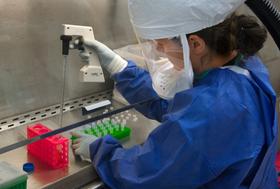
Recession-proof and rewarding, healthcare careers can be started right from community college. Here you’ll identify the hottest trends in health care degrees, earn how to become an emergency technician and read why community college is a great place to start your addiction counseling degree.
TEACHING CAREERS
Great teaching careers are started at community colleges. Keep up to date on the latest hiring standards, education requirements, and continuing education for teacher initiatives. Learn what role community colleges play in furthering the skills of future and current teachers and what degrees are the most lucrative.
CULINARY CAREERS
With renowned culinary programs, community colleges are a delicious place to begin your culinary arts career. From brewing beer to cake decorating, community colleges offer a wide variety of culinary degrees. Learn how to earn a college degree while drinking wine, identify 5-star culinary programs, and turn that baking hobby into a lucrative career.
BUSINESS CAREERS
Jump start a career in business right at your community college. Explore the various business degree programs available, from marketing to human resources, these articles will provide you with valuable information on business career opportunities for community college graduates. Many famous entrepreneurs started their careers at community college, add your name to the list.
CREATIVE CAREERS
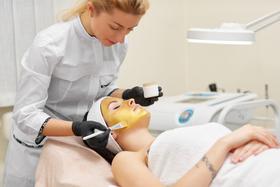
Community colleges offer a myriad of degree programs for students interested in creative careers. From glass blowing to fashion design, community college degrees are opening doors into many creative industries. Learn how you can prepare for a career in radio broadcasting, cosmetology or music at community college.
TECHNOLOGY CAREERS
Indeed, technology careers, ranging from cyber-security to nano-technology, can all start from community college training. Get your feet wet with waterbotics, crack into cyber-security or dive into marine biology at your local community college.
PUBLIC SERVICE CAREERS
Begin your career in public service at community college. Receive cutting-edge firefighting training, lean more about air force programs and learn how community colleges are training our armed forces. Regardless of the badge you carry, a honorable public service career can be jump started at community college.
MANUFACTURING CAREERS
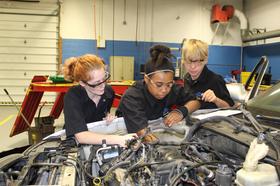
– From welding technology to automobile manufacturing community colleges are training students for lucrative manufacturing careers. Get the scoop on middle skills, labor shortages and the best degrees for manufacturing careers.
LUCRATIVE JOBS
There are lots of lucrative careers for community college graduates. Here we’ll cover the top career choices for two-year degree holders, six-figure jobs you can land with an associate’s degree, and how community college can take your career to the next level.
CAREER TRAINING 101
Everything you need to know about the earnings potential of a community college degree. From fast track training to careers suited for introverts, we’ll cover a variety of career related topics. Learn more about a recession proof careers, casino dealing certification and theology programs at community college.
FARMING CAREERS
Small farms are an important part of creating a sustainable food supply. Your community college has the skilled teachers who can teach you 21st-century farming techniques.
HOSPITALITY CAREERS
Careers in the hospitality industry: catering, restaurant, wedding planning, tourism, hospitality & event management