
College Policies

Community college polices are frequently being updated. Keep current on the latest bans, free speech initiatives and safety protocols. Learn what schools are doing to increase funding in the midst of widespread budget cuts, determine the best practices to ensure safety on campus and get the latest on school controversies and student rights.

View the most popular articles in College Policies:

How Free is Free Speech on Community College Campuses?

Updated
|
How Free is Free Speech on Community College Campuses?
Is free speech in jeopardy on community college campuses? Learn about new movements that may limit students' speech to specific "free speech zones."

The Peralta Community College District in California has recently been the subject of intense scrutiny since announcing its plans to establish "free speech" zones around its campuses. According to the Mercury News, school district officials are currently working on a policy to limit where and how groups can speak on campus.

These proposed free speech zones have rankled students and faculty alike and caused many to question whether First Amendment free speech is in jeopardy in venues where the public exchange of ideas has always been welcomed. However, Peralta is not the only college environment where free speech platforms have been limited. This idea has actually been in existence for a decade, and every college campus that has instituted free speech zones has come under fire for its plans.

This report from NCB News reports on free speech on college campuses.

Free Speech on College Campuses

Since the 1960s, college students have led many protests against social issues and stood up for policies and legislation they have believed to be a violation of their rights. Protests during that time primarily revolved around the Vietnam War, but grumblings against the "Establishment" and other social policies were also the topics of debate.

During the final two decades of the previous centuries, protests on college campuses cooled significantly. However, concerns over race and sex have emboldened students once again, according to a report from the

. . .read more

Should Instructors Be Allowed to Carry Guns on Campus?

Updated
|
Should Instructors Be Allowed to Carry Guns on Campus?
With the growing number of on-campus shootings, some states are debating whether or not community college instructors should carry concealed weapons on campus. Learn about both sides of the heated debate.

In the last decade, college campuses have become the crime scene for too many violent shootings. From the University of Arkansas and Virginia’s Appalachian School of Law to Arizona Nursing College and Virginia Tech, dozens of students, professors, and deans have been killed or wounded by gunmen. In the last five years, 35% of American college campuses have experienced at least one gun incident, according to the Brady Campaign to Prevent Gun Violence. The violence on campus has sparked a rigorous debate: should instructors and professors be allowed to carry guns on campus? Currently, 13 state legislatures are reviewing bills that would permit concealed weapons on campus.

This video from WJZ television in Baltimore reports on the issue of staff carrying guns on campus.

The Current Law

The Gun-Free School Zones Act of 1990 currently makes it illegal for anyone to carry a gun in a school zone, which is on campus or within 1000 feet of a school. State legislators reviewing pro-gun laws are considering revoking gun-free school zones, allowing permit holders to bring firearms onto campus. Proponents rhetorically argue, “Why can’t people protect themselves on campus, just like they do throughout the state?”

Proponents of Concealed Weapons on Campus

The supporters of the proposed legislation argue that allowing instructors to carry concealed weapons would keep campuses safer, giving the potential victims an ability to defend themselves against shooters.

Right-to-Carry Laws Decrease
. . .read more

How Community Colleges are Working to Stop Drunk Driving

Updated
|
How Community Colleges are Working to Stop Drunk Driving
Learn about the innovative programs, curriculum, and parades that community colleges are creating to prevent drunk driving on campus.

Each day, 36 individuals in the United States die from drunk driving, and another 700 are injured. In 2019 alone, nearly 10,500 individuals died in alcohol-impaired accidents, equivalent to one-third of all traffic accident deaths in total, according to the Centers for Disease Control and Prevention.

The college student population, unfortunately, accounts for a disproportionate amount of these tragic statistics. In 2001 alone, more than 1,700 college students were killed in alcohol-involved incidents, and 80% of these cases involved drunk driving. In the same year, more than 31% of college students admitted to drinking and driving, according to AAA of Southern California.

Thankfully, community colleges are playing an important role in reducing and preventing instances of drunk driving. Through various substance awareness programs, informative classes, and even volunteer designated driving programs, community college students are being commended for their role in the fight against drunk driving.

This video illustrates some of the drunk driving training a community college can offer.

The initiatives at Eastern Iowa Community Colleges

The initiatives which the Eastern Iowa Community Colleges have put in place are fairly typical of the initiatives other colleges have taken to make their communities aware of substance abuse programs. From their website: "It is our intent and obligation to provide a drug-free, healthful, safe, and secure campus environment in order to promote an optimum learning environment.

The college recognizes drug abuse as
. . .read more

Faith Based Initiatives at Community Colleges: Faux Pas or Politically Correct?

Updated
|
Faith Based Initiatives at Community Colleges: Faux Pas or Politically Correct?
Learn about how religious initiatives at community colleges are growing in popularity and how these programs will impact the dynamics on campus.

While mixing religion with education was once reserved for private schools, some community colleges have created faith-based programs for their campuses. These community colleges hope to provide the right environment for students who desire a comprehensive spiritual and educational experience.

However, many school leaders cautiously question how the more spiritually-minded community colleges will fare amidst a diverse population of “faith-based” and non-practicing students nationwide.

“Faith-Based” Models in Higher Education Institutions

Religious denominations underpin over 1,200 higher education institutions, but each “faith-based” school can function uniquely. For example, as College View further reveals,

“The opportunities for spiritual growth vary from school to school—as do the requirements for participation. At some schools, religious services and classes are offered…at other schools, participation is required or at least expected.”

Students often decide on the underlying religious denominations and how strictly these religious beliefs structure the campus environment. Students considering a “faith-based” school can choose from several types of structural options, including:

  • Schools that celebrate a religious history dating back to the school’s founders. However, these schools may or may not include the particular origin of religion as a major part of their modern-day instruction or campus functions.
  • Schools dedicated to traditional evangelical values, wherein the campus structures its conduct guidelines based on religious beliefs and values. For example, some community colleges affiliate with Southern Baptist, Mennonite, and other Reformed Denominations.
  • Schools open to non-evangelical beliefs, wherein colleges adhere to the values of Catholicism, the Seventh Day Adventist Church, Judaism, or other religions.

Of course,

. . .read more

How Community College Campuses are Preparing for the H1N1 Virus

Updated
|
How Community College Campuses are Preparing for the H1N1 Virus
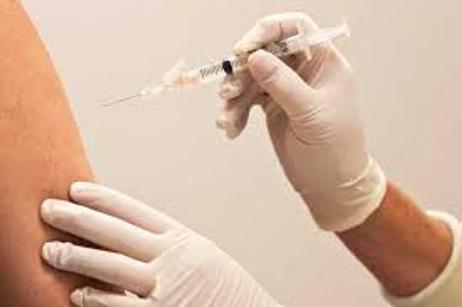
Learn about how community colleges are putting plans in place to prevent and combat the spread of H1N1 on campus.

With the H1N1 spreading across college campuses from Washington to Massachusetts, community colleges are taking action to shelter their students from any potential outbreak. As reported by CNN, according to a presidential advisory panel, the potential spread of the virus could contribute to as many as 90,000 U.S fatalities this season. Expected to break out in the fall, experts estimate that 30 to 50 percent of the U.S. population may become infected.

Advisors further predict that schools and shared community areas pose the greatest threats for contamination and contagiousness. To prepare for an array of plausible H1N1-related challenges, community college leaders are avidly planning to confront the virus on campus.

Community College Preparation for the H1N1 Virus

As reported by the Gazette News, Prince George Community College (PGCC), located in Largo, Maryland, is one of many community colleges making preparations against the H1N1 virus. Since Prince George Community College enrolls more than 40,000 students, leaders are concerned that the large number of students enclosed in shared common areas can lead to rapid virus outbreaks. To proactively address the H1N1 threats, “The college has a pandemic team in place composed of about nine people from different departments.”

PGCC has developed guidelines to help the school employ specific responses for an array of potential H1N1 campus issues. For example, the leaders have established regulations for when and if the campus should shut down amidst an H1N1 outbreak and how many students should have confirmed cases before

. . .read more

Recent Articles

How to Judge Community College AI Skills Training
Learn how to evaluate whether community college AI training delivers skills employers recognize by checking curriculum, projects, credentials, faculty, partnerships, job postings, assessments, and graduate outcomes before enrolling.
International or Undocumented Student? Check 5 Policies
International and undocumented community college applicants face different rules. Before applying, verify admission eligibility, tuition classification, financial aid, employment restrictions, and transfer requirements to avoid costly surprises later on campus.
Should You Accept Your Math Placement or Challenge It?
Learn when to accept your community college math placement, when to challenge it, and how transcripts, test scores, major requirements, and academic readiness can guide your decision confidently.

College Policies

COLLEGE FUNDING
Community colleges are coping with major budget deficits, and this section covers how students are being impacted. From local fundraising efforts to federal grants, we’ll explore how community colleges are staying afloat despite funding cuts and cost increases.
CAMPUS SAFETY
Community college campuses should be a safe place, and these policies, controversial or not, aim to achieve that goal. Schools have banned sex offenders from campus, allowed security to carry guns and installed surveillance cameras in an effort to keep students safe. Here we’ll cover the latest crime and safety policies in place on campuses across the country.
SCHOOL CONTROVERSIES
From controversial reform to cursing in the classroom, our articles provide the latest news on school controversies. Here you’ll find information on some of the hot button topics related to community colleges.
STUDENT RIGHTS
From free speech to free dress, what rights do students have or relinquish on campus? Smoking bans, faith based initiatives and rights violations are just a few of the topics covered here. Don’t miss out on the latest information on student rights on community college campuses.
SUSTAINABLILITY
As a leader in many areas, community colleges are walking the talk, going green in different facets of their operations. Explore what schools are doing to protect the environment, learn how campuses are saving money with green policies, and see why these initiatives benefit students.