
Student Rights

From free speech to free dress, what rights do students have or relinquish on campus? Smoking bans, faith based initiatives and rights violations are just a few of the topics covered here. Don’t miss out on the latest information on student rights on community college campuses.

View the most popular articles in Student Rights:

International or Undocumented Student? Check 5 Policies

Updated
|
International or Undocumented Student? Check 5 Policies
International and undocumented community college applicants face different rules. Before applying, verify admission eligibility, tuition classification, financial aid, employment restrictions, and transfer requirements to avoid costly surprises later on campus.

Community colleges are often described as accessible entry points to higher education, but "open access" does not mean every applicant faces the same rules. For international or undocumented students, policies involving admission, tuition, financial aid, employment, and transfer can substantially change the cost and practicality of attending a particular college.

Those distinctions are especially important in 2026. State policies affecting undocumented students have changed rapidly, while international students must satisfy separate federal immigration requirements. A college that looks affordable based on its advertised tuition may become considerably more expensive once residency classification is applied. A program that includes an internship may also present different employment questions depending on a student's immigration or visa status.

Before submitting applications, verify these five policies directly. Do not assume that a rule at one community college applies at another, even within the same state.

First, Know Which Rules Apply to You

International and undocumented students are not interchangeable categories.

An international student studying in the United States in F-1 status generally follows federal requirements connected to that nonimmigrant status. The college must be authorized to enroll F-1 students and issue the documentation necessary for the student visa process.

An undocumented student may have attended U.S. schools for years but still face state-specific rules concerning public college enrollment, tuition classification, financial assistance, and professional licensing. DACA recipients can encounter still another set of distinctions.

Community College Review's overview of community college policies and financial aid in 2026 provides broader context for


. . .read more

How to Compare Guaranteed Transfer Agreements Across Colleges

Updated
|
How to Compare Guaranteed Transfer Agreements Across Colleges
Learn how to compare guaranteed transfer agreements across colleges, evaluate requirements, and choose the best pathway to a bachelor's degree.

For millions of students, community college offers an affordable pathway to a bachelor's degree. Tuition costs are significantly lower than at most four-year institutions, class sizes are often smaller, and students can complete general education requirements close to home before transferring. One of the biggest advantages available today is the guaranteed transfer agreement, a formal partnership that can simplify the transition from a community college to a university.

However, not all guaranteed transfer agreements provide the same opportunities. Some guarantee admission only to specific universities, while others cover an entire public university system. Certain agreements promise only admission to the institution, while others also protect the transfer of credits or grant junior standing. Understanding these differences can help students avoid losing credits, extending their graduation timeline, or discovering too late that their intended major is excluded from the agreement.

If you're new to the transfer process, Community College Review's guide to articulation agreements explains how formal partnerships between colleges and universities help create smoother transfer pathways.

What Is a Guaranteed Transfer Agreement?

A guaranteed transfer agreement is a formal arrangement between a community college and one or more four-year institutions. Students who meet the specified academic requirements are guaranteed admission to participating universities after completing designated coursework or earning an associate degree.

These agreements differ from standard transfer policies. While nearly every university accepts transfer students, a guaranteed agreement provides a clearly defined roadmap. Students know which courses to take, what GPA they must maintain, and what

. . .read more

Should Students be Banned from Preaching on Campus?

Updated
|
Should Students be Banned from Preaching on Campus?
Many people view college campuses as bastions of free speech, but recent actions taken by some institutions of higher learning indicate that this may not always be the case.

This article has been updated to reflect 2026 data and recent developments.

Christian Parks, a Christian student attending Thomas Nelson Community College in Virginia, has filed a lawsuit against his school for prohibiting him from preaching on campus. According to the Christian Post, Parks’ argument is that the school violated his “fundamental rights to free speech, free exercise of religion, due process, and equal protection of the law.” The lawsuit further contends that the school prohibited the plaintiff from preaching on campus for fear that his religious views would offend others and prompt complaints. Thomas Nelson Community College officially became Virginia Peninsula Community College on July 1, 2022.

The college, which is part of the larger Virginia Community College System, maintains a specific policy regarding student demonstrations. In order to stage a demonstration on campus, students are required to be a member of an on-campus student organization and must get permission to stage a demonstration at least four days in advance. The school maintains that the issue at hand is not regarding what Mr. Parks was saying on campus, but that he did not follow proper protocol by failing to get permission to speak ahead of time. Parks’ legal team, the conservative-leaning Alliance Defending Freedom, disagrees. Joining the ADF in supporting Mr. Parks’ complaint is the Virginia Chapter of the American Civil Liberties Union, which released a statement saying that students deserve a first-rate college education, “which is impossible without a free exchange

. . .read more

More Smoking Bans at Community Colleges Billow, But Not All is Sunny

Updated
|
More Smoking Bans at Community Colleges Billow, But Not All is Sunny
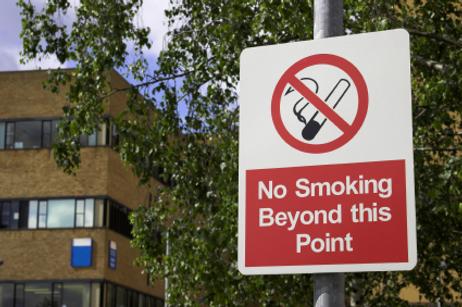
Even more community colleges are banning smoking on campus, but not everyone is happy about the change. We'll take a look at what students have to say about the bans and whether they can even be enforced effectively.
More and more campuses are banning smoking on campus.

Smoking bans are not new at community colleges; many schools have prohibited smoking in buildings and other areas of campus for years. However, complete, school-wide smoking bans are still a relatively new – and growing – trend for the 20-something crowd. Many community colleges have implemented such bans, with 120 campuses jumping onto the smoke-free bandwagon this year alone. However, campus-wide smoking bans are not met with enthusiasm by all students, and enforcement has proven to be a significant issue for many of these schools. Take a look at why some community colleges are launching such bans, and how they are handling the negative aspects of their decisions with students.

Smoke-Free = Cleaner, Healthier Campuses

According to a recent report on Christian Post, the Centers for Disease Control and Prevention estimate that nearly 22 percent of adults between the ages of 18 and 24 smoke. Some colleges implementing a smoking ban are hoping to encourage students to kick the habit as a result. To that end, college representatives share information on quitting with students and provide aids like nicotine patches and gum to students during school hours.

Other community colleges have initiated smoking bans to clean up campuses littered with second-hand smoke and cigarette butts. The first college to launch a campus-wide ban, Ozarks Technical College in Springfield, Missouri, had that goal in mind. According to CNN, the president of the college approached Ty Patterson, the former vice president of student affairs

. . .read more

Community Colleges Nationwide Joining in President Obamas Interfaith and Community Service Campus Challenge

Updated
|
Community Colleges Nationwide Joining in President Obamas Interfaith and Community Service Campus Challenge
Learn about the number of colleges joining the President’s Interfaith and Community Service Campus Challenge, which was introduced by the White House this past spring.

In March, President Obama called community colleges, universities and theology schools to come together despite their diverse faiths to make their communities a better place. Since the initial call went out from the White House, more than 240 schools have answered the challenge – a much larger number than the administration originally planned for. This movement has a twofold purpose: first, to cross religious lines and promote religious tolerance for college students across the country. The second purpose is to work together as a community to help those in need and protect the environment. With a growing population of postsecondary institutions jumping on the Interfaith and Community Service Campus Challenge, it appears that the White House might get its wish on both counts.

This video reports on the White House meeting of the President's Interfaith Community Service Campus Challenge on August 3, 2011.

What is the Interfaith and Community Service Campus Challenge?

According to a report at WhiteHouse.gov, the Interfaith and Community Service Campus Challenge serves the ultimate goal of President Obama to emphasize faith and community involvement as a means of building understanding between diverse communities and contributing to the common good. As the President said in his address when he announced this challenge, “For over 200 years, Americans of all faiths have come together, put their shoulders to the wheel of history, and made this country what it

. . .read more

Recent Articles

Main Campus or Satellite Center? What Students Should Know
Compare main campuses and satellite centers at community colleges, including courses, services, facilities, schedules, transportation, and student life, before choosing where to attend classes and study each term.
Could Your Community College Program Be Cut?
Learn how to assess whether a community college program faces enrollment or funding risk, recognize warning signs, evaluate teach-out protections, and protect your progress toward graduation before enrolling.
Accepted to College but Not Your Program? What to Know
Learn why community college admission may not guarantee entry to nursing, health sciences, or other selective programs, and what applicants should do next to protect their academic plans and timeline.