
Financing

Paying for community college can be overwhelming. Use the tools, resources and tips within this section to help you finance your education. From student loans to scholarships, we’ll cover the most common financial aid options available to community college students. Get money saving tips, learn more about Pell grants, and explore the federal work-study program.

View the most popular articles in Financing:

Potential Reforms Impacting Your Community College Tuition Funding

Updated
|
Potential Reforms Impacting Your Community College Tuition Funding
Learn about future financial aid revisions and changes that may influence your community college tuition funding.

During times of political change, economic uncertainty, and fluctuating levels of job security, students of all ages are facing an array of personal and academic pressures. Many community college students and applicants are trying to cope with the mounting educational costs paired with added stresses of job loss, reduced wages, or soaring costs of living.

As many college applicants are struggling to find ways to pay for higher education expenses during economic tumultuousness, community college leaders across the country are seeking out new forms of financial aid to provide students with a greater scaffold of fiscal support.

Recent Financial Aid Reforms

In just the past several years, enormous changes have been made to the federal financial aid program, as struggling college students expressed with rising voices the difficulty of paying for the costs of college with limited access to money or means.

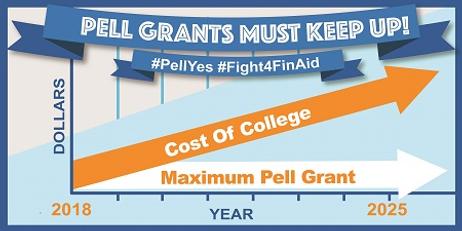
According to Art Hauptman from the Progressive Policy Institute, there was an initial jump-start to increasing federal student aid funding in 2005, when former President Bush renewed the “Higher Education Act.” With this act, the President proposed an increase to the Pell grant of $500 over the course of five subsequent years. As Pell grants were initially created to raise educational aspirations of socially and economically struggling Americans, many believe that the Pell grant increase would stimulate a boost in college accessibility and enrollment. Despite this positive reform, however, Hauptman

. . .read more

Will Community Colleges Become Tuition-Free?

Updated
|
Will Community Colleges Become Tuition-Free?
Learn about movements around the country to make community college courses tuition-free for qualifying students.

Due to the financial challenges incoming students face, many local and state leaders are advocating for tuition-free community college programs. As community colleges strive to provide local residents with programs for certification, degrees, and training, many community leaders argue that tuition-free programs will help students to more effectively prepare for the job market without being subjected to excessive educational costs during difficult economic times.

This video offers one solution for making public colleges tuition-free.

The Tuition-Free Debate

As Diverse Community College reveals in their investigation, the county majors of both Knoxville and Memphis assert that residents of their communities should have access to free public education at local community colleges. Mayors A.C. Wharton and Mike Ragsdale of local Tennessee counties argue that, in utilizing the resources of scholarships and grants that are currently available, local community colleges can shift their current programs to create tuition-free pathways for incoming and current students. As Tennessee, along with most states across the country, are struggling with job losses and a struggling economy, Wharton argues that the shift for tuition-free programs is Tennessee’s attempt at creating a more effective and prepared work force: “‘We want to blast our way into being able to produce a world-class work force. You can't do that with merely a high school diploma.’”

By collaborating with community college and local political leaders, the Tennessee

. . .read more

Finding Childcare on Community College Campuses

Updated
|
Finding Childcare on Community College Campuses
Learn how you can balance the roles of being a student and a parent by securing child care assistance on campus.

Many community college students juggle various personal responsibilities along with their academic requirements. Specifically, many community college students have young children and families to care for and support. Recognizing the importance of family and the lack of quality, affordable childcare in some cities, community colleges are implementing programs to offer support for their student-parents.

Community Colleges and Financial Support

Many state and local governments provide student-parents with financial aid, grants, and support, depending upon each student’s needs and family dynamics. For example, students at Wake Tech Community College can apply for the Childcare Grant. To be eligible, student-parents must demonstrate high financial need and be able to qualify for the federal Pell Grant. Additionally, they must be a single parent or a stay-at-home parent who is returning to school.

If awarded the grant, the student-parent will receive $650 per month to pay for childcare services. To maintain eligibility, student-parents must adhere to the following regulations:

  • Maintain at least a 2.0 GPA.
  • Complete the Free Application for Federal Student Aid (FAFSA) and be eligible for the Pell Grant.
  • Must be enrolled in a degree, diploma, or transfer credit program.
  • Submit monthly attendance sheets documenting class attendance.

By following these guidelines, students can focus on their coursework and not have to worry about the financial strain of paying for childcare.

This video reports on Salt Lake Community College's daycare program.

Am I Eligible for the Childcare Grant?

. . .read more

Demystifying Direct Loans: A Comprehensive Guide for Community College Students

Updated
|
Demystifying Direct Loans: A Comprehensive Guide for Community College Students
This article explains the concept of Direct Loans as a financing option for community college students. It covers the types of Direct Loans available, eligibility criteria, application process, and repayment options, helping students make informed decisions about their education financing.

Stafford loans are made under two federal programs: the Federal Family Education Loan (FFEL) Program and the William D. Ford Federal Direct Loan (Direct Loan) Program. Whereas community colleges have more widely used the FFEL Program in the past, students and colleges are becoming more aware of the Direct Loan Program as another option. This article explains the Direct Loan Program, shows how Direct Loans compare to other Stafford loans, and discusses how the Direct Loan program may become the dominant, if not exclusive, college lending program.

What Students Should Know About Direct Loans

The Direct Loan Program was created in 1993 to offer subsidized and unsubsidized Stafford loans. Under the Direct Loan Program, students borrow directly from the Department of Education rather than private lenders. On a subsidized loan, the federal government pays the interest while the student is in school. The interest on an unsubsidized loan is accumulated until the student begins repaying the loan. The Direct Loan Program also offers PLUS (Parent Loan for Undergraduate Students) loans.

To apply for a Direct Loan, a student must submit the Free Application for Federal Student Aid (FAFSA), available online or at student financial aid offices. A student must also sign a promissory note, the Direct Loan Electronic Master Promissory Note, which sets forth the terms and conditions of the loan.

Before June 30, 2006, the interest rate varied but could not exceed 8.25 percent. A reduction in the maximum interest rate for Stafford loans is being phased

. . .read more

Navigating Student Loans During Economic Uncertainty: A Community College Guide

Updated
|
Navigating Student Loans During Economic Uncertainty: A Community College Guide
This article provides guidance on planning for student loans during economic slowdowns. It offers strategies for community college students to manage their finances, explore loan options, and make informed decisions about education financing in challenging economic times.

As the market steadily slows, and credit, banks, and loan institutions are forced to tighten their budgets, students and schools express concern about affording community college, especially in light of the rising cost of tuition paired with the plummeting availability of funds.

Andy Rosen, in his article “Students, Colleges Prepare for the Private Loan Slowdown,” further explores this issue in asserting: “Area colleges and students are concerned that it will get harder to bridge the gap between federal financial aid and the total cost of education, as a troubled credit market threatens to make private loans harder to get.”

Since many lenders are becoming increasingly cautious about student loans, intuitions are striving to prepare students with additional tools and resources to obtain funds for the school.

This video shares a student's opinion about student loans.

Can I Obtain Loans When Attending Community College Next Year?

If you’re seeking funds to attend college next year or in the upcoming future, it is still relatively uncertain as to how much support students will have access to tuition costs. Essentially, as Rosen reveals, “Nobody really knows the magnitude of the problem because many students have already secured their financing for this year.”

Since an economic recession has been predicted for quite some time, many students held onto anticipatory savings; however, this may not be the case in the upcoming semesters over the next few years. As

. . .read more

Recent Articles

5 Key Community College Trends Parents Should Know in 2026
Explore major 2026 community college trends including enrollment changes, costs, career programs, and affordability for parents planning college decisions.
Average Community College Tuition Cost 2026 Update
Explore updated 2026 community college tuition averages, cost trends, planning tips, admissions timing advice, and financial strategies for families and students.
Preparing for Placement Tests in 2026: Student Guide
Preparing for Placement Tests in 2026, what students, parents, and educators need to know about formats, prep strategies, and placement changes.

Financing

FINANCING BASICS
Build the foundation needed to navigate the community college financial aid system. Learn which schools are the most affordable, get money tips on reducing college costs, and explore the latest initiatives to make community colleges even more accessible.
TUITION
This section will help you prepare for the costs of attending community college and any future increases. Explore pricing plans, learn where you may be able to attend community college tuition-free, and examine the latest initiatives to make higher education more affordable.
FINANCIAL AID
Our articles will provide you with the tools and resources needed to make sure you are qualifying for all the financial aid available, as well as maintaining your aid throughout your college career. Get the latest news on student loan interest rates, learn what to do when your financial aid is late, and explore all of your financial aid options.
SAVING MONEY
This section is full of money saving tips for community college students. From free textbooks to finding affordable childcare, we’ll provide you with a wealth of information on keeping college affordable.
GRANTS & SCHOLARSHIPS
There's nothing better than free money, and these articles can help you get grants and scholarships for your community college education. Acquire information on Pell grants and why you should take advantage of them, learn how you can earn money through community college writing and get the latest news on scholarships and funding.