Technology Careers

Indeed, technology careers, ranging from cyber-security to nano-technology, can all start from community college training. Get your feet wet with waterbotics, crack into cyber-security or dive into marine biology at your local community college.

View the most popular articles in Technology Careers:

Careers: Robotics

Updated
|
Careers: Robotics
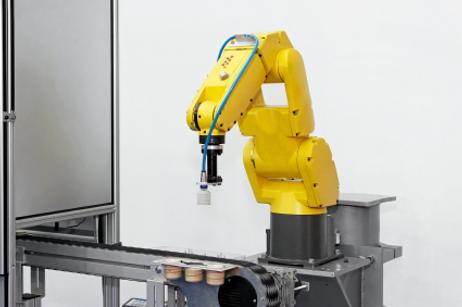
Community colleges are paving the way for exciting careers in robotics. Learn more about the programs that could train you to be a robotics professional.

Robotics is an exciting, dynamic field that utilizes robots in a variety of industries. Robots are used in manufacturing, transportation, warehouses, safety research, mass production, and even surgery. This field offers a wide range of employment opportunities to those who are qualified. How do you earn those qualifications? Your community college has programs in robotics to train you for a lucrative career in the industry.

Robotics is the design, repair, and maintenance of robots. A robotics engineer learns a blend of mechanical engineering, electrical engineering, and computer science principles to develop autonomous machines that perform a wide range of dull, dangerous, and complex tasks. Source: New England Institute of Technology

This video outlines careers in robotics.

About a Robotics Career

Best Accredited Colleges lists two common professions within the robotics industry:

  • Robotics Technicians – These professionals typically require a two-year degree and are trained on the job in apprenticeship programs, as well as through classroom study.
  • Robotics Engineers – These individuals earn a four-year degree, then usually go on to earn a graduate degree or professional certification in their field.

Both of these professions have a wide range of options within their chosen industry, including medical robots, air traffic management, and medical care. Industries in search of professionals with training in robotics include the auto industry, agriculture, and health care. Manufacturing is another area that uses robotics in a number

. . .read more

Careers: Nuclear Technician

Updated
|
Careers: Nuclear Technician
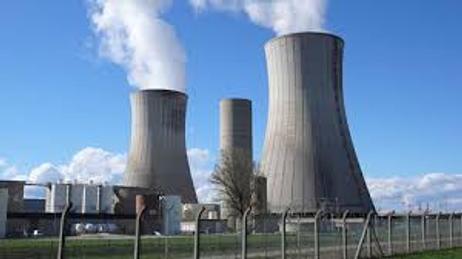
Learn about the various roles nuclear technicians play, from reactor operation and maintenance to radiation protection and safety procedures. Join us as we explore how community college nuclear technician training programs are shaping the future of energy and offering unparalleled opportunities for those seeking a path into this dynamic field.

As our country continues to search for alternative energy sources, the field of nuclear technology becomes a larger piece of the pie. The knowledge, land, and resources are in place to open nuclear plants across the country – but there is one element lacking. Skilled technicians will be needed to work in these new plants, particularly in light of the fact that thousands of current nuclear technicians are slated for retirement over the next five years, according to a recent report in the New York Times.

As many as 40 community colleges across the nation have heeded the call and are now providing programs to train a new generation of nuclear technicians. These programs can be completed in a fraction of the time of a standard four-year degree, with most associate's degrees earned in two years or less. Both high school graduates and adults looking for a career change can capitalize on these programs, moving into an industry that pays well and is much more secure in terms of growth and stability.

What is a Nuclear Technician?

Education-Portal describes the role of a nuclear technician as one who operates and maintains equipment in nuclear power plants. As specialists in nuclear energy, they might also assist scientists in the field of research.

Many professionals get their foot in the nuclear door with just a two-year associate's degree, and their first job could earn around $50,000 per year. The New York Times estimates that

. . .read more

Careers: Nano-Technology

Updated
|
Careers: Nano-Technology
Learn about the lucrative career opportunities in nano-technology and how you can begin your training right at community college.

Some of the hottest jobs of the future may be in the nanotechnology industry. For community college students who dream big, the key to a bright future may be thinking small – very small.

The National Nanotechnology Initiative defines nanotechnology as “the understanding and control of matter at dimensions between approximately 1 and 100 nanometers where unique phenomena enable novel applications.” A nanometer is one-billionth of a meter. According to the NNI, nanotechnology involves “imaging, measuring, modeling, and manipulating matter” at these tiny scales.

Students who earn associate’s degrees in nanotechnology are prepared to work in research, production, marketing, and business environments where knowledge of nanoscience is needed.

The Nanotechnology Job Market

Nanotechnicians work in various fields, including biomedicine, biotechnology, agriculture production, and environmental analysis. . The website for Minnesota State Community College and Technical College’s Nanotechnology program quotes Jack Uldrich and Deb Newberry, the authors of the book The Next Big Thing Is Small. According to these experts, “The market for nanotechnology in the United States was rapidly growing and projected to reach $1 trillion by 2010. Growth over this period is expected to produce between 800,000 and two million new technical jobs.”

The National Nanotechnology Initiative reports that in the United States, federal funding for nanotechnology has increased “from approximately $464 million in 2001 to nearly $1.5 billion for the 2009 fiscal year.”

This video explains what nanotechnology is.

. . .read more

Careers: Aquarium Science

Updated
|
Careers: Aquarium Science
This article explores the growing field of Aquarium Science and how community colleges are offering specialized programs to prepare students for careers in marine biology, aquaculture, and aquarium management. It highlights specific programs and potential career paths for graduates.
Careers: Aquarium Science

If you have a passion for Earth’s underwater worlds, consider starting an exciting career in the field of Aquarium Science at your local community college! Many community colleges in the country have comprehensive programs specifically designed to teach students about the fundamental concepts, skills, and theories needed to effectively work in a professional aquarium or related marine setting.

For example, through the marine and aquatic biology program offered at the Florida Keys Community College, students can pursue careers in “Fisheries Science,” “Aquaculture / Mariculture,” or “Ecology and Conservation.” Through these programs, students explore their surrounding Florida marine habitats. At the same time, both hands-on and formal learning venues provide students with the necessary skills and experience to pursue a professional career in the field.

This video outlines the programs available at The College of the Florida Keys in Key West, Florida.

While The College of the Florida Keys is certainly located in an ideal location for marine-based studies, an array of colleges in other areas also provide students with similar training, utilizing their own local marine science resources and facilities.

Oregon Coast Community College

One of the most notable schools providing students with unique marine-based educational opportunities is Oregon Coast Community College (OCCC), located in Newport, Oregon. At OCCC, students have the opportunity to earn their Associates of Applied Science degree in Aquarium Science by pursuing

. . .read more

Careers: In Science and Engineering

Updated
|
Careers: In Science and Engineering
Learn how community college can be a great start for becoming a scientist or engineer.

Although they were once known primarily for their vocational programs and associate degrees, community colleges have expanded their programs to serve a wider audience. And while community colleges still do an outstanding job of fulfilling their original roles, community colleges have now become a center for scientific and engineering learning.

In fact, in recent years, according to the National Science Foundation (NSF), more students have turned to community colleges to prepare them for a career in science and engineering. Research from the NSF study reveals interesting reasons why students begin their careers at a community college.

Many scientists and engineers begin at community college

Community colleges are, without a doubt, great schools. They offer many different types of programs for a wide range of academic interests. Truthfully, it is no longer fair or even accurate (if it ever was) to think of them as an “easy” two-year school for those looking to earn an associate’s degree.

Today, according to the NSF, less than 30% of community college students are looking to simply earn an associate’s degree. This means that over 70% of the students attending community colleges are looking for more than just a two-year program. These statistics reveal that many people view community colleges as a viable option when beginning their educational careers.

In fact, according to the NSF, 44% of students who earn bachelor’s and master’s degrees in the physical sciences,

. . .read more

Recent Articles

Community College vs. Bootcamps for Tech Careers in 2026
Community college vs. bootcamps in 2026. Compare cost, outcomes, credentials, and hiring trends to choose the best tech career path.
How to Build a Class Schedule That Fits Your Life (Spring 2026)
Learn how to build a class schedule that fits your life with expert tips, updated strategies for Spring 2026, and practical planning tools for students and families.
Top 10 Jobs for Community College Graduates in 2026
Meta Description: Discover high-demand jobs for community college graduates, with current salary trends, costs, and career pathways.