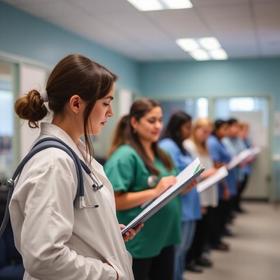

As the costs of all school programs are rising, community colleges are offering more affordable education plans that prepare young professionals for some of the top-paying careers. While the original article referenced CNN's reporting, the broader point remains true in 2026. Many well-paying careers do not require a bachelor's degree, although they often require an associate degree, industry certification, apprenticeship, or other specialized workforce training.
According to the College Board's Education Pays, workers with postsecondary education generally earn more over their careers than workers whose highest credential is a high school diploma. Earnings vary by occupation, experience, and location, but community colleges continue to provide one of the most affordable pathways into many rewarding careers.
Ultimately, as some of the top-paying careers only require a two-year degree, certification, or select courses, community colleges continue to offer financially affordable and rewarding pathways for future success. Students interested in current workforce trends can also read Community College Review's guide to Best Community College Programs for High-Paying Jobs.
Moving Towards a New Career Frontier
The correspondence between higher education and higher income is now changing. While it was once conventional wisdom that you needed to have a four-year college degree to be successful, today's workforce places increasing value on technical skills, industry certifications, apprenticeships, and practical experience alongside traditional academic credentials.
While most lucrative jobs require post-high school training, many of today's top-paying careers do not require a four-year degree, and thus community colleges continue to stand out as an affordable alternative to many universities. Employers increasingly seek graduates with workforce-ready skills, particularly in healthcare, information technology, advanced manufacturing, transportation, public safety, and the skilled trades.
According to the U.S. Bureau of Labor Statistics Occupational Outlook Handbook, many occupations commonly entered through community college education are expected to experience strong employment demand during the current decade. Healthcare occupations, skilled trades, technical careers, and public safety positions continue to offer promising opportunities for qualified graduates.
Career planning experts continue to study workforce trends published by the U.S. Bureau of Labor Statistics. Their research consistently shows that many employers now evaluate applicants based upon their knowledge, technical abilities, certifications, and workplace experience rather than simply the number of years spent in college.
Community colleges have responded by expanding workforce education to meet employer demand. Community College Review's article on Most In-Demand Community College Majors for 2026 explains how colleges continue to introduce programs aligned with today's fastest-growing industries.
The Top Paying Careers
According to career researchers, many jobs continue to rank among the best-paying careers that do not require a traditional four-year degree. Although employment projections and salary information have changed since this article was originally published, occupations such as air traffic controller, police supervisor, detective supervisor, firefighter, and numerous healthcare careers remain attractive professional options.
Air Traffic Controller
Community colleges across the country are now offering associate degree programs in Air Traffic Controlling. These programs prepare individuals to apply technical knowledge and skills to air traffic management and control, while often providing students with supplemental aviation training that prepares them for careers within the aviation industry.
Instruction also includes flight control lessons, how to use radar and electronic scanning technologies, flight plotting, radio communication, interpretation of weather that potentially impacts flights, instrumentation used by pilots, and how to maintain flight-control center and control-tower logbooks.
Many programs also introduce students to modern aviation simulation technology and current Federal Aviation Administration procedures, helping graduates build a strong educational foundation before pursuing additional FAA requirements.
Police and Detective Supervisor
Since many careers in law enforcement do not require formal higher education, occupations as a police officer or a detective supervisor continue to rank among well-paying career options. Although post-secondary education is not always mandatory, many law enforcement agencies strongly recommend completing college coursework to become better prepared for the police academy and work in the field.
Today, many entry-level applicants for police officer positions have an associate degree in criminal justice, law enforcement, police science, administration of justice, or public administration. In many jurisdictions, additional education can strengthen an applicant's qualifications and may improve opportunities for advancement into supervisory or specialized investigative roles.
The diverse opportunities for police and detective associate degree programs continue to be widely available through community colleges throughout the country. Students typically study criminal law, criminal investigations, constitutional law, report writing, ethics, community policing, and emergency management while developing the communication and analytical skills required in modern law enforcement.
Here's information on a career as a police detective.
Municipal Firefighter and Prevention Supervisor
Community college firefighting programs continue to provide students with the science, background, and practical experience needed to work in the field. Academy programs remain rigorous and include extensive hands-on training, often incorporating live-fire exercises and emergency response simulations.
As the original article explains, students are often strongly encouraged to complete medical and physical prerequisites before entering the academy. Many community colleges continue to offer these preparatory courses, including firefighter fitness, emergency medical training, anatomy, and basic fire science.
Because firefighting is physically demanding, colleges still recommend that students begin academy training in good physical condition. In addition to physical preparation, many departments now expect applicants to earn Emergency Medical Technician (EMT) certification or complete emergency medical coursework before or during the hiring process.
Employment opportunities for firefighters remain positive in many regions, particularly as departments replace retiring personnel and expand emergency medical response services. Students considering careers in public safety can compare projected employment trends using the National Center for Education Statistics and the U.S. Bureau of Labor Statistics Occupational Outlook Handbook, both of which provide updated information about education requirements and career outlooks.
Community College Review also highlights employment outcomes and workforce preparation in its article on Top 10 Jobs for Community College Graduates in 2026, which explores careers that combine strong salaries with practical community college training.
Making a lucrative income, even one with six figures, no longer necessarily requires a four-year degree. Instead, your local community college can be your foundation for enjoying a very successful, profitable career while developing practical skills that employers continue to value. Whether your goal is aviation, law enforcement, firefighting, healthcare, technology, or another skilled profession, community colleges continue to provide affordable pathways that prepare students for rewarding careers and long-term professional growth.