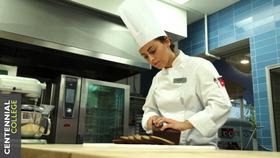

Culinary Careers

With renowned culinary programs, community colleges are a delicious place to begin your culinary arts career. From brewing beer to cake decorating, community colleges offer a wide variety of culinary degrees. Learn how to earn a college degree while drinking wine, identify 5-star culinary programs, and turn that baking hobby into a lucrative career.

View the most popular articles in Culinary Careers:

Careers: Winemaking

Updated
|
Careers: Winemaking
If you enjoy wine, learn more about how you can earn a college degree in winemaking and wine tasting at your local community college.

While some may believe that wine tasting is simply an enjoyable hobby, an after-work indulgence, or a unique cultural phenomenon, the art of wine is truly much more. Today, as the interest in wine continues to grow, students across the country are now pursuing this art as the main focus of their college studies. In community colleges across the country, students can study the art of wine tasting, making, and product distribution, which leads to an array of related careers.

Even amidst stressful and uncertain economic times, the wine industry is proving to stand strong, according to MSNBC. Recession-proof careers in the wine industry are continuing to grow. With myriad options and stable job security, the art of wine can open up incredible new pastures for today’s community college students.

Viticulture and Enology

One of the primary careers in the wine industry begins right at wine’s roots. Viticulture and Enology involve the study of grape growing and winemaking. Available at many regionally specific community colleges (especially in areas conducive to growing grapes), students can earn their degrees by learning about the complex details of wine harvesting. From Napa Valley College in California to Piedmont Community College in Virginia, students are preparing for a lucrative career at the core of the wine industry.

This video describes the winemaking program at Napa Valley College.

For example, students attending Surry Community College (SCC),

. . .read more

Careers: Culinary Training

Updated
|
Careers: Culinary Training
Learn about highly acclaimed culinary programs at community colleges.

For individuals seeking a life in the art of food, culinary programs provide information about chemistry, preparation, skills, and knowledge to become a professional contender in the cooking career. According to industry professionals, if you want to become a professional chef, it is critical to attend a culinary school – and one may be right in your city, at your local community college.

The Rewards of a Culinary Education

According to the Bureau of Labor Statistics, the culinary and food industry accounted for approximately 3.1 million jobs in 2004. Culinary careers are expected to grow faster than the average for all other occupations.

With a background education from culinary programs, many individuals can bypass the lower-skilled positions in a kitchen while moving more quickly up the ladder toward status as a cook or chef.

Culinary programs provide insight into the essential elements of a successful chef, such as menu planning, nutrition, health regulations, inventory management, and portion control. Also, since culinary programs tend to be hands-on, students can gain experience—and sometimes are even provided with internships—which help foster professional expertise and connections to job opportunities.

This video offers a look at the culinary arts field.

Award-Winning Culinary Programs at Community Colleges

Grand Rapids Community College, Michigan

With a stylish on-site restaurant featuring delicious menu options, Grand Rapids Community College and Heritage Restaurant have gained rave reviews and acclaim for its educational

. . .read more

Recent Articles

Credit for Prior Learning: When Life Experience Can Shorten Your Degree
Learn how Credit for Prior Learning (CPL) can help community college students earn college credit for military service, work experience, certifications, and prior learning, reducing both the time and cost of earning a degree.
The Working Student Schedule Test: Can You Balance College and a Job?
Discover how to evaluate whether your work schedule is compatible with community college before classes begin, and learn practical strategies that help working students stay on track toward graduation.
Stop-Out Risk: How to Choose a Community College That Helps You Finish
Learn how to identify community colleges that actively reduce stop-out risk through proactive advising, financial support, transfer pathways, flexible scheduling, and student success services, helping you stay enrolled, complete your credential, and achieve your long-term educational goals.