This article has been updated to reflect 2026 data and recent developments.
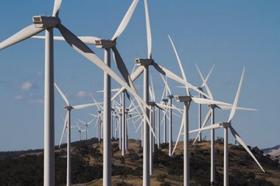
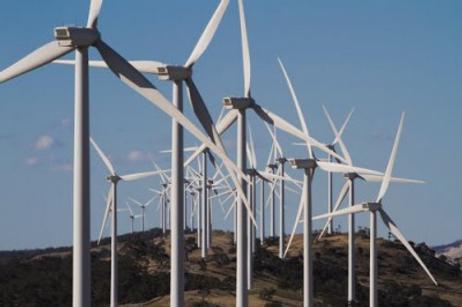
If you are considering a future career or a professional change, let the winds of change take you into a new industry. For community college students, the American wind energy industry is growing rapidly. Consider the following indicators:
- The U.S. Bureau of Labor Statistics projects employment of wind turbine service technicians to grow 30% from 2025 to 2035, much faster than the average for all occupations.
- Wind turbine service technicians had a median annual wage of $64,120 in May 2025.
- About 1,500 openings for wind turbine technicians are projected each year, on average, over the decade.
- Wind energy continues to account for a significant share of U.S. electricity generation.
- According to the U.S. Energy Information Administration, Texas, Iowa, Oklahoma, Kansas, and Illinois were the top five states for wind electricity generation in 2025.
The expansion of the wind energy industry comes at the perfect time for Americans who are out of work and looking to enroll in a community college program that can train them for a new career. Students considering these opportunities can also explore Community College Review's discussion of top careers you can land with a two-year degree when comparing career-focused programs with other educational pathways.
The U.S. Bureau of Labor Statistics reports that wind turbine technicians maintain and repair individual turbines, help keep wind energy systems operating, and work with mechanical, hydraulic, and electrical systems. Wind turbine technicians use mechanical, hydraulic, and electrical skills in their daily work. They must be comfortable with working outdoors and with working atop high wind towers.
Community colleges across the country continue to offer wind energy programs, as students seek entry into this growing industry.
Fast-Growing and Potentially Lucrative Career
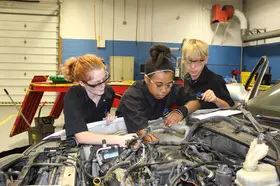
Iowa Lakes Community College, whose Associate’s Degree in Wind Energy and Turbine Technology was one of the first of its kind in the country, continues to offer training in turbine mechanics, electrical systems, hydraulics, safety protocols, troubleshooting, and wind turbine maintenance. The college also provides students with hands-on training as part of the program.
In a similar vein, the website for Minnesota West Community and Technical College reports that its Wind Energy program offers degree, diploma, and certificate pathways designed to prepare students for technical work involving wind turbines.
Across the country, graduates of wind energy programs enter a field with strong projected employment growth. Students interested in related technical occupations can use Community College Review's overview of industrial technology associate degree options to consider additional skilled career pathways.
Community College Programs
Many community colleges offer programs leading either to certificates or Associate’s Degrees in Wind Energy. Investing in these programs is a continuing trend across the country as colleges respond to changing workforce needs. The growth of specialized programs is part of a broader shift toward career preparation discussed in Community College Review's examination of how the economy has changed community college curriculum in response to workforce demands.
Courses Required for Wind Energy Certificates and Degrees
Curriculum requirements for earning a certificate or Associate’s Degree in Wind Energy will vary from college to college, but most will include courses in hydraulics, computerized control and monitoring systems, construction and maintenance of wind turbines, and standards for safe operation of wind turbines.
Solid mathematical skills are essential to success in wind energy programs. The Wind Energy program offered by Iowa Lakes Community College requires technical mathematics as part of its curriculum. If students do not have the requisite skills, they may be able to take courses at the community college to fill in the gaps in their academic preparation.
Wind energy programs also emphasize technical math, reading comprehension skills, safety, troubleshooting, and problem-solving abilities. Students considering this kind of practical education may find Community College Review's look at the rise of technical and vocational training useful when evaluating career-oriented community college programs.
Future of Wind Energy Field
As the U.S. continues to produce a significant share of its electricity from wind energy, there will be a continuing need for workers who are trained in installing, maintaining, and operating wind turbines. The current top five states in terms of wind electricity generation are Texas, Iowa, Oklahoma, Kansas, and Illinois, according to federal energy data. Community college students, particularly those living in states with high rates of wind energy production, may find that wind energy is the perfect solution to their search for a new career amidst the shifting winds of today’s job market.