
Healthcare Careers

Recession-proof and rewarding, healthcare careers can be started right from community college. Here you’ll identify the hottest trends in health care degrees, earn how to become an emergency technician and read why community college is a great place to start your addiction counseling degree.

View the most popular articles in Healthcare Careers:

Clinical Placements and Graduation Delays

Updated
|
Clinical Placements and Graduation Delays
Learn how clinical placements can delay graduation in nursing and allied health programs, what students should verify before enrolling, and how to reduce scheduling, financial, and completion risks early.

A two-year health-care program may look straightforward on paper: complete the required courses, finish clinical training, graduate and become eligible for licensure or certification. In practice, one part of that timeline may be less predictable than students expect.

Clinical placements can delay graduation when a college cannot provide the required experience at the expected time, when a clinical site changes its availability or when a student has not completed the requirements needed to enter a placement.

This issue deserves attention before enrollment, particularly for students pursuing nursing and allied health programs in 2026. Hospitals, clinics and other health-care facilities have finite capacity to supervise students. Colleges may also compete for placements, instructors and preceptors.

The result is an important distinction prospective students should understand: being admitted to a program does not necessarily tell you when or where every required clinical experience will occur.

Why Clinical Placements Matter

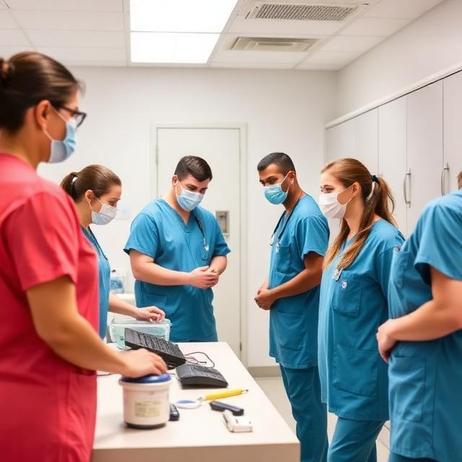
Clinical education allows students to apply classroom and laboratory knowledge in real health-care environments under appropriate supervision. Depending on the program, students may rotate through hospitals, outpatient facilities, rehabilitation centers, long-term care facilities, or community health settings.

These experiences are not simply optional internships. In many health-care programs, completing specified clinical education is part of satisfying program requirements.

The National Council of State Boards of Nursing conducted a national study examining simulation as a substitute for part of traditional clinical education in prelicensure nursing programs. The research illustrates both the growing role of simulation and the continuing importance

. . .read more

Healthcare Workforce Programs: Fast Track or Overcrowded Path?

Updated
|
Healthcare Workforce Programs: Fast Track or Overcrowded Path?
Explore whether community college healthcare programs still offer a fast track to rewarding careers or if growing enrollment and competition are changing the landscape.

Healthcare has long been one of the strongest reasons students choose community college. Associate degrees and certificate programs can prepare graduates for careers in nursing, radiologic technology, respiratory therapy, dental hygiene, and dozens of other allied health professions in far less time than many traditional four-year degrees. Combined with relatively affordable tuition and strong employer demand, healthcare programs have become some of the most competitive offerings at community colleges nationwide.

Yet as more students pursue these opportunities, questions have emerged. Are healthcare workforce programs still the fast track they once appeared to be, or are they becoming increasingly difficult to enter due to limited clinical placements, competitive admissions, and growing demand?

The answer depends largely on the profession, the college, and the regional healthcare market. Students who understand these factors before enrolling are far more likely to choose a program that aligns with both their career goals and local workforce needs.

Community College Review explores many of today's leading options in its guide to Best Community College Programs for Healthcare Careers.

Why Healthcare Programs Continue to Grow

Healthcare remains one of the nation's fastest-growing employment sectors. An aging population, expanded outpatient care, advances in medical technology, and continuing workforce shortages have increased demand for qualified professionals across nearly every healthcare setting.

Community colleges are uniquely positioned to respond because they can develop career-focused programs that combine classroom instruction with laboratory training and supervised clinical experiences. Many graduates are eligible for licensure or certification within two years or

. . .read more

Best Community College Programs for Healthcare Careers

Updated
|
Best Community College Programs for Healthcare Careers
Explore top community college healthcare programs, from nursing to radiology, and find the best path to launch a medical career in 2026.

Healthcare remains one of the fastest-growing employment sectors in the United States, and community colleges continue to play a pivotal role in preparing students for these high-demand careers. For students seeking affordable, flexible, and career-focused education, the best community college programs for healthcare careers offer a direct path into stable and rewarding professions.

In 2026, evolving workforce shortages, especially in nursing, allied health, and technical roles, have only increased the value of community college training. According to the U.S. Bureau of Labor Statistics, healthcare occupations are projected to grow significantly faster than average through the next decade, adding millions of jobs nationwide.

This guide explores the most in-demand healthcare programs offered at community colleges, what makes them stand out, and how students can choose the right path.

Why Choose Community Colleges for Healthcare Training?

Community colleges offer several distinct advantages for healthcare education:

  • Affordability: Tuition is significantly lower than four-year institutions
  • Accelerated pathways: Many programs can be completed in 1–2 years
  • Hands-on training: Strong emphasis on clinical and lab experience
  • Local workforce alignment: Programs often match regional healthcare needs
  • Flexible scheduling: Evening, weekend, and hybrid options are common

These benefits make community colleges particularly attractive for adult learners, career changers, and recent high school graduates.

Top Community College Programs for Healthcare Careers

While healthcare encompasses dozens of roles, several programs consistently stand out for their job placement rates, earning potential, and accessibility.

  1. Nursing (ADN Programs)

    Associate Degree in Nursing (ADN) programs remain among the most popular and respected healthcare pathways at

. . .read more

Mental Health Resources for Community College Students in 2025

Updated
|
Mental Health Resources for Community College Students in 2025
Explore effective mental health resources for community college students in 2025: counseling, peer support, telehealth, toolkits, and expert strategies.

Community college students face many challenges—balancing coursework, jobs, family responsibilities, and often lacking the support and resources more common at four-year institutions. In 2025, mental health among community college students remains a pressing concern. This article reviews what we currently know about student mental health at community colleges, what resources are available, what gaps persist, and what colleges, students, and parents can do now to improve support.

Why Mental Health Matters in Community Colleges

  • High prevalence, low help-seeking: More than one-third of community college students who likely have depressive or generalized anxiety disorders report never seeking help.

  • Academic risk: A 2025 survey found that many community college students say mental health challenges have negatively impacted their schoolwork. For example, among students with depression or anxiety, over half reported it was likely that mental health issues would cause them to withdraw from classes or even from college altogether.

  • Student parents are especially vulnerable: Roughly 18% of undergraduates are also parents; they experience higher rates of depression or anxiety, and are more likely to consider dropping out.

Given these realities, recognizing, investing in, and implementing robust mental health resources is critical to student success.

Types of Mental Health Resources Available

Here are the primary kinds of resources community college students can rely on in 2025:

Resource TypeDescription / What It OffersStrengthsLimitations / Challenges
On-campus counseling centersIndividual or group therapy; crisis response; case management.Accessible, often free or low cost; can reduce barriers of travel/time.Staffing shortages; wait times; limited hours; sometimes insufficient to meet demand.
Virtual
. . .read more

Healthcare Careers Hub

Updated
|
Healthcare Careers Hub
Discover the opportunities in the healthcare field. Your community college offers the courses and training you need to fill a job in this field that always seems to have openings.

As you know, healthcare is a huge industry in the United States. Since there have been significant layoffs in other sectors of the economy, whether you've been laid off or are just beginning your career, I suggest you explore healthcare. You and I think of healthcare as the domain of medical professionals such as doctors and nurses. That's only partly true. Healthcare has dozens of positions and roles, one or two of which might suit your requirements.

U.S. health care spending grew 4.1 percent in 2022, reaching $4.5 trillion or $13,493 per person. As a share of the nation's Gross Domestic Product, health spending accounted for 17.3 percent. Source: Centers for Medicare and Medicaid Services

So, to help you explore the field, I've compiled a list of some of the positions in the healthcare field, ranging from supporting roles to paraprofessional and professional roles. Healthcare offers a variety of jobs at several levels. In other words, you can earn a certificate to become a member of the profession. In fact, you don't need a four-year degree for many well-paying positions. Your community college will offer foundation courses and certifications for select positions. Contact it for more information.

Degreed Professionals:

  1. Physician Assistant (PA)
    Physician Assistants (PAs) work alongside physicians to diagnose illnesses, develop treatment plans, and prescribe medication. They provide essential medical care in various specialties, from primary care to surgery. From my personal experience, I believe that Physician Assistants are

. . .read more

Recent Articles

Transfer Scholarship Timing: Avoid Costly Deadline Traps
Transfer scholarships can disappear when students apply too early or too late. Learn how admission, FAFSA, transcript, scholarship, and enrollment deadlines interact so you can protect valuable college aid.
Community College Bachelor’s Degree or Transfer?
Compare a community college bachelor’s degree with a university transfer by career goals, employer expectations, graduate study, cost, flexibility, and transfer risk to choose the safer path forward confidently today.
Transfer Credit Appeals: Protect Your Academic Plan
When transfer agreements change, community college students can protect credits, document prior guidance, appeal decisions, request substitutions, compare universities, and keep bachelor's degree plans financially and academically on track.