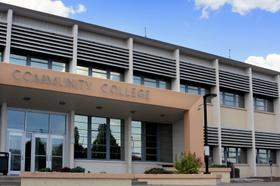

Community colleges often see growth in enrollment during economic recessions, as recently laid-off workers look to gain more marketable skills and new high school graduates hope to save money on college tuition. However, the current booming popularity of community colleges can also be attributed to President Obama, who is being hailed as the "Community College President."
Community college teachers, students, and administrators have been buoyed by Obama's continued focus on these historically under-appreciated institutions of higher education. Obama believes that community colleges must play a key role in helping America to recover from the recession and to regain its place as an educational leader in the developed world.
If Obama’s recently unveiled American Graduate Initiative is carried out, community colleges could see an unprecedented period of growth over the next decade.
Wick Sloane writes in Inside Higher Education: "The big Obama accomplishment: “During the height of the economic meltdown, we not only sustained but more than doubled, funding for the Pell Grant program, enabling more than nine million more low-income students to go to college. When you think about it, we’ve given more than 17 million Pell Grants to students from low-income families since the start of our administration than otherwise would have been provided, an average of around three million more each year. Year after year after year!” That’s from the 2013 “swan song” of Martha Kanter, Obama’s first undersecretary of education."
In this video, President Obama explains why community colleges