
Updated
|
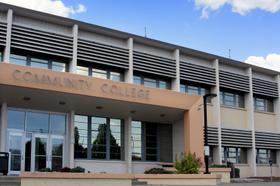
Community Colleges: Get a Job or Get Your Money Back
Learn how Lansing Community College's job guarantee program helped shape workforce education and how career-focused community college programs continue to evolve in 2026.

In the consumer world, "satisfaction guaranteed or your money back" is a common promise. However, this guarantee has rarely crossed into the academic realm. Michigan's Lansing Community College made headlines by offering a guarantee that was virtually unprecedented in higher education: get a job or your money back.

Although the program discussed in this article was introduced more than a decade ago, it remains an interesting example of how community colleges have long looked for innovative ways to prepare students for the workforce. Today, many community colleges partner directly with local employers, offer short-term workforce credentials, and provide extensive career placement services designed to connect graduates with in-demand careers.

Program Seeks to Encourage Prospective Students

According to Lansing Community College president Brent Knight, the guarantee was meant to alleviate the apprehension some people felt about returning to school during a difficult economy. Prospective students wondered whether investing time and money in a new degree or further job training was worthwhile if those efforts would not translate into better employment opportunities after graduation.

Knight acknowledged, "Many people are discouraged in job seeking. Why spend money, take time to learn when you may not get a job?"

The new program, called "Get a Skill, Get a Job or Your Money Back," aimed to ease those concerns. It promised students who enrolled in certain occupational training programs that if they were unable to find employment in their field within one year of graduation, Lansing Community College would refund their


. . .read more

Careers: Smart Grid Tecnology

Updated
|
Careers: Smart Grid Tecnology
The "smart grid" presents a myriad of opportunities for green collar jobs. Learn about the job prospects in the industry and how your local community college can provide you with the training to capitalize on this growing industry.

Our nation’s energy delivery system is undergoing a significant transformation, and soon, the “smart grid” will replace the electric system of yesteryear.

The grid is deemed “smart” because it can route power according to specific needs and conditions, which is a sharp contrast to today’s grid, which merely “broadcasts” power from central generators. The smart grid is more reliable, transparent, cost-effective, and energy-effective than the current infrastructure, and the system is how America plans to manage its future energy independence, emergency resilience, and ability to generate clean power.

This video explains smart grid technology.

Under the Obama Administration, along with the Federal Smart Grid Task Force established through the Energy Independence and Security Act of 2007, the smart grid will soon become a reality. Areas around the country, such as Southern California and Cincinnati, have already begun installing smart meters to create a national system.

The Smart Grid: Smart Career Choices

The Department of Energy’s Grid 2030 Vision plans to modernize and revolutionize the electric system within ten years. The changes will impact every mile of the electricity system, reaching every consumer and business. Clearly, a change of this magnitude will cost billions of dollars and create “green collar” job opportunities for many individuals.

In fact, according to KEMA, the leading authority in energy consulting, in the next four years alone, the $16 billion earmarked for intelligent grid funding incentives

. . .read more

Should Instructors Be Allowed to Carry Guns on Campus?

Updated
|
Should Instructors Be Allowed to Carry Guns on Campus?
With the growing number of on-campus shootings, some states are debating whether or not community college instructors should carry concealed weapons on campus. Learn about both sides of the heated debate.

This article has been updated to reflect 2026 data and recent developments.

In the last decade, college campuses have become the crime scene for too many violent shootings. From the University of Arkansas and Virginia’s Appalachian School of Law to Arizona Nursing College and Virginia Tech, dozens of students, professors, and deans have been killed or wounded by gunmen. In a historical report, the Brady Campaign to Prevent Gun Violence stated that 35% of American college campuses had experienced at least one gun incident over a five-year period. The violence on campus has sparked a rigorous debate: should instructors and professors be allowed to carry guns on campus? State legislatures have reviewed bills that would permit concealed weapons on campus, and laws continue to vary by state in 2026.

This video from WJZ television in Baltimore reports on the issue of staff carrying guns on campus.

The Current Law

The Gun-Free School Zones Act of 1990 currently makes it illegal for anyone to carry a gun in a school zone, which is on campus or within 1000 feet of a school. However, the federal law generally applies to elementary and secondary schools, rather than college campuses, and includes statutory exceptions. State legislators reviewing pro-gun laws are considering revoking gun-free school zones, allowing permit holders to bring firearms onto campus. Proponents rhetorically argue, “Why can’t people protect themselves on campus, just like they do throughout

. . .read more

Careers: Lead-Safe Renovator

Updated
|
Careers: Lead-Safe Renovator
Community colleges are leading the way in offering lead-safe certification, which will be required by law starting in April 2010. Learn about the courses and how you can obtain your certificaiton at your local community college.

A new law regarding the renovation of buildings that contain lead paint will go into effect in April 2010, and it has contractors and other professionals scrambling to earn the certification that will be mandated by law. Thankfully, some community colleges offer courses to help with the certification process.

Starting in April 2010, federal law will require all professionals hired to renovate, repair, or paint homes, childcare facilities, or schools built before 1978 to be certified in lead-safe work practices. The change is mandated by the Environmental Protection Agency's (EPA's) new Lead Renovation, Repair and Painting (RRP) Rule. The EPA's new rule requires that accredited centers train renovators in lead-safe work practices, and renovators and renovation firms must be certified as capable of working safely with lead-based paint.

The new law is designed to improve public health and safety, as working with lead paint can result in lead dust and chips being disseminated in the air, harming the health of children and adults. According to a New York Fox News station report, 14% of the children in New York State who had elevated levels of lead in their blood suffered from the condition as a direct result of home renovation projects.

Training for Lead-Safe Workers

Contractors and other professionals who work with paint in buildings built before 1978 must show that they have taken a training course and received a certificate in lead-safe

. . .read more

How to Maintain Your Financial Aid

Updated
|
How to Maintain Your Financial Aid
Are you still eligible for financial aid? Learn about the GPA and coursework requirements to ensure that you can maintain your financial aid every quarter or semester.

Maintaining your financial aid standing at a community college is crucial for continuing your education without undue financial burden. To ensure ongoing eligibility, meeting certain requirements and following specific guidelines is important.

Firstly, maintaining satisfactory academic progress is paramount. This typically entails achieving a minimum GPA and successfully completing a certain percentage of credits each semester. Additionally, students must adhere to attendance policies and make timely progress toward their degree or certificate program. It is imperative to stay informed about any changes in financial aid policies or requirements and submit all necessary documents and forms by specified deadlines. Regularly communicating with the financial aid office and seeking their guidance can help navigate any challenges or questions that may arise. By remaining diligent, organized, and proactive in meeting the criteria outlined by the community college's financial aid department, students can sustain their financial aid standing and continue to receive crucial support for their educational journey.

Many students at community colleges would not be able to pursue their educational and vocational goals were it not for the help they receive through financial aid programs.

Unfortunately, every year, some students experience the heartbreak of learning that they are no longer eligible for financial aid and the money that has afforded them higher education is being withdrawn. Usually, these students become ineligible for financial aid because their grade point averages have fallen below the minimum requirement. In other cases, they have withdrawn from a class and, thus, failed to

. . .read more

Recent Articles

Fast Credential or Degree Pathway? How to Choose
Short-term training has more funding options, but speed is only one consideration. Compare immediate job preparation with documented degree pathways, remaining coursework, future costs, and realistic plans for returning.
Aerospace & Chip Programs: Should You Follow the Funding?
New investment is expanding technical training, but funding alone should not determine your major. Learn how to evaluate funded programs, student access, career fit, and benefits for your entering class.
Should You Choose a Community College Program Built Around One Major Local Employer?
A community college program tied to one major employer can offer valuable training. Learn how to weigh specialized skills, local job dependence, and your options if that employer changes course.