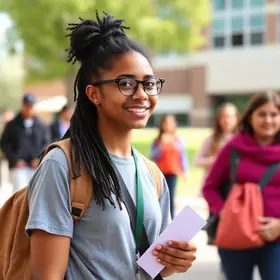
Community college campuses have historically had a reputation for having many older students who have returned to college after raising a family, serving in the military, or working for many years. While the average age of a community college student is still 29, there are many younger faces beginning to walk the halls of community colleges. In fact, from 2002 to 2011, the number of high school students enrolled in college courses increased by 67 percent, mic skills can enroll into 1.3 million students.
High School Partnerships Fuel Enrollment
This shift towards a younger student population is largely the result of partnerships with local high schools. Kids as young as 13 and 14 years of age are enrolling in college courses and earning what’s known as dual credit – courses that count toward both high school and college graduation requirements. General education courses such as English, maths, and science are far and away the most popular courses taken by high school-aged students. But others take advantage of non-core course offerings such as humanities, fine arts, and physical education, as well. The result is that students are graduating with an associate’s degree before they even graduate from high school.
Baltimore County’s Diploma to Degree Program
This video explains the pros and cons of earning college credits in high school.
In Baltimore County, Maryland, students who demonstrate exceptional academic skills can enroll in the Diploma to Degree Program. The program represents a partnership between several local public high schools and the Community College of Baltimore County (CCBC). The program provides free tuition for participants, so long as they continue to make adequate academic progress. So far, students enrolled in the program have had no difficulty maintaining good grades. In 2014, sixteen of the eighteen students in the program graduated with honors from CCBC, and four of them maintained a perfect 4.0 GPA. Each student earned at least 60 credits, meaning they graduated from high school as juniors in college.
Florida Teen Gets Bachelor’s Degree Before Graduating High School
Grace Bush is only 16 years old, but she already has a bachelor’s degree in criminal justice. Grace graduated from Florida Atlantic University with her degree, just a few weeks before graduating from Florida Atlantic University High School with her high school diploma. The amazing feat was made possible by a partnership between the high school and university that allows high school students to pursue a full-time college degree while simultaneously completing high school credits. The program will allow Grace to enter graduate school at the age of 17, where she intends to study public administration. She’s also planning to begin studying for the LSAT.
Some Students Enroll on Their Own
Not all school districts have formal partnerships with local community colleges, but that doesn’t stop some students from enrolling in college courses on their own. AJ Gilman was just 13 years old when he enrolled in courses at Paradise Valley Community College (PVCC) in Maricopa County, Arizona. Today, he is a fifteen-year-old college graduate with four associate’s degrees.
But getting into college wasn’t necessarily easy for such a young kid. AJ had to first meet with professors to prove that he was up to the task. Over the course of two years of study at PVCC, AJ proved himself more than worthy, joining various campus organizations, including the student council, where he served as treasurer. Additionally, he was inducted into the National Honor Society and served as a tutor for both high school and college students who needed help in math. AJ will enter Arizona State University as a college sophomore. He plans to double major in finance and business legal studies.
Pros and Cons of Teen Enrollment in College
The benefits of young teens enrolling in college courses are many. Programs such as these allow students to get a head start on their post-secondary education. In many cases, college courses are offered for free to high school students, saving their families thousands of dollars on tuition and fees and providing students who might not otherwise be able to afford a post-secondary education an opportunity to attend college. Students who enroll in college early also graduate early, allowing them to enter the workforce and begin earning an income many years ahead of their peers. Additionally, many high schools offer college credit courses on their campus, so students don’t have to commute to the local community college.
This video explains how to earn college credit in high school.
Detractors of early enrollment point out that taking college courses while in high school can place undue stress on students. The heavy academic load can mean kids don’t have time for high school activities and sports, or that they have reduced social time to spend with their friends and families. Students who have a part-time job face even greater pressures for their time. Furthermore, not all high schools offer college credit courses on their campus, leaving young kids to attend class with adults in their 20s and beyond. Not all parents are comfortable with their fifteen-year-old socializing with people nearly twice their age.
Although there are some concerns about young teenagers taking college classes, overall, the experience of those who have done so seems to be highly positive for them and their families. As the economy continues to strengthen, it stands to reason that more partnerships between high schools and community colleges will be developed to ensure the next generation of workers has access to quality courses early and often.
Questions? Contact us on Facebook. @communitycollegereview