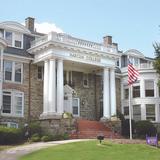
Founded in 1928, Valley Forge features an all-male college-preparatory boarding school and a co-educational two-year transfer college. The 120-acre campus of Valley Forge Military Academy & College is located in Wayne, Pennsylvania.
School Highlights
Valley Forge Military College serves 97 students (90% of students are full-time).
The college's student-teacher ratio of 12:1 is lower than the state community college average of 22:1.
Minority enrollment is 54% of the student body (majority Asian and Hispanic), which is more than the state average of 50%.
Quick Facts (26-27)
Enrollment: 97 students
Private-state tuition: $25,466
Acceptance Rate: 97%
Student-teacher ratio: 12:1
Minority enrollment: 54%
Source: Integrated Postsecondary Education Data System (IPEDS)
Note: Data may not be displayed on any public-facing website or service that replicates or resembles a college search or review portal without prior written permission. See our Terms of Service.
The student population of Valley Forge Military College has declined by 11% over five years.
The student-teacher ratio of 12:1 has increased from 8:1 over five years.
The Valley Forge Military College diversity score of 0.74 is more than the state average of 0.69. The school's diversity has grown by 8% over five years.
Note: Data may not be displayed on any public-facing website or service that replicates or resembles a college search or review portal without prior written permission. See our Terms of Service.
Note: Data may not be displayed on any public-facing website or service that replicates or resembles a college search or review portal without prior written permission. See our Terms of Service.
Note: Data may not be displayed on any public-facing website or service that replicates or resembles a college search or review portal without prior written permission. See our Terms of Service.
Note: Data may not be displayed on any public-facing website or service that replicates or resembles a college search or review portal without prior written permission. See our Terms of Service.
Note: Data may not be displayed on any public-facing website or service that replicates or resembles a college search or review portal without prior written permission. See our Terms of Service.
Note: Data may not be displayed on any public-facing website or service that replicates or resembles a college search or review portal without prior written permission. See our Terms of Service.
Note: Data may not be displayed on any public-facing website or service that replicates or resembles a college search or review portal without prior written permission. See our Terms of Service.
Note: Data may not be displayed on any public-facing website or service that replicates or resembles a college search or review portal without prior written permission. See our Terms of Service.
Note: Data may not be displayed on any public-facing website or service that replicates or resembles a college search or review portal without prior written permission. See our Terms of Service.
Note: Data may not be displayed on any public-facing website or service that replicates or resembles a college search or review portal without prior written permission. See our Terms of Service.
Note: Data may not be displayed on any public-facing website or service that replicates or resembles a college search or review portal without prior written permission. See our Terms of Service.
Note: Data may not be displayed on any public-facing website or service that replicates or resembles a college search or review portal without prior written permission. See our Terms of Service.
Note: Data may not be displayed on any public-facing website or service that replicates or resembles a college search or review portal without prior written permission. See our Terms of Service.
Note: Data may not be displayed on any public-facing website or service that replicates or resembles a college search or review portal without prior written permission. See our Terms of Service.
College Completion Rate (Students who graduate in less than 4 years)
Note: Data may not be displayed on any public-facing website or service that replicates or resembles a college search or review portal without prior written permission. See our Terms of Service.
Note: Data may not be displayed on any public-facing website or service that replicates or resembles a college search or review portal without prior written permission. See our Terms of Service.
Tuition & Financial Aid
The private state tuition of $25,466 is more than the state average of $17,466. The private state tuition has declined by 17% over four years.
Note: Data may not be displayed on any public-facing website or service that replicates or resembles a college search or review portal without prior written permission. See our Terms of Service.
Note: Data may not be displayed on any public-facing website or service that replicates or resembles a college search or review portal without prior written permission. See our Terms of Service.
Note: Data may not be displayed on any public-facing website or service that replicates or resembles a college search or review portal without prior written permission. See our Terms of Service.
Note: Data may not be displayed on any public-facing website or service that replicates or resembles a college search or review portal without prior written permission. See our Terms of Service.
Note: Data may not be displayed on any public-facing website or service that replicates or resembles a college search or review portal without prior written permission. See our Terms of Service.
Note: Data may not be displayed on any public-facing website or service that replicates or resembles a college search or review portal without prior written permission. See our Terms of Service.
Note: Data may not be displayed on any public-facing website or service that replicates or resembles a college search or review portal without prior written permission. See our Terms of Service.
Note: Data may not be displayed on any public-facing website or service that replicates or resembles a college search or review portal without prior written permission. See our Terms of Service.
Note: Data may not be displayed on any public-facing website or service that replicates or resembles a college search or review portal without prior written permission. See our Terms of Service.
Note: Data may not be displayed on any public-facing website or service that replicates or resembles a college search or review portal without prior written permission. See our Terms of Service.
Source: 2025 (or latest year available) Integrated Postsecondary Education Data System (IPEDS) , School Administrators
School Notes
Valley Forge Military College is a private, co-educational,
two-year college enrolling approximately 220 cadets in its first-
and second-year programs. Students benefit from a complete military
school education that encompasses a strong academic program,
leadership opportunities, character development, athletic
competition and physical fitness, extracurricular activities and
social interaction with a diverse group of peers. Our academic
program leads to an Associate of Arts or an Associate of Science
degree. Associate of Arts degree is offered in Liberal Arts,
Business, Leadership/Entrepreneurial Studies, General Studies and
Criminal Justice. Associate of Science degree is offered in
Pre-Engineering, Physical Sciences, Life Sciences and General
Sciences. Transfer of academic credits and completion of a Valley
Forge Military College associate degree is facilitated by
established relationships with our consortium institutions; Eastern
University, Rosemont College and Cabrini College. VMFC College
Transfer Officers and Advisors successfully guide students toward
the ultimate completion of a baccalaureate degree in concert with
the assistance from several outstanding colleges and universities.
The Academy is accredited by the Middle States Association of
Colleges and Schools. It holds memberships in the Association of
Military Colleges and Schools of the United States (AMCSUS), the
Council for Religion in Independent Schools, The Association of
Boarding Schools (TABS), the Boarding School Headmasters'
Association, and the National Association of Independent Schools
(NAIS). Valley Forge is designated as an honor unit, with
distinction, by the Department of the U.S. Army.
Learn how a full required course can delay graduation, how to navigate waitlists, and how to find approved alternatives that protect your community college degree timeline and financial aid eligibility.
Understand how catalog years determine community college graduation requirements, how enrollment breaks and major changes affect eligibility, and what to verify before choosing courses or switching to a newer catalog.
Learn what happens when your community college discontinues your program before graduation, including teach-out options, credit transfers, financial aid implications, student protections, and practical steps to finish your degree successfully.
Quick Facts (26-27)
Enrollment: 97 students
Private-state tuition: $25,466
Acceptance Rate: 97%
Student-teacher ratio: 12:1
Minority enrollment: 54%
Source: Integrated Postsecondary Education Data System (IPEDS)