Updated
|
Major Changes Coming to Wyoming Community Colleges
Community college students in Wyoming have two new changes coming to campus: tuition hikes and the first Wyoming Community College Summit. Learn more about what to expect.

The state of Wyoming is demonstrating its commitment to higher education this month with the first-ever community college summit. The summit, sponsored by the Wyoming Association of Community College Trustees, drew educators from around the state to discuss the changing role of community colleges and the best ways to meet student needs in the future. The governor of Wyoming, Matt Mead, was also on hand for the event and addressed the gathering regarding recent decisions made at the state level for community college and the importance of higher education for the state.

Summit Brings Colleges, Businesses Together

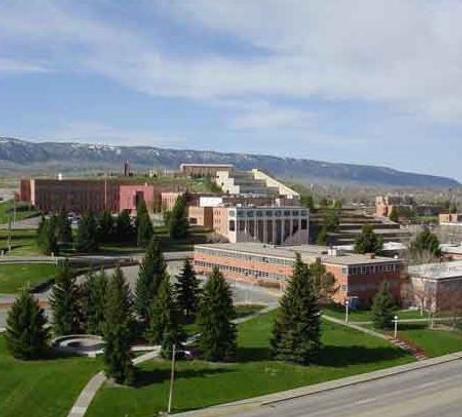
The Wyoming Community College Summit brought together all seven of the state’s community colleges and included more than 100 educators from those schools. The summit also saw participation from industry partners and business owners from the state who frequently hired community college graduates for their open positions. KWGN reports that these businessmen and women offered input into what their needs were regarding employees.

“You’ll hear all of them today say, the community colleges are essential to their ability to hire and train productive employees and to grow their businesses,” Steve Bahmer, executive director for the Wyoming Association of Community College Trustees, told KWGN.

The meeting between business owners and community college officials could pave the way for new programs at local community colleges based on the changing needs of businesses in the state. Washington has long touted this type of coordination between the business world and higher education,

. . .read more

University of Minnesota to Limit Transfer Students

Updated
|
University of Minnesota to Limit Transfer Students
A recent decision by the University of Minnesota will limit the number of transfer students it will accept. How will this decision impact community college students in the area?

In what has been called a major setback for Minnesota community college students, the University of Minnesota has formally announced plans to reduce the number of transfer students to the school. While the university claims that the decrease will be just a “drop in the bucket” regarding total transfer numbers, students and community college officials are voicing their concerns over the policy change. With community college enrollment increasing nationwide, it is possible that other universities will eye the new University of Minnesota policy with interest as they grapple with their own issues regarding a rising number of transfer students.

Pulling Back the Welcome Mat

According to a report at TwinCities.com, the welcome mat has a history of being extended to transfer students at the University of Minnesota. In 2009, the school accepted 3,260 new transfer students, making up nearly 40 percent of its new student population. However, the university plans to cut the number of transfer students they accept by roughly eight percent over the next two years, translating to around 300 transfer students. The university cites various reasons for their decision, including their desire to form a solid, four-year relationship with more students coming to the school. The school has also stated that fluctuating transfer numbers from year to year strain university resources.

This video shares one student's experience at North Hennepin Community College.

Another concern from some university officials is the

. . .read more

New Quality Standards Coming to Community Colleges

Updated
|
New Quality Standards Coming to Community Colleges
Learn about the new accountability standards specifically geared toward community colleges and the organization that created them, the American Association of Community Colleges.

While it is essential to track the progress and effectiveness of higher education in this country, current standards that apply across the board to both two and four-year institutions do not paint a complete picture of the state of postsecondary education today. There are significant differences between four-year universities and two-year community colleges that are not addressed in the standards as they are currently written. In most cases, current assessment standards do community colleges an injustice, providing an inaccurate view of how well these schools educate their students.

The AACC and the VFA

The American Association of Community Colleges (AACC) is hoping to change the view of the community college system through a set of defined assessment standards designed just for them. According to the AACC website, the new Voluntary Framework of Accountability (VFA) is the first national accountability system created just for community colleges, considering their unique student demographics and purpose. The new metrics will initially be tested by 58 community colleges, according to a brief report in the Chronicle of Higher Education, with the hope that other schools will adopt the framework.

The VFA is a three-phase initiative encompassing many aspects of community college success or failure. When the framework is completed, it will include:

  • A technical manual that will offer an overview of measurement calculations
  • A college framework to guide schools in assessing student learning outcomes
  • A blueprint of data collection to provide an assessment model to participating colleges
  • Preliminary results of the pilot
. . .read more

The Complete Community College Athletics Guide

Updated
|
The Complete Community College Athletics Guide
If you are an athlete hoping to go pro, our complete community college athletics guide can help you get started on the right foot, literally!

Community colleges provide a plethora of opportunities for traditional and non-traditional students alike. These two-year institutions offer fast, affordable higher education to high school graduates who are not ready for the university and older students looking for a new direction in their career path. One element of a community college that is often overlooked is the ability for students to play sports at the junior college level. From football to women’s softball, many campuses across the country provide the chance for students to participate in the sport of their choice for fun, competition, and even a possible career.

Benefits of Sports at Community College

The addition of a robust athletics program at community colleges offers a host of benefits to students, as well as the school. While these programs are not traditionally big money makers for the colleges, the advantages offered may make the cost of the programs worthwhile to many college campuses.

“It provides a full college experience,” Gary Branch, president of Faulkner State Community College, explained to the GadsenTimes. Branch is also the president of the Alabama College Athletic Conference.

David Mollahan agrees. The president of Marion Military Institute told the Times, “It’s beneficial to higher education. Our programs, I think, are worth it.”

Although some in the community college arena lament the cost of such programs, particularly at a time when budgets are getting tighter and tighter, Raymond Staats, president of Gadsen State Community College told the

. . .read more

Connecticut College System to Undergo Major Overhaul in Merger

Updated
|
Connecticut College System to Undergo Major Overhaul in Merger
This article probably details a significant restructuring of Connecticut's college system, involving mergers of institutions. It likely discusses the reasons for the overhaul, potential benefits and challenges, and how it will impact students and faculty.

To save money and streamline the higher education process, Connecticut has merged the state’s college system to create a central governance board for 12 community colleges, four universities, and Charter Oak State College – an online college. The only state school that will remain independent under the new structure is the University of Connecticut. While many applaud this change as an effective way to improve the state’s college system overall, others are concerned about exactly how this new merger will impact individual schools with very different missions.

How the Merger Happened and What Students Can Expect

According to a report at Inside Higher Ed, Connecticut state legislators launched the merger in July, when they created the new Board of Regents for Higher Education to oversee the institutions in the state. Two of the primary reasons for the decision were to save money on higher education overall, as well as to coordinate higher education in the state to ensure students received an education that would prepare them for a lucrative and available job in the future.

“The State of Connecticut has to look across higher education,” Gena Glickman, president of Manchester Community College, told Inside Higher Ed. Glickman added that the state needs to determine “whether or not we’re facile enough to meet the needs of each student.”

The new Board of Regents will consist of 19 board members who have not yet been appointed, according to a report at CBS Connecticut. Nine of the

. . .read more

Recent Articles

How to Judge Community College AI Skills Training
Learn how to evaluate whether community college AI training delivers skills employers recognize by checking curriculum, projects, credentials, faculty, partnerships, job postings, assessments, and graduate outcomes before enrolling.
International or Undocumented Student? Check 5 Policies
International and undocumented community college applicants face different rules. Before applying, verify admission eligibility, tuition classification, financial aid, employment restrictions, and transfer requirements to avoid costly surprises later on campus.
Should You Accept Your Math Placement or Challenge It?
Learn when to accept your community college math placement, when to challenge it, and how transcripts, test scores, major requirements, and academic readiness can guide your decision confidently.