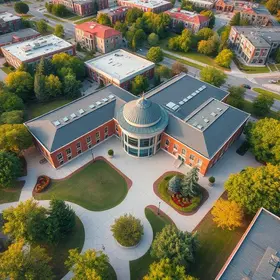
- The mission of William R. Moore College of Technology is to provide the student with the training and skills necessary to become successful in business and industry. It is the goal of the college to provide students with a working knowledge of the skills needed to enter employment in the program area of their choice. William R. Moore College of Technology is a private, non-profit, two-year educational institution above the high school level offering occupational curricula in the fields of basic industrial, vocational and technical areas. The emphasis in all cases is on the application of "hands on knowledge." Students may specialize in one of several technological areas.
School Highlights
William R Moore College of Technology serves 468 students (48% of students are full-time).
The college's student-teacher ratio of 19:1 is lower than the state community college average of 25:1.
Minority enrollment is 64% of the student body (majority Black), which is more than the state average of 38%.
Quick Facts (26-27)
- Enrollment: 468 students
- Private-state tuition: $5,880
- Student-teacher ratio: 19:1
- Minority enrollment: 64%
- Source: Integrated Postsecondary Education Data System (IPEDS)
Top Rankings
William R Moore College of Technology ranks among the top 20% of public schools in Tennessee for:
Category
Attribute
Affordability
Diversity
School Overview
The teacher population of 25 teachers has declined by 39% over five years.
William R Moore College of Technology
(TN) Community College Avg.
Carnegie Classification
Associate's Colleges: High Career & Technical-High Nontraditional
Not applicable, not in Carnegie universe (not accredited or nondegree-granting)
Institution Level
At least 2 but less than 4 years
At least 2 but less than 4 years
Institution Control
Private not-for-profit
Public
Year Founded
1909
Total Faculty
25 staff
38 staff
School Calendar
AccreditationAccred.
Council on Occupational Education (COE)
Student Body
The student population of William R Moore College of Technology has grown by 23% over five years.
The student-teacher ratio of 19:1 has increased from 8:1 over five years.
The William R Moore College of Technology diversity score of 0.68 is more than the state average of 0.57. The school's diversity has declined by 8% over five years.
Total Enrollment
468 students
1,083 students
Showing 2012–2025. Full 19-year historical data available below ↓
Student-Teacher Ratio
19:1
25:1
# Full-Time Students
223 students
416 students
Showing 2012–2025. Full 19-year historical data available below ↓
# Part-Time Students
245 students
667 students
Showing 2008–2025. Full 19-year historical data available below ↓
# Enrollment Undergraduate
468 students
870 students
# Full-Time Undergraduate Students
223 students
378 students
Showing 2012–2025. Full 19-year historical data available below ↓
# Part-Time Undergraduate Students
245 students
739 students
% Asian
4%
2%
% Hispanic
15%
8%
% Black
41%
20%
Showing 2008–2025. Full 19-year historical data available below ↓
% White
36%
62%
Showing 2010–2025. Full 19-year historical data available below ↓
% Two or more races
3%
4%
% Unknown races
1%
3%
Diversity Score
0.68
0.57
Showing 2011–2025. Full 19-year historical data available below ↓
College Completion Rate (Students who graduate in less than 4 years)
74%
65%
Showing 2013–2025. Full 19-year historical data available below ↓
Tuition & Financial Aid
The private state tuition of $5,880 is less than the state average of $13,503. The private state tuition has declined by 33% over four years.
Private State Tuition Fees
$5,880
$13,503
% Students Receiving Some Financial Aid
55%
93%
Showing 2012–2025. Full 19-year historical data available below ↓
Source: 2025 (or latest year available) Integrated Postsecondary Education Data System (IPEDS) , School Administrators
Frequently Asked Questions
How much does William R Moore College of Technology cost?
William R Moore College of Technology's private state tuition is approximately $5,880.
What is William R Moore College of Technology's ranking?
William R Moore College of Technology ranks among the top 20% of community college in Tennessee for: Least expensive tuition, Diversity in US community colleges and Average community college minority breakdown.
In what neighborhood is William R Moore College of Technology located?
William R Moore College of Technology is located in the North Memphis neighborhood of Memphis, TN.
Recent Articles

Licensure Pass Rates: What Students Should Check
Learn how to evaluate licensure pass rates before enrolling in community college career programs, compare exam results, identify warning signs, and choose training that supports professional licensing and employment goals.

Do Your Transfer Credits Count Toward Your Major?
A college course may transfer without counting toward your major. Learn how to check degree requirements, identify elective credits, avoid graduation delays, and protect your community college transfer plan.

Transfer With 45 Credits, 60 Credits, or a Degree?
Should you transfer with 45 credits, 60 credits, or an associate degree? Compare university requirements, tuition savings, graduation timelines, and transfer benefits to choose the best path for your goals.