Student Rights

From free speech to free dress, what rights do students have or relinquish on campus? Smoking bans, faith based initiatives and rights violations are just a few of the topics covered here. Don’t miss out on the latest information on student rights on community college campuses.

View the most popular articles in Student Rights:

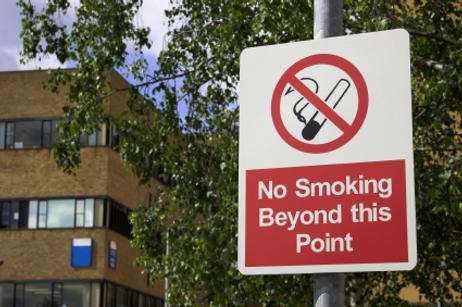
More Smoking Bans at Community Colleges Billow, But Not All is Sunny

Updated
|
More Smoking Bans at Community Colleges Billow, But Not All is Sunny
Even more community colleges are banning smoking on campus, but not everyone is happy about the change. We'll take a look at what students have to say about the bans and whether they can even be enforced effectively.
More and more campuses are banning smoking on campus.

Smoking bans are not new at community colleges; many schools have prohibited smoking in buildings and other areas of campus for years. However, complete, school-wide smoking bans are still a relatively new – and growing – trend for the 20-something crowd. Many community colleges have implemented such bans, with 120 campuses jumping onto the smoke-free bandwagon this year alone. However, campus-wide smoking bans are not met with enthusiasm by all students, and enforcement has proven to be a significant issue for many of these schools. Take a look at why some community colleges are launching such bans, and how they are handling the negative aspects of their decisions with students.

Smoke-Free = Cleaner, Healthier Campuses

According to a recent report on Christian Post, the Centers for Disease Control and Prevention estimate that nearly 22 percent of adults between the ages of 18 and 24 smoke. Some colleges implementing a smoking ban are hoping to encourage students to kick the habit as a result. To that end, college representatives share information on quitting with students and provide aids like nicotine patches and gum to students during school hours.

Other community colleges have initiated smoking bans to clean up campuses littered with second-hand smoke and cigarette butts. The first college to launch a campus-wide ban, Ozarks Technical College in Springfield, Missouri, had that goal in mind. According to CNN, the president of the college approached Ty Patterson, the former vice president of student affairs

. . .read more

Community Colleges Nationwide Joining in President Obamas Interfaith and Community Service Campus Challenge

Updated
|
Community Colleges Nationwide Joining in President Obamas Interfaith and Community Service Campus Challenge
Learn about the number of colleges joining the President’s Interfaith and Community Service Campus Challenge, which was introduced by the White House this past spring.

In March, President Obama called community colleges, universities and theology schools to come together despite their diverse faiths to make their communities a better place. Since the initial call went out from the White House, more than 240 schools have answered the challenge – a much larger number than the administration originally planned for. This movement has a twofold purpose: first, to cross religious lines and promote religious tolerance for college students across the country. The second purpose is to work together as a community to help those in need and protect the environment. With a growing population of postsecondary institutions jumping on the Interfaith and Community Service Campus Challenge, it appears that the White House might get its wish on both counts.

This video reports on the White House meeting of the President's Interfaith Community Service Campus Challenge on August 3, 2011.

What is the Interfaith and Community Service Campus Challenge?

According to a report at WhiteHouse.gov, the Interfaith and Community Service Campus Challenge serves the ultimate goal of President Obama to emphasize faith and community involvement as a means of building understanding between diverse communities and contributing to the common good. As the President said in his address when he announced this challenge, “For over 200 years, Americans of all faiths have come together, put their shoulders to the wheel of history, and made this country what it

. . .read more

Smoke-Free Community Colleges: Policies and Trends 2026

Updated
|
Smoke-Free Community Colleges: Policies and Trends 2026
Explore smoke-free community college policies in 2026, including vaping bans, health impacts, and campus-wide tobacco-free initiatives.

This article has been updated to reflect 2026 data and recent developments.

Smoke-free policies at community colleges have evolved significantly over the past decade. What began as designated smoking areas has, in many cases, transitioned into fully tobacco-free campuses. In 2026, community colleges will not only ban traditional cigarettes but also address vaping, e-cigarettes, and emerging nicotine products.

This shift reflects broader public health priorities, changing student attitudes, and updated federal and state guidance. As community colleges continue to serve diverse student populations, their approach to campus health policies offers insight into larger trends in higher education.

The Shift Toward Tobacco-Free Campuses

Community colleges were early adopters of smoke-free policies, but the definition of “smoke-free” has expanded.

Today, many institutions enforce tobacco-free campus policies, which prohibit:

  • Cigarettes
  • Cigars and smokeless tobacco
  • E-cigarettes and vaping devices
  • Heated tobacco products

According to the American Nonsmokers’ Rights Foundation, thousands of U.S. colleges and universities now maintain 100 percent smoke-free or tobacco-free policies.

This shift aligns with updated public health recommendations and reflects growing awareness of secondhand smoke and aerosol exposure risks.

Why Community Colleges Are Leading the Movement

Community colleges are uniquely positioned to implement and scale these policies.

Diverse Student Populations

Community colleges serve students across age groups, socioeconomic backgrounds, and life stages. Many institutions emphasize accessible, healthy environments that support both traditional and adult learners.

Public Health Alignment

Most community colleges operate within public systems, making them more responsive to state and federal health initiatives. Policies often align with

. . .read more

Cussing on Campus: Should Community Colleges Fine Students?

Updated
|
Cussing on Campus: Should Community Colleges Fine Students?
Do you have a right to use profanity on campus? Read about one community college that is fining its students for cussing.

Profanity is generally frowned upon at primary and secondary schools across the country. In fact, one high school in Connecticut has issued a policy that allows police to hand out pricey tickets to students caught in the act of cussing. The rule is designed to teach students self-control and prohibit profanity in the school, where it doesn't belong. Despite the $103 price tag, most parents and students at Connecticut High School have supported these tickets, according to a report in the New Haven Register.

Most of us agree with rules against foul language used by kids, but what about when those kids reach college campuses? Aren't they considered adults, capable of making their own choices, even if the words they choose are offensive to people around them?

According to a community college in Mississippi, the answer is a resounding no. This school is cracking down on cussing on campus, and some say they are violating First Amendment rights in the process. One case has garnered the country's attention, putting the usually quiet campus in a bit of a predicament.

This video explains how not to swear.

The Case of Isaac Rosenbloom

According to a report in the Chronicle of Higher Education, Isaac Rosenbloom is a 29-year-old student at Hinds Community College. One day, he and a few other students remained after class to discuss their grades with the professor.

. . .read more

How Free is Free Speech on Community College Campuses?

Updated
|
How Free is Free Speech on Community College Campuses?
Is free speech in jeopardy on community college campuses? Learn about new movements that may limit students' speech to specific "free speech zones."

The Peralta Community College District in California has recently been the subject of intense scrutiny since announcing its plans to establish "free speech" zones around its campuses. According to the Mercury News, school district officials are currently working on a policy to limit where and how groups can speak on campus.

These proposed free speech zones have rankled students and faculty alike and caused many to question whether First Amendment free speech is in jeopardy in venues where the public exchange of ideas has always been welcomed. However, Peralta is not the only college environment where free speech platforms have been limited. This idea has actually been in existence for a decade, and every college campus that has instituted free speech zones has come under fire for its plans.

This report from NCB News reports on free speech on college campuses.

Free Speech on College Campuses

Since the 1960s, college students have led many protests against social issues and stood up for policies and legislation they have believed to be a violation of their rights. Protests during that time primarily revolved around the Vietnam War, but grumblings against the "Establishment" and other social policies were also the topics of debate.

During the final two decades of the previous centuries, protests on college campuses cooled significantly. However, concerns over race and sex have emboldened students once again, according to a report from the

. . .read more

Recent Articles

Licensure Pass Rates: What Students Should Check
Learn how to evaluate licensure pass rates before enrolling in community college career programs, compare exam results, identify warning signs, and choose training that supports professional licensing and employment goals.
Do Your Transfer Credits Count Toward Your Major?
A college course may transfer without counting toward your major. Learn how to check degree requirements, identify elective credits, avoid graduation delays, and protect your community college transfer plan.
Transfer With 45 Credits, 60 Credits, or a Degree?
Should you transfer with 45 credits, 60 credits, or an associate degree? Compare university requirements, tuition savings, graduation timelines, and transfer benefits to choose the best path for your goals.