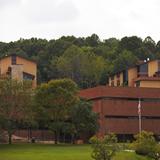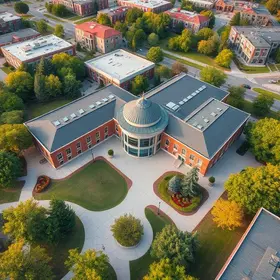
- West Virginia University (WVU) Parkersburg is a public institution of higher education, affiliated with West Virginia University, separately accredited by the Higher Learning Commission, and operated by the state of West Virginia. WVU Parkersburg is a higher education center offering community college programs and bachelor's degrees. It is a member institution of the Community and Technical College System of West Virginia. WVU Parkersburg is the only public community college in West Virginia accredited to offer baccalaureate degrees. It is the fifth largest institution of higher education in West Virginia. West Virginia University at Parkersburg provides accessible, life-changing educational opportunities in a safe and supportive environment. Opportunities include career pathways from certificate to baccalaureate, global studies, workplace experience, civic engagement, leadership studies.
School Highlights
West Virginia University at Parkersburg serves 2,728 students (46% of students are full-time).
The college's student-teacher ratio of 25:1 is higher than the state community college average of 22:1.
Minority enrollment is 8% of the student body (majority Hispanic and Black), which is more than the state average of 22%.
Quick Facts (2026)
- Enrollment: 2,728 students
- In-state tuition: $2,928
- Out-state tuition: $10,416
- Student-teacher ratio: 25:1
- Minority enrollment: 8%
- Source: Integrated Postsecondary Education Data System (IPEDS)
Top Rankings
West Virginia University at Parkersburg ranks among the top 20% of public schools in West Virginia for:
Category
Attribute
Community Size
School Overview
The teacher population of 107 teachers has declined by 55% over five years.
West Virginia University at Parkersburg
(WV) Community College Avg.
Carnegie Classification
Baccalaureate/Associate's Colleges
Institution Level
Four or more years
At least 2 but less than 4 years
Institution Control
Public
Public
Colors
Not mentioned
Total Faculty
107 staff
30 staff
School Calendar
Student Body
The student population of West Virginia University at Parkersburg has stayed relatively flat over five years.
The student-teacher ratio of 25:1 has increased from 12:1 over five years.
The West Virginia University at Parkersburg diversity score of 0.15 is more than the state average of 0.00. The school's diversity has grown by 29% over five years.
Total Enrollment
2,728 students
569 students
Student-Teacher Ratio
25:1
22:1
# Full-Time Students
1,250 students
414 students
# Part-Time Students
1,478 students
395 students
# Enrollment Undergraduate
2,728 students
450 students
# Full-Time Undergraduate Students
1,250 students
414 students
# Part-Time Undergraduate Students
1,478 students
395 students
% Asian
1%
1%
% Hispanic
2%
4%
% Black
1%
9%
% White
92%
78%
% Two or more races
3%
3%
Diversity Score
0.15
0.00
College Completion Rate (Students who graduate in 4 years or more than 4 years)
30%
30%
Average Graduate Earnings (10 Years)
$31,100
$25,000
Tuition and Acceptance Rate
The public in-state tuition of $2,928 is less than the state average of $3,640. The in-state tuition has declined by 23% over four years.
The public out-state tuition of $10,416 is more than the state average of $8,321. The out-state tuition has grown by 21% over four years.
In-State Tuition Fees
$2,928
$3,640
Out-State Tuition Fees
$10,416
$8,321
% Students Receiving Some Financial Aid
95%
91%
Median Debt for Graduates
$15,995
$9,568
Median Debt for Dropouts
$6,995
$4,580
Source: 2025 (or latest year available) Integrated Postsecondary Education Data System (IPEDS)
Frequently Asked Questions
How much does West Virginia University at Parkersburg cost?
West Virginia University at Parkersburg's tuition is approximately $2,928 for In-State students and $10,416 for Out-State students.
What is West Virginia University at Parkersburg's ranking?
West Virginia University at Parkersburg ranks among the top 20% of community college in West Virginia for: Largest student body.
Recent Articles
Credit for Prior Learning: When Life Experience Can Shorten Your Degree
Learn how Credit for Prior Learning (CPL) can help community college students earn college credit for military service, work experience, certifications, and prior learning, reducing both the time and cost of earning a degree.
The Working Student Schedule Test: Can You Balance College and a Job?
Discover how to evaluate whether your work schedule is compatible with community college before classes begin, and learn practical strategies that help working students stay on track toward graduation.
Stop-Out Risk: How to Choose a Community College That Helps You Finish
Learn how to identify community colleges that actively reduce stop-out risk through proactive advising, financial support, transfer pathways, flexible scheduling, and student success services, helping you stay enrolled, complete your credential, and achieve your long-term educational goals.