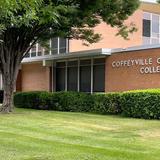
Northeastern Oklahoma A&M College

200 I St NE
Miami, OK 74354
Top-Ranked (2026-27): View Rankings
  • NEO A&M College was founded in 1919. Northeastern Oklahoma A&M College is one of the nation's premier two-year colleges and has a long tradition of serving the educational needs of our students with over 50 outstanding educational programs from which to choose.

School Highlights

Northeastern Oklahoma A&M College serves 1,962 students (69% of students are full-time).
The college's student-teacher ratio of 33:1 is higher than the state community college average of 28:1.
Minority enrollment is 55% of the student body (majority American and Black), which is more than the state average of 51%.

Quick Facts (26-27)

  • Enrollment: 1,962 students
  • In-state tuition: $3,772
  • Out-state tuition: $8,872
  • Student-teacher ratio: 33:1
  • Minority enrollment: 55%
  • Source: Integrated Postsecondary Education Data System (IPEDS)

Top Rankings

Northeastern Oklahoma A&M College ranks among the top 20% of public schools in Oklahoma for:

School Overview

The teacher population of 60 teachers has declined by 67% over five years.
Northeastern Oklahoma A&M College
(OK) Community College Avg.
Carnegie Classification
Associate's Colleges
Institution Level
At least 2 but less than 4 years
Institution Control
Public
Public
Campus Size
200 acres
Total Faculty
60 staff
56 staff
School Calendar

Student Body

The student population of Northeastern Oklahoma A&M College has grown by 10% over five years.
The student-teacher ratio of 33:1 has increased from 10:1 over five years.
The Northeastern Oklahoma A&M College diversity score of 0.73 is more than the state average of 0.71. The school's diversity has stayed relatively flat over five years.
Total Enrollment
1,962 students
1,520 students

Showing 2012–2025. View full 19-year historical data

Student-Teacher Ratio
33:1
28:1

Showing 2008–2025. View full 19-year historical data

# Full-Time Students
1,357 students
493 students

Showing 2012–2025. View full 19-year historical data

# Part-Time Students
605 students
1,027 students

Showing 2012–2025. View full 19-year historical data

# Enrollment Undergraduate
1,962 students
1,223 students
# Full-Time Undergraduate Students
1,357 students
489 students

Showing 2013–2025. View full 19-year historical data

# Part-Time Undergraduate Students
605 students
1,012 students
Total Dormitory Capacity
800 students
300 students

Showing 2011–2023. View full 17-year historical data

% American Indian/Alaskan
19%
10%

Showing 2008–2025. View full 19-year historical data

% Asian
1%
3%
% Hispanic
9%
15%

Showing 2008–2025. View full 19-year historical data

% Black
12%
9%

Showing 2008–2025. View full 19-year historical data

% White
45%
49%

Showing 2010–2025. View full 19-year historical data

% Two or more races
11%
10%
% Non Resident races
3%
1%
Diversity Score
0.73
0.71

Showing 2011–2025. View full 19-year historical data

College Completion Rate (Students who graduate in less than 4 years)
33%
50%

Showing 2015–2025. View full 19-year historical data

Median Earnings 10 Years After Entry (measured in 2022-2023, in 2024 dollars)
$40,642
$41,757

Points are in the dollars of their own College Scorecard release, and the colleges behind the state line differ by period. The lines do not show inflation-adjusted growth.

Tuition & Financial Aid

The public in-state tuition of $3,772 is more than the state average of $3,475. The in-state tuition has declined by 23% over four years.
The public out-state tuition of $8,872 is more than the state average of $7,963. The out-state tuition has declined by 19% over four years.
In-State Tuition Fees
$3,772
$3,475
Out-State Tuition Fees
$8,872
$7,963
% Students Receiving Some Financial Aid
96%
89%

Showing 2013–2025. View full 19-year historical data

Median Debt for Graduates
$9,875
$11,500

Showing 2008–2020. View full 14-year historical data

Median Debt for Dropouts
$5,500
$5,763

Showing 2008–2020. View full 14-year historical data

Source: 2025 (or latest year available) Integrated Postsecondary Education Data System (IPEDS)

School Notes

  • As a comprehensive two-year college, NEO offers freshman and sophomore college courses in all academic areas. The curriculum includes general education classes for students who want to transfer credits to a Bachelor's Degree program at a four-year college or university. Two-year occupational programs and one-year certificate programs are also offered for students who want to enter the job market after completing one or two years of college-level study. The basic curricula contain freshman and sophomore courses for students who intend to pursue a baccalaureate degree after leaving Northeastern Oklahoma A&M College. Occupational programs provide opportunities for those who plan to enter the work force upon graduation. Other educational programs provide for furthering the cultural, occupational, recreational, and enrichment opportunities for those in the community desiring to study, with or without credit, in specific areas of theirinterest. NEO is a unique junior college offering student activities found only in most four year universities. With dormitories, over forty student activities and organizations, competitive team sports (baseball, cheer, men's & women's baskeball, golf, football, softball, and volleyball), chorus, theatre, and Ag teams, students are sure to experience a true university atmosphere at our small, affordable, friendly college. Northeastern Oklahoma A&M College is accredited by The Higher Learning Commission – a commission of the North Central Association of Colleges and Schools.

Frequently Asked Questions

How much does Northeastern Oklahoma A&M College cost?
Northeastern Oklahoma A&M College's tuition is approximately $3,772 for In-State students and $8,872 for Out-State students.
What is Northeastern Oklahoma A&M College's ranking?
Northeastern Oklahoma A&M College ranks among the top 20% of community college in Oklahoma for: Diversity in US community colleges and Percent of students receiving financial aid.

Recent Articles

Does a College’s Employer Partnership Include Hiring?
A major employer’s logo does not promise a job. Learn how to check hiring commitments, eligibility and access before choosing a community college program.
New vs. Established Career Programs: Which Is Safer?
Compare new and established community college career programs by checking readiness, recent outcomes, staffing and support before you commit to enrollment.
Can Your Career Credential Cross State Lines?
Before choosing a community college career program, check whether its credential meets licensing requirements in another state and what moving could cost.

Quick Facts (26-27)

  • Enrollment: 1,962 students
  • In-state tuition: $3,772
  • Out-state tuition: $8,872
  • Student-teacher ratio: 33:1
  • Minority enrollment: 55%
  • Source: Integrated Postsecondary Education Data System (IPEDS)

Did You Know?

For Oklahoma public community colleges, the average tuition is approximately $3,475 per year for in-state students and $7,963 for out-of-state students. For private community colleges, the average yearly tuition is approximately $14,142 per year. Read more about average community college tuition costs across the country.

The average community college acceptance rate in Oklahoma is 68%. Read more about national community college acceptance rates.

Oklahoma community colleges have a diversity score of 0.71, which is lower than the national average of 0.74. The most diverse community college in Oklahoma is Bacone College. Read more about community college diversity statistics in the USA.

Quick Links