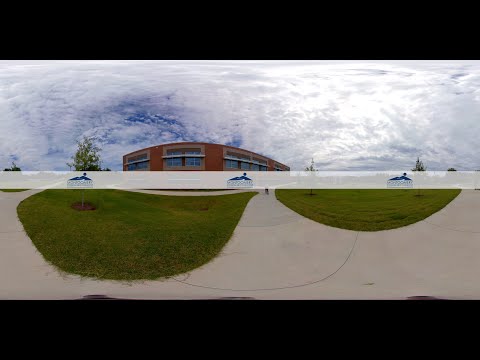
Montgomery Community College will provide quality educational opportunities including basic skills, occupational, associate, and pre-baccalaureate programs; support economic development by offering workforce training and retraining; improve the quality of life for individuals and the community; and respond to the changing needs of the local, state, and global environment.
School Highlights
Montgomery Community College serves 1,184 students (23% of students are full-time).
The college's student-teacher ratio of 17:1 is lower than the state community college average of 21:1.
Minority enrollment is 52% of the student body (majority Hispanic), which is more than the state average of 50%.
Quick Facts (26-27)
Enrollment: 1,184 students
In-state tuition: $2,409
Out-state tuition: $8,553
Student-teacher ratio: 17:1
Minority enrollment: 52%
Source: Integrated Postsecondary Education Data System (IPEDS)
School Overview
The teacher population of 70 teachers has declined by 49% over five years.
Note: Data may not be displayed on any public-facing website or service that replicates or resembles a college search or review portal without prior written permission. See our Terms of Service.
Southern Association of Colleges and Schools Commission on Colleges (SACSCOC)
Student Body
The student population of Montgomery Community College has grown by 74% over five years.
The student-teacher ratio of 17:1 has increased from 7:1 over five years.
The Montgomery Community College diversity score of 0.67 is less than the state average of 0.68. The school's diversity has grown by 22% over five years.
Note: Data may not be displayed on any public-facing website or service that replicates or resembles a college search or review portal without prior written permission. See our Terms of Service.
Note: Data may not be displayed on any public-facing website or service that replicates or resembles a college search or review portal without prior written permission. See our Terms of Service.
Note: Data may not be displayed on any public-facing website or service that replicates or resembles a college search or review portal without prior written permission. See our Terms of Service.
Note: Data may not be displayed on any public-facing website or service that replicates or resembles a college search or review portal without prior written permission. See our Terms of Service.
Note: Data may not be displayed on any public-facing website or service that replicates or resembles a college search or review portal without prior written permission. See our Terms of Service.
Note: Data may not be displayed on any public-facing website or service that replicates or resembles a college search or review portal without prior written permission. See our Terms of Service.
Note: Data may not be displayed on any public-facing website or service that replicates or resembles a college search or review portal without prior written permission. See our Terms of Service.
Note: Data may not be displayed on any public-facing website or service that replicates or resembles a college search or review portal without prior written permission. See our Terms of Service.
Note: Data may not be displayed on any public-facing website or service that replicates or resembles a college search or review portal without prior written permission. See our Terms of Service.
Note: Data may not be displayed on any public-facing website or service that replicates or resembles a college search or review portal without prior written permission. See our Terms of Service.
Note: Data may not be displayed on any public-facing website or service that replicates or resembles a college search or review portal without prior written permission. See our Terms of Service.
Note: Data may not be displayed on any public-facing website or service that replicates or resembles a college search or review portal without prior written permission. See our Terms of Service.
Note: Data may not be displayed on any public-facing website or service that replicates or resembles a college search or review portal without prior written permission. See our Terms of Service.
College Completion Rate (Students who graduate in less than 4 years)
Note: Data may not be displayed on any public-facing website or service that replicates or resembles a college search or review portal without prior written permission. See our Terms of Service.
Note: Data may not be displayed on any public-facing website or service that replicates or resembles a college search or review portal without prior written permission. See our Terms of Service.
Tuition & Financial Aid
The public in-state tuition of $2,409 is less than the state average of $3,915. The in-state tuition has declined by 5% over four years.
The public out-state tuition of $8,553 is less than the state average of $9,508. The out-state tuition has stayed relatively flat over four years.
Note: Data may not be displayed on any public-facing website or service that replicates or resembles a college search or review portal without prior written permission. See our Terms of Service.
Note: Data may not be displayed on any public-facing website or service that replicates or resembles a college search or review portal without prior written permission. See our Terms of Service.
Tuition Notes
$76 per credit hour in-state, $268 per credit hour out-of-state.
Note: Data may not be displayed on any public-facing website or service that replicates or resembles a college search or review portal without prior written permission. See our Terms of Service.
Source: 2025 (or latest year available) Integrated Postsecondary Education Data System (IPEDS)
School Notes
The State Board of Education issued a charter to Montgomery
Technical Institute on September 7, 1967. As directed by law, eight
members were appointed to the Board of Trustees. In November 1967,
administrative and teaching personnel were employed. Extension
classes were conducted in 1967-68, and full-time curriculum
students were accepted in August 1968. The institution's first
students were graduated in June 1969. Adult Basic Education and
adult high school diploma programs began in October 1968.
Montgomery Technical College in 1983 in accordance with legislative
and board approval, and in September 1987, the Board of Trustees
and Montgomery County Commissioners voted for the name to be
officially changed to Montgomery Community College as authorized by
the North Carolina General Assembly. The Montgomery Community
College campus now includes facilities of approximately 125,000
square feet on 153 acres of land. The most recent addition to the
campus is the newly constructed Business, Industry, Technology
Resource Center. The Business, Industry, Technology Resource Center
contains 44,800 square feet of floor space utilized for an
electronic library, a totally interactive classroom to transmit and
receive real-time voice, video, and data on the North Carolina
Information Highway (NCIH), and classrooms/laboratories. The Center
is designed to serve as a facilitation site for training both on
campus and within a work place, and employers can utilize the
Center for training all levels of staff. Montgomery Community
College offers programs of study within five areas: Arts &
Sciences, Business Technology, Commercial Technology, Health/Public
Services Technology. Classes are offered during the day and
evening. Successful completion of a program may result in an
Associate degree, diploma, or certificate. The college is
accredited by the Commission on Colleges of the Southern
Association of Colleges and Schools to offer associate degrees,
diplomas, and certificates.
Frequently Asked Questions
How much does Montgomery Community College cost?
Montgomery Community College's tuition is approximately $2,409 for In-State students and $8,553 for Out-State students.
Nearby Schools
The nearest community college to Montgomery Community College is Stanly Community College (20.6 miles away)
Learn how to evaluate licensure pass rates before enrolling in community college career programs, compare exam results, identify warning signs, and choose training that supports professional licensing and employment goals.
A college course may transfer without counting toward your major. Learn how to check degree requirements, identify elective credits, avoid graduation delays, and protect your community college transfer plan.
Should you transfer with 45 credits, 60 credits, or an associate degree? Compare university requirements, tuition savings, graduation timelines, and transfer benefits to choose the best path for your goals.
Quick Facts (26-27)
Enrollment: 1,184 students
In-state tuition: $2,409
Out-state tuition: $8,553
Student-teacher ratio: 17:1
Minority enrollment: 52%
Source: Integrated Postsecondary Education Data System (IPEDS)
For North Carolina public community colleges, the average tuition is approximately $3,915 per year for in-state students and $9,508 for out-of-state students. For private community colleges, the average yearly tuition is approximately $19,438 per year. Read more about average community college tuition costs across the country.