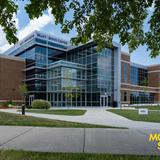
J. F. Drake State Community and Technical College

3421 Meridian St N
Huntsville, AL 35811
Top-Ranked (2026-27): View Rankings
  • Drake?s mission is to provide vocational-technical education through academic and occupational training, from basic education through two-year technical programs. Students develop marketable skills in vocational-technical areas at J. F. Drake, one of a network of forty postsecondary institutions of its kind in the state of Alabama. The 30-acre campus houses eight buildings.

School Highlights

J. F. Drake State Community and Technical College serves 1,187 students (26% of students are full-time).
The college's student-teacher ratio of 29:1 is lower than the state community college average of 31:1.
Minority enrollment is 79% of the student body (majority Black), which is more than the state average of 44%.

Quick Facts (26-27)

  • Enrollment: 1,187 students
  • In-state tuition: $3,384
  • Out-state tuition: $6,096
  • Student-teacher ratio: 29:1
  • Minority enrollment: 79%
  • Source: Integrated Postsecondary Education Data System (IPEDS)

Top Rankings

J. F. Drake State Community and Technical College ranks among the top 20% of public schools in Alabama for:

Category
Attribute
Affordability

School Overview

The teacher population of 41 teachers has declined by 43% over five years.
J. F. Drake State Community and Technical College
(AL) Community College Avg.
Carnegie Classification
Associate's Colleges
Institution Level
At least 2 but less than 4 years
Institution Control
Public
Public
Year Founded
1961
Total Faculty
41 staff
74 staff

Showing 2008–2025. View full 19-year historical data

School Calendar
AccreditationAccred.
Southern Association of Colleges and Schools Commission on Colleges (SACSCOC)

Student Body

The student population of J. F. Drake State Community and Technical College has grown by 43% over five years.
The student-teacher ratio of 29:1 has increased from 11:1 over five years.
The J. F. Drake State Community and Technical College diversity score of 0.58 is less than the state average of 0.60. The school's diversity has declined by 10% over five years.
Total Enrollment
1,187 students
2,287 students

Showing 2013–2025. View full 19-year historical data

Student-Teacher Ratio
29:1
31:1
# Full-Time Students
309 students
806 students

Showing 2013–2025. View full 19-year historical data

# Part-Time Students
878 students
1,481 students

Showing 2013–2025. View full 19-year historical data

# Enrollment Undergraduate
1,187 students
1,985 students
# Full-Time Undergraduate Students
309 students
806 students

Showing 2013–2025. View full 19-year historical data

# Part-Time Undergraduate Students
878 students
1,792 students
% Asian
1%
1%

Showing 2011–2025. View full 19-year historical data

% Hispanic
10%
7%

Showing 2008–2025. View full 19-year historical data

% Black
60%
27%

Showing 2008–2025. View full 19-year historical data

% White
21%
56%

Showing 2010–2025. View full 19-year historical data

% Two or more races
6%
4%
% Non Resident races
1%
n/a
Diversity Score
0.58
0.60

Showing 2011–2025. View full 19-year historical data

College Completion Rate (Students who graduate in less than 4 years)
12%
29%

Showing 2015–2025. View full 19-year historical data

Median Earnings 10 Years After Entry (measured in 2022-2023, in 2024 dollars)
$34,464
$38,083

Points are in the dollars of their own College Scorecard release, and the colleges behind the state line differ by period. The lines do not show inflation-adjusted growth.

Tuition & Financial Aid

The public in-state tuition of $3,384 is less than the state average of $4,026. The in-state tuition has declined by 29% over four years.
The public out-state tuition of $6,096 is less than the state average of $7,102. The out-state tuition has declined by 28% over four years.
In-State Tuition Fees
$3,384
$4,026
Out-State Tuition Fees
$6,096
$7,102

Showing 2010–2025. View full 19-year historical data

% Students Receiving Some Financial Aid
90%
91%

Showing 2012–2025. View full 19-year historical data

Source: 2025 (or latest year available) Integrated Postsecondary Education Data System (IPEDS)

School Notes

  • J. F. Drake State Technical College is a two-year, state-supported, coed, vocational-technical college founded in 1961. J. F. Drake is accredited by the Southern Association of Colleges and Schools to award the Associate in Applied Technology degree. Diplomas and certificates are also awarded. Drake Tech is located in northeastern Huntsville, home of the NASA Marshall Space Flight Center, the U.S. Army Missile Command, Strategic Defense Command, the Redstone Arsenal, and a host of high-technology industrial centers. The area is one of the fastest-growing engineering and technology centers in the South. Huntsville offers students access to museums, shopping, and fine restaurants. The College assists African-American students to find and contact predominantly African- American schools and colleges which provide educational opportunities that are best suited to the individual students academic achievement and financial resources.

Frequently Asked Questions

How much does J. F. Drake State Community and Technical College cost?
J. F. Drake State Community and Technical College's tuition is approximately $3,384 for In-State students and $6,096 for Out-State students.
What is J. F. Drake State Community and Technical College's ranking?
J. F. Drake State Community and Technical College ranks among the top 20% of community college in Alabama for: Least expensive tuition and Diversity in US community colleges.

Recent Articles

Fast Credential or Degree Pathway? How to Choose
Short-term training has more funding options, but speed is only one consideration. Compare immediate job preparation with documented degree pathways, remaining coursework, future costs, and realistic plans for returning.
Aerospace & Chip Programs: Should You Follow the Funding?
New investment is expanding technical training, but funding alone should not determine your major. Learn how to evaluate funded programs, student access, career fit, and benefits for your entering class.
Should You Choose a Community College Program Built Around One Major Local Employer?
A community college program tied to one major employer can offer valuable training. Learn how to weigh specialized skills, local job dependence, and your options if that employer changes course.

Quick Facts (26-27)

  • Enrollment: 1,187 students
  • In-state tuition: $3,384
  • Out-state tuition: $6,096
  • Student-teacher ratio: 29:1
  • Minority enrollment: 79%
  • Source: Integrated Postsecondary Education Data System (IPEDS)

Related School Videos

Did You Know?

For Alabama public community colleges, the average tuition is approximately $4,026 per year for in-state students and $7,102 for out-of-state students. For private community colleges, the average yearly tuition is approximately $13,954 per year. Read more about average community college tuition costs across the country.

Alabama community colleges have a diversity score of 0.60, which is lower than the national average of 0.74. The most diverse community college in Alabama is Chattahoochee Valley Community College. Read more about community college diversity statistics in the USA.

Quick Links