- The St. Elizabeth College of Nursing is a private university located in Utica, NY, United States. The college was a product of the mission and tradition of St. Elizabeth Medical Center: with the closing of SEMC in October 2023, SECON is now a part of the Mohawk Valley Health System.
School Highlights
St. Elizabeth College of Nursing serves 153 students (54% of students are full-time).
The college's student-teacher ratio of 9:1 is lower than the state community college average of 24:1.
Minority enrollment is 29% of the student body (majority Asian and Hispanic), which is less than the state average of 63%.
Quick Facts (26-27)
- Enrollment: 153 students
- Acceptance Rate: 100%
- Student-teacher ratio: 9:1
- Minority enrollment: 29%
- Source: Verified school update
Top Rankings
St. Elizabeth College of Nursing ranks among the top 20% of public schools in New York for:
Category
Attribute
School Resources
School Overview
The teacher population of 18 teachers has declined by 41% over five years.
St. Elizabeth College of Nursing
(NY) Community College Avg.
Carnegie Classification
Special Focus Two-Year: Health Professions
Associate's Colleges
Institution Level
At least 2 yrs but < 4 yrs
At least 2 but less than 4 years
Institution Control
Private, non-profit
Private not-for-profit
Year Founded
1904
Total Faculty
18 staff
43 staff
Number of Programs Offered
1
8
School Calendar
School Motto
The mission of St. Elizabeth College of Nursing is to provide a strong foundation of theory and nursing practice within an environment of academic excellence that promotes active citizenship and a desire for life-long learning.
Student Body
The student population of St. Elizabeth College of Nursing has stayed relatively flat over five years.
The student-teacher ratio of 9:1 has increased from 6:1 over five years.
The St. Elizabeth College of Nursing diversity score of 0.48 is less than the state average of 0.76. The school's diversity has grown by 100% over five years.
Total Enrollment
153 students
953 students
Student-Teacher Ratio
9:1
24:1
# Full-Time Students
83 students
528 students
# Part-Time Students
70 students
425 students
# Enrollment Undergraduate
153 students
717 students
# Full-Time Undergraduate Students
83 students
511 students
# Part-Time Undergraduate Students
70 students
495 students
% American Indian/Alaskan
1%
n/a
% Asian
6%
8%
% Hispanic
5%
23%
% Black
4%
19%
% White
71%
37%
% Hawaiian
10%
n/a
% Two or more races
4%
3%
Diversity Score
0.48
0.76
College Completion Rate (Students who graduate in less than 4 years)
65%
24%
Average Graduate Earnings (10 Years)
$55,500
$35,300
Tuition & Financial Aid
% Students Receiving Some Financial Aid
100%
89%
Median Debt for Graduates
$17,500
$12,000
Median Debt for Dropouts
$5,500
$5,500
Acceptance Rate
100%
80%
Source: 2025 (or latest year available) Integrated Postsecondary Education Data System (IPEDS) , School Administrators
Profile last updated: 08/11/2026
Frequently Asked Questions
What is the acceptance rate of St. Elizabeth College of Nursing?
The acceptance rate of St. Elizabeth College of Nursing is 100%, which is higher than the state average of 80%.
What is St. Elizabeth College of Nursing's ranking?
St. Elizabeth College of Nursing ranks among the top 20% of community college in New York for: Percent of students receiving financial aid.
Nearby Schools
The nearest community college to St. Elizabeth College of Nursing is Mohawk Valley Community College (2.5 miles away)
School
Location
Miles
Quick Facts
1101 Sherman Dr
Utica, NY 13501
(315) 792-5400
Utica, NY 13501
(315) 792-5400
2.5 miles
Enrollment: 5,940 students Student-teacher ratio: 37:1 In-state tuition: $4,415 Out-state tuition: $8,225 Minority enrollment: 43%
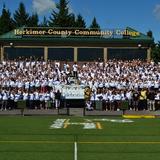
100 Reservoir Rd
Herkimer, NY 13350
(315) 866-0300
Herkimer, NY 13350
(315) 866-0300
14.0 miles
Enrollment: 1,971 students Student-teacher ratio: 27:1 Acceptance rate: 90% In-state tuition: $5,116 Out-state tuition: $8,000 Minority enrollment: 31%
SUNY Morrisville
Public
80 Eaton Street
Morrisville, NY 13408
(315) 684-6000
Morrisville, NY 13408
(315) 684-6000
23.1 miles
Enrollment: 2,186 students Student-teacher ratio: 15:1 Acceptance rate: 92% In-state tuition: $7,689 Out-state tuition: $17,339 Minority enrollment: 42%
Cazenovia College
Private not-for-profit
22 Sullivan St
Cazenovia, NY 13035
(800) 654-3210
Cazenovia, NY 13035
(800) 654-3210
31.4 miles
Enrollment: 746 students Student-teacher ratio: 4:1 Acceptance rate: 68% Private-state tuition: $30,560 Minority enrollment: 98%
Bryant & Stratton College-Syracuse
Private, non-profit
953 James St
Syracuse, NY 13203
(315) 472-6603
Syracuse, NY 13203
(315) 472-6603
43.9 miles
Enrollment: 413 students Student-teacher ratio: 13:1 Private-state tuition: $16,329 Minority enrollment: 57%
Recent Articles

Can Your Two-Year Degree Really Be Finished in Four Semesters?
Learn how to test whether a two-year community college degree can actually be completed in four semesters by checking prerequisites, course rotations, availability, sequencing, and hidden scheduling barriers.

Program Seat Test: Are You Really Admitted to Your Major?
Learn how to determine whether community college acceptance includes admission to your intended major, and evaluate selective programs, prerequisites, seat limits, deadlines, waitlists, and backup options before enrolling.

Build Your Community College First-Semester Stress Test
Build a realistic first-semester stress test before registration by checking course load, work hours, commuting, finances, family duties, study time, and support systems before your schedule becomes unmanageable later.