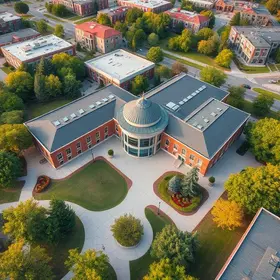
- The Southeast Missouri Hospital College of Nursing & Health Sciences is a private not-for-profit institution of higher learning that specializes in the preparation of individuals for high demand health care careers. The College is accredited by the Higher Learning Commission of the North Central Association of Colleges and Schools.Our mission is to respond to the health care educational needs of the region by preparing qualified health care professionals.
School Highlights
Southeast Missouri Hospital College of Nursing and Health Sciences serves 202 students (78% of students are full-time).
The college's student-teacher ratio of 6:1 is lower than the state community college average of 27:1.
Minority enrollment is 18% of the student body (majority Black), which is less than the state average of 43%.
Quick Facts (26-27)
- Enrollment: 202 students
- Acceptance Rate: 100%
- Student-teacher ratio: 6:1
- Minority enrollment: 18%
- Source: Verified school update
School Overview
The teacher population of 35 teachers has declined by 5% over five years.
Southeast Missouri Hospital College of Nursing and Health Sciences
(MO) Community College Avg.
Carnegie Classification
Special Focus Four-Year: Other Health Professions Schools
Associate's Colleges
Institution Level
At least 2 yrs but < 4 yrs
At least 2 but less than 4 years
Institution Control
Private, non-profit
Public
Year Founded
1928
Total Faculty
35 staff
55 staff
Number of Programs Offered
8
9
Student Body
The student population of Southeast Missouri Hospital College of Nursing and Health Sciences has stayed relatively flat over five years.
The student-teacher ratio of 6:1 has increased from 4:1 over five years.
The Southeast Missouri Hospital College of Nursing and Health Sciences diversity score of 0.32 is less than the state average of 0.62. The school's diversity has declined by 21% over five years.
Total Enrollment
202 students
1,723 students
Showing 2013–2025. Full 19-year historical data available below ↓
Student-Teacher Ratio
6:1
27:1
Showing 2008–2025. Full 19-year historical data available below ↓
# Full-Time Students
158 students
619 students
Showing 2012–2025. Full 19-year historical data available below ↓
# Part-Time Students
44 students
1,104 students
Showing 2012–2025. Full 19-year historical data available below ↓
# Enrollment Undergraduate
202 students
1,074 students
# Full-Time Undergraduate Students
110 students
708 students
Showing 2013–2025. Full 19-year historical data available below ↓
# Part-Time Undergraduate Students
92 students
1,033 students
% Hispanic
3%
6%
% Black
8%
10%
Showing 2008–2025. Full 19-year historical data available below ↓
% White
82%
57%
Showing 2010–2025. Full 19-year historical data available below ↓
% Two or more races
4%
4%
Diversity Score
0.32
0.62
Showing 2011–2025. Full 19-year historical data available below ↓
College Completion Rate (Students who graduate in less than 4 years)
100%
27%
College Completion Rate (Students who graduate in 4 years or more than 4 years) (Year 2023)
100%
62%
Average Graduate Earnings (10 Years)
$47,300
$30,900
Tuition & Financial Aid
% Students Receiving Some Financial Aid
78%
92%
Showing 2010–2025. Full 19-year historical data available below ↓
Median Debt for Graduates
$15,600
$10,500
Showing 2010–2020. Full 14-year historical data available below ↓
Median Debt for Dropouts
$6,576
$5,500
Showing 2008–2020. Full 14-year historical data available below ↓
Acceptance Rate
100%
89%
Extracurriculars
Total ExtracurricularsTotal Extra-curric.
3 extracurriculars
ExtracurricularsExtra-curric.
Club or Organization:
National Student Nurses AssociationPhi Theta Kappa Honor Society
Student Council
Source: 2025 (or latest year available) Integrated Postsecondary Education Data System (IPEDS) , School Administrators
Profile last updated: 08/11/2026
Frequently Asked Questions
What is the acceptance rate of Southeast Missouri Hospital College of Nursing and Health Sciences?
The acceptance rate of Southeast Missouri Hospital College of Nursing and Health Sciences is 100%, which is higher than the state average of 89%.
Recent Articles

Will Your Community College GPA Follow You After Transfer?
Will your community college GPA follow you after transfer? Learn how university grades, transcripts, scholarships, graduate admissions, and academic standing may be affected by your previous college performance.

The Transfer Catalog-Year Trap: What Students Must Check
Could university requirements change before you transfer? Learn how catalog years, continuous enrollment, and degree rules affect your pathway, and what students should verify before choosing university courses.

Transfer Agreements: Admission vs. Your Major
Does your transfer agreement guarantee admission to your major? Discover what happens when universities accept transfer students but restrict entry to specific academic programs and degrees after admission.