Why Community College

Learn all about community college and whether it is the right choice for your academic career. We'll cover the history of community colleges, the latest trends and issues, and the top degree-producing schools. Find out why students are turning to community colleges, see what issues affect campuses with such a diverse student body, and get information on the latest trends in degree offerings.

View the most popular articles in Why Community College:

Should Community Colleges Allow Undocumented Immigrants to Enroll?

Updated
|
Should Community Colleges Allow Undocumented Immigrants to Enroll?
Learn how North Carolina community colleges are navigating undocumented student enrollment policies, tuition debates, and access to higher education in 2026.

Community colleges were originally intended to help all students access higher education, regardless of socioeconomic or geographical constraints. Subsequently, some community colleges adjusted their admission policies to allow undocumented immigrants to enroll on campus.

However, these changes have long been met with controversy, especially during periods of rising enrollment and financial pressure on public colleges. Today, debates surrounding undocumented student enrollment continue nationwide as states reevaluate tuition policies, financial aid eligibility, and workforce development priorities.

As the debate continues on both sides, some experts predict that community colleges across the country will continue facing pressure to clarify and expand policies affecting undocumented students.

Undocumented Students: The Heated Debate

Examining these controversial changes to community college policies in North Carolina, WRAL News previously reported that community colleges in the state were required to accept qualified undocumented immigrants if applicants met admission guidelines. Before policy changes in the late 2000s, some college officials rejected undocumented students entirely, even when applicants had graduated from United States high schools.

The policy debate evolved significantly over the following decades. In 1997, former North Carolina Attorney General and Governor Mike Easley expressed support for allowing undocumented immigrants to enroll in community colleges. Eventually, legal guidance from the North Carolina Community College System led campuses across the state to adopt more standardized admissions practices.

As many North Carolina residents discovered, some campuses had already quietly allowed certain undocumented students to enroll without proof of citizenship status. Other colleges, however, were forced to revise


. . .read more

Stuck on a Waiting List? How Community College Students Can Combat College Admission Freezes

Updated
|
Stuck on a Waiting List? How Community College Students Can Combat College Admission Freezes
More and more of today's community college students find themselves on waiting lists thanks to budget cuts. Learn about strategies you can take to get yourself off of waiting lists and into class.

This article has been updated to reflect 2026 data and recent developments.

Historically, when the economy sputters, community college enrollment rates rise. In facing today’s growing student population, some campuses are struggling under the increased demand. As a result, some community college students have been forced to halt their academic pursuits, finding themselves placed on waiting lists.

Being on a community college’s waiting list can slow down a student’s anticipated graduation date, as well as limit career training. If you find yourself on a waiting list, there are measures you can take to overcome frustrating admission freezes.

In 2026, enrollment conditions vary among community colleges. Although overall enrollment has recovered from pandemic-era declines, students may still encounter waiting lists in high-demand courses and competitive career programs.

What is a College Wait List?

Waitlists, which put students in a “line” of acceptance after a school or program’s maximum capacity has been reached, can delay a student’s pursuit of a certification or degree for multiple semesters.

Some programs may have longer waiting lists than others. For example, as Hudson Valley Community College in Troy, New York reveals, “The size of the program and departmental projections will determine the number of students on a waitlist. If a student is not accepted from the waitlist, he/she will be notified shortly after the start of the semester.”

Students should check current institutional policies, as waitlist procedures

. . .read more

Will the Failing Auto Industry Drive Up Community College Enrollment Rates?

Updated
|
Will the Failing Auto Industry Drive Up Community College Enrollment Rates?
Learn about how the failure of the American auto industry, along with President Obama's education initiatives, will translate into increased enrollment in community college campuses.

While the United States has more than six million students enrolled at 1,000 community college campuses nationwide, only half a million students graduate from these institutions each year. According to President Obama, this low graduation rate must change in order for our country to prepare for a stronger and more fertile economy.

In specifically examining the troubling economic setbacks experienced by residents of Michigan, Obama asserts that many unemployed auto workers must actively pursue community college programs to gain new education and training for the future job openings that will arise. In light of President Obama's direct visit with Michigan's current and former auto workers, many residents are wondering if the failure of their auto industry will ultimately help drive up their community college enrollment rates.

The impact of Michigan's auto industry on community colleges

As Yahoo News reports, President Obama's mid-July visit to Detroit was intended to help the city and surrounding areas face their current economic challenges with new vigor. Considering that Ford, GM, and Chrysler are all based out of Michigan, their recent financial struggles have contributed to a waterfall of job losses and salary cuts statewide.

During his visit, President Obama sympathized with residents while simultaneously attempted to boost morale with his $12 billion dollar proposal. With this proposal, President Obama hopes to increase the enrollment rates at community colleges, both in Michigan and across the country, to eventually create a more qualified workforce.

In looking forward to the economic

. . .read more

How Will the New GI Bill Impact Your Community College Enrollment Options?

Updated
|
How Will the New GI Bill Impact Your Community College Enrollment Options?
Learn about how the revisions within the GI Bill impact the academic benefits for veterans who served America on or after the 9/11 attacks.

The GI Bill has provided many opportunities for soldiers and veterans to further their educational opportunities. In fact, according to the US Department of Veterans Affairs, the GI Bill is one of the most “significant pieces of legislation ever produced by the federal government.”

Like any other piece of legislation, the GI Bill is impacted by the country's economic, political, and social climates, and subsequently, it has recently undergone remarkable changes and revisions. Today, veterans seeking to attend courses at their local community college may find that their benefits have significantly changed.

This video explains the GI Bill benefits.

The Evolution of the GI Bill and its Recent Revisions

Created in 1944, the GI Bill (more formally known as the GI Bill of Rights) has been a heated topic of debate and discussion since its inception. Initially, the plan for the GI Bill involved paying veterans a sum of $20 per week; however, this stimulated controversy, as opponents argued that paying veterans decreased their incentive to work and find jobs.

In addition, there were provisions for educational opportunities for veterans. However, colleges during the 1940s were still seen as institutions reserved only for the privileged and elite, which added more fuel to the opponents' fires; protesters argued that “battle-hardened veterans” would struggle to conform with high college standards.

Yet, despite these arguments, the Bill was eventually passed, while the Veterans Administration (VA) was subsequently established

. . .read more

Which Community College is Best for Students with Autism Spectrum Disorder?

Updated
|
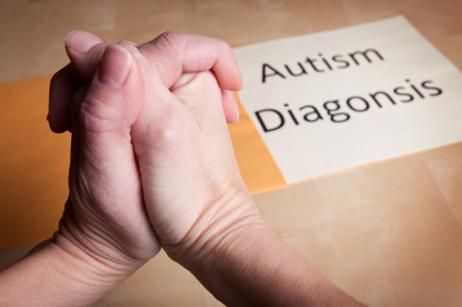
Which Community College is Best for Students with Autism Spectrum Disorder?
Learn how community colleges support students with autism spectrum disorder in 2026 through disability services, mentoring, transition programs, and campus resources that promote academic success, independence, and career readiness.

According to the CDC, approximately 1 in 31 children is identified with Autism Spectrum Disorder (ASD), reflecting updated national surveillance data released in 2025. As explained by Autism Speaks, Autism Spectrum Disorder is a developmental condition that typically involves challenges with social interaction, communication, and behavior.

ASD is a learning disability that typically involves a child's struggle to socially, emotionally, and personally interact with others. Autistic children tend to show an unawareness of others' feelings, facial recognition, and social cues.

Despite these struggles, however, ASD students are commonly intellectually exceptional. Autism Spectrum Disorder is described as a "spectrum" because the symptoms of each child can vary significantly. Those with strong signs of Autism are generally labeled as having "Classic Autism," while individuals with fewer signs of autism may be labeled as having "Asperger's Syndrome." Although the medical community now classifies Asperger's syndrome within Autism Spectrum Disorder, many families and older educational resources still use the term.

The Autism Society of America defines autism as a lifelong developmental disability that affects how people communicate, interact, and experience the world around them.

Autism is a neurodevelopmental disorder characterized by:

  • Social impairments
  • Cognitive impairments
  • Communication difficulties
  • Repetitive behaviors

According to Autism Speaks, "Compared with classic autism, children with Asperger's Syndrome usually don't show any signs of major cognitive difficulties, their IQ falls in the normal or even superior range." Similarly, children who are diagnosed with Classic Autism may have more noticeable signs but are often able to exceed their peers' standard intellectual

. . .read more

Recent Articles

Will Your Community College GPA Follow You After Transfer?
Will your community college GPA follow you after transfer? Learn how university grades, transcripts, scholarships, graduate admissions, and academic standing may be affected by your previous college performance.
The Transfer Catalog-Year Trap: What Students Must Check
Could university requirements change before you transfer? Learn how catalog years, continuous enrollment, and degree rules affect your pathway, and what students should verify before choosing university courses.
Transfer Agreements: Admission vs. Your Major
Does your transfer agreement guarantee admission to your major? Discover what happens when universities accept transfer students but restrict entry to specific academic programs and degrees after admission.

Why Community College

OVERVIEW
What is a community college and why are more students turning to them? Who are some of the most famous community college graduates? Here you’ll find the answers to these questions and more.
TRENDS AND CURRENT ISSUES
Get information on the latest trends and issues affecting community colleges today. Explore the impact of community colleges on the global economy, get information on how community colleges have changed over the years, and see how the latest technologies are being employed on campus.
STUDENT POPULATIONS
Attracting students from all walks of like, community college campuses are rich with diversity. This section covers a myriad of issues relating to student populations. Learn more about LGBT support on community college campuses, explore adult-friendly degree programmers and, see what resources are available to veterans.
ENROLLMENT & ADMISSIONS
We provide a comprehensive look into some of the most important issues affecting enrollment and admissions. Get the latest news on declining enrollment across the country and the impact it has. Learn more about the latest trends in admissions requirements from vaccinations to placement tests. Find expert advice on what to expect your first year, and lean more about the pitfalls to avoid.