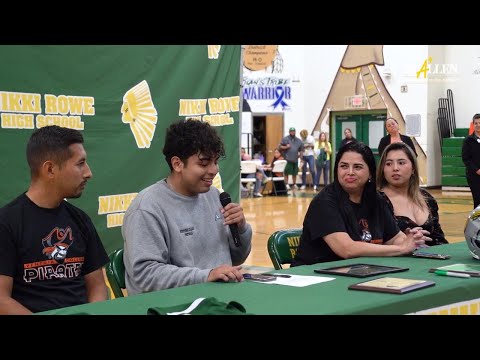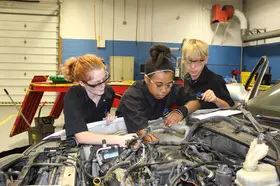
- The mission of Ventura College is to offer academic and vocational programs leading to the completion of associate degrees or certificates; to prepare students to transfer to four-year colleges and universities; to provide remediation to those who need to improve their basic skills; to support the state and region�s economic viability through workforce development; and to provide continuing education opportunities that enhance personal growth and life enrichment.
School Highlights
Quick Facts (26-27)
- Enrollment: 12,222 students
- In-state tuition: $1,388
- Out-state tuition: $7,050
- Student-teacher ratio: 48:1
- Minority enrollment: 77%
- Source: Integrated Postsecondary Education Data System (IPEDS)
School Overview
Student Body
Showing 2012–2025. Full 19-year historical data available below ↓
Showing 2012–2025. Full 19-year historical data available below ↓
Showing 2012–2025. Full 19-year historical data available below ↓
Showing 2013–2025. Full 19-year historical data available below ↓
Showing 2008–2025. Full 19-year historical data available below ↓
Showing 2008–2025. Full 19-year historical data available below ↓
Showing 2008–2025. Full 19-year historical data available below ↓
Showing 2010–2025. Full 19-year historical data available below ↓
Showing 2011–2025. Full 19-year historical data available below ↓
Showing 2015–2025. Full 19-year historical data available below ↓
Tuition & Financial Aid
Showing 2012–2025. Full 19-year historical data available below ↓
Showing 2008–2020. Full 14-year historical data available below ↓
Showing 2008–2020. Full 14-year historical data available below ↓
Sports
School Notes
- Ventura College, an accredited two-year institution of higher education, has been a part of this beautiful seaside community since 1925. It is conveniently located approximately 60 miles north of Los Angeles and 30 miles south of Santa Barbara. The 112-acre campus, set in the rolling hills of Ventura, has an enrollment of 13,000 students. As one of the oldest of the 109 California Community Colleges, Ventura College has a tradition of helping its students succeed. Whether you are interested in transferring to a four-year institution, achieving your associate's degree or a certificate of completion, improving your career skills or taking classes for fun and enrichment, we are here to be of assistance! To facilitate your progress, we offer a variety of support services including personal, academic and career counseling, tutoring, financial aid, on-site child care, and a center for learning and physically disabled students. The college serves high school graduates and others who are able to benefit from the academic and vocational opportunities it offers. Courses are provided using both traditional and distance learning delivery systems. The faculty and staff of Ventura College are committed to student success and strive to create an environment of continuous improvement through the establishment of measurable and/or observable student learning outcomes that can be used to assess student performance, improve instructional and service delivery, and guide institutional decision-making. Ventura College is fully accredited by the Western Association of Schools and Colleges, an institutional accrediting body recognized by the Council on Post-Secondary Accrediting and the U.S. Department of Education.
Frequently Asked Questions
How much does Ventura College cost?
What schools are Ventura College often compared to?
Recent Articles