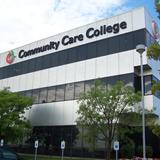
Tulsa Welding School-Tulsa

  • The mission of Tulsa Welding School is to assist learners in the development of the skills and knowledge necessary for employment and professional growth.

School Highlights

Tulsa Welding School-Tulsa serves 892 students (100% of students are full-time).
The college's student-teacher ratio of 45:1 is higher than the state community college average of 28:1.
Minority enrollment is 57% of the student body (majority Black and American), which is more than the state average of 51%.

Quick Facts (26-27)

  • Enrollment: 892 students
  • Student-teacher ratio: 45:1
  • Minority enrollment: 57%
  • Source: Integrated Postsecondary Education Data System (IPEDS)

School Overview

The teacher population of 20 teachers has declined by 62% over five years.
Tulsa Welding School-Tulsa
(OK) Community College Avg.
Carnegie Classification
Associate's Colleges
Institution Level
At least 2 but less than 4 years
Institution Control
Private for-profit
Public
Year Founded
1949
Total Faculty
20 staff
56 staff
Number of Programs Offered
5
25

Student Body

The student population of Tulsa Welding School-Tulsa has grown by 13% over five years.
The student-teacher ratio of 45:1 has increased from 14:1 over five years.
The Tulsa Welding School-Tulsa diversity score of 0.72 is more than the state average of 0.71. The school's diversity has stayed relatively flat over five years.
Total Enrollment
892 students
1,520 students

Showing 2012–2025. Full 19-year historical data available below ↓

Student-Teacher Ratio
45:1
28:1

Showing 2008–2025. Full 19-year historical data available below ↓

# Full-Time Students
892 students
493 students

Showing 2012–2025. Full 19-year historical data available below ↓

# Enrollment Undergraduate
892 students
1,223 students
# Full-Time Undergraduate Students
892 students
489 students

Showing 2013–2025. Full 19-year historical data available below ↓

% American Indian/Alaskan
18%
10%
% Asian
2%
3%
% Hispanic
17%
15%

Showing 2008–2025. Full 19-year historical data available below ↓

% Black
19%
9%

Showing 2008–2025. Full 19-year historical data available below ↓

% White
43%
49%

Showing 2010–2025. Full 19-year historical data available below ↓

% Unknown races
1%
3%
Diversity Score
0.72
0.71

Showing 2011–2025. Full 19-year historical data available below ↓

College Completion Rate (Students who graduate in less than 4 years)
56%
50%

Showing 2015–2025. Full 19-year historical data available below ↓

Average Graduate Earnings (10 Years)
$40,800
$33,300

Tuition & Financial Aid

% Students Receiving Some Financial Aid
88%
90%

Showing 2012–2025. Full 19-year historical data available below ↓

Median Debt for Graduates
$9,500
$11,500

Showing 2008–2020. Full 14-year historical data available below ↓

Median Debt for Dropouts
$4,750
$5,763

Showing 2008–2020. Full 14-year historical data available below ↓

Source: 2025 (or latest year available) Integrated Postsecondary Education Data System (IPEDS)

School Notes

  • Tulsa Welding School was founded in 1949 by two welders who recognized a strong demand for skilled tradesman in their industry. Over 60 years later, TWS has evolved into an educational institution that prepares students for various skilled trade careers with a multitude of specialties and applications. We train our graduates for the skills, knowledge, and theworkplace attitudes that are essential when entering the professional world. Graduates who put forth the dedication, commitment to excel, and workplace experience in their welding, pipefitting, shipfitting, HVAC/R or electrical welding education, have the potential to obtain a lasting and rewarding welding career. TWS in Tulsa started its Associate degree program in welding technology effective February 1998. The Master Welder program prepares a graduate for entry level positions in structural, pipe, thin alloy, and pipeline welding. Key welding processes include SMAW, GMAW, GTAW, FCAW, and high frequency GTAW. The program contains ten training phases of three weeks each. Structural Welder contains five of the Master Welder phases. This program prepares a graduate to weld on structures (plate surfaces) using the welding processes of SMAW, GMAW and FCAW. Associate of Occupational Studies in Welding Technology degree consists of the Master Welder program for the first-seven months. The new TWS branch campus in Jacksonville, Florida opened November 2001 to provide welder training. Programs in welding match those in Tulsa, Oklahoma. The college is accredited by the Accrediting Commission of Career Schools and Colleges of Technology. For more information about the school please visit: www.weldingschool.com

Recent Articles

Will Your Community College GPA Follow You After Transfer?
Will your community college GPA follow you after transfer? Learn how university grades, transcripts, scholarships, graduate admissions, and academic standing may be affected by your previous college performance.
The Transfer Catalog-Year Trap: What Students Must Check
Could university requirements change before you transfer? Learn how catalog years, continuous enrollment, and degree rules affect your pathway, and what students should verify before choosing university courses.
Transfer Agreements: Admission vs. Your Major
Does your transfer agreement guarantee admission to your major? Discover what happens when universities accept transfer students but restrict entry to specific academic programs and degrees after admission.

Quick Facts (26-27)

  • Enrollment: 892 students
  • Student-teacher ratio: 45:1
  • Minority enrollment: 57%
  • Source: Integrated Postsecondary Education Data System (IPEDS)

Related School Videos

Did You Know?

Tulsa County, OK community colleges have a diversity score of 0.71, which is lower than the national average of 0.74. The most diverse community college in Tulsa County, OK is Clary Sage College. Read more about community college diversity statistics in the USA.

Quick Links