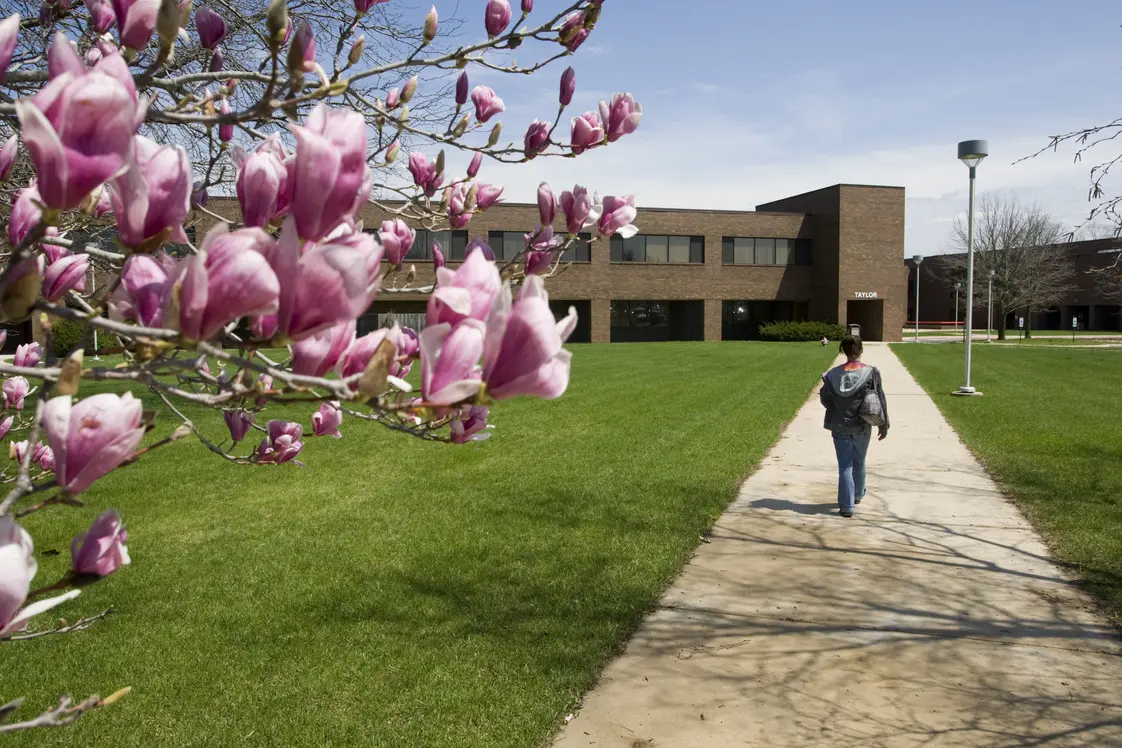
Spoon River College is a multi-faceted community college dedicated to providing students a quality education. Students have a variety of educational goals and SRC is positioned to meet the needs of all these students by providing: First two years of college and pre-professional, courses in 30 college majors, 30 career and technical programs, Continuing Education ,Business and Industry Training.
School Highlights
Spoon River College serves 1,247 students (36% of students are full-time).
The college's student-teacher ratio of 26:1 is lower than the state community college average of 33:1.
Minority enrollment is 14% of the student body (majority Black), which is less than the state average of 54%.
Quick Facts (26-27)
Enrollment: 1,247 students
In-state tuition: $9,390
Out-state tuition: $10,470
Student-teacher ratio: 26:1
Minority enrollment: 14%
Source: Integrated Postsecondary Education Data System (IPEDS)
School Overview
The teacher population of 48 teachers has declined by 62% over five years.
Note: Data may not be displayed on any public-facing website or service that replicates or resembles a college search or review portal without prior written permission. See our Terms of Service.
Note: Data may not be displayed on any public-facing website or service that replicates or resembles a college search or review portal without prior written permission. See our Terms of Service.
Note: Data may not be displayed on any public-facing website or service that replicates or resembles a college search or review portal without prior written permission. See our Terms of Service.
Note: Data may not be displayed on any public-facing website or service that replicates or resembles a college search or review portal without prior written permission. See our Terms of Service.
Note: Data may not be displayed on any public-facing website or service that replicates or resembles a college search or review portal without prior written permission. See our Terms of Service.
Note: Data may not be displayed on any public-facing website or service that replicates or resembles a college search or review portal without prior written permission. See our Terms of Service.
Note: Data may not be displayed on any public-facing website or service that replicates or resembles a college search or review portal without prior written permission. See our Terms of Service.
Note: Data may not be displayed on any public-facing website or service that replicates or resembles a college search or review portal without prior written permission. See our Terms of Service.
Note: Data may not be displayed on any public-facing website or service that replicates or resembles a college search or review portal without prior written permission. See our Terms of Service.
Note: Data may not be displayed on any public-facing website or service that replicates or resembles a college search or review portal without prior written permission. See our Terms of Service.
Note: Data may not be displayed on any public-facing website or service that replicates or resembles a college search or review portal without prior written permission. See our Terms of Service.
Note: Data may not be displayed on any public-facing website or service that replicates or resembles a college search or review portal without prior written permission. See our Terms of Service.
College Completion Rate (Students who graduate in less than 4 years)
Note: Data may not be displayed on any public-facing website or service that replicates or resembles a college search or review portal without prior written permission. See our Terms of Service.
Note: Data may not be displayed on any public-facing website or service that replicates or resembles a college search or review portal without prior written permission. See our Terms of Service.
Tuition & Financial Aid
The public in-state tuition of $9,390 is more than the state average of $8,019. The in-state tuition has declined by 13% over four years.
The public out-state tuition of $10,470 is less than the state average of $10,874. The out-state tuition has declined by 12% over four years.
Note: Data may not be displayed on any public-facing website or service that replicates or resembles a college search or review portal without prior written permission. See our Terms of Service.
Note: Data may not be displayed on any public-facing website or service that replicates or resembles a college search or review portal without prior written permission. See our Terms of Service.
Note: Data may not be displayed on any public-facing website or service that replicates or resembles a college search or review portal without prior written permission. See our Terms of Service.
Note: Data may not be displayed on any public-facing website or service that replicates or resembles a college search or review portal without prior written permission. See our Terms of Service.
Note: Data may not be displayed on any public-facing website or service that replicates or resembles a college search or review portal without prior written permission. See our Terms of Service.
Sports
Total Sports Offered
2 sports
Sports
BaseballSoftball
Source: 2025 (or latest year available) Integrated Postsecondary Education Data System (IPEDS) , School Administrators
School Notes
Spoon River College serves 4,000 credit students per year in a
1,566 square miles area including Fulton, McDonough, Mason,
Schuyler and part of Knox counties. Spoon River College offers the
personalized, quality learning environment that prepares you for
success. Classes are small and the ability to work one-on-one with
individual faculty members is a priority. As a result, you are well
prepared for successful moves into four-year universities or the
workforce. SRC boasts an average class size of 14, with each class
taught by a highly qualified instructor...not a graduate assistant.
Learning takes place in many locations, not just in the classroom.
In addition to the Canton Campus, Macomb Campus, Havana Center and
Rushville Center buildings, Spoon River College students prepare
for success in real-life learning situations. Some of these areas
include hospitals for nursing students, the large Vocational
Technical building on the SRC Canton Campus, and child care
facilities. Agriculture is taught in the classroom and in the
field. Spoon River College also has an Arboretum on campus for the
study of wildlife. In addition, computer labs are available at
every campus. This includes comprehensive distance learning
facilities at all locations. Students can take classes via
television from these facilities. As a comprehensive community
college, Spoon River College provides a wide-range of activities to
round out the complete college experience. Some of the activities
include varsity athletics, drama, literary magazine, Student
Senate, Phi Theta Kappa Honors Society, Alpha Gamma Tau
Agricultural Fraternity, and Phi Mu Tau Diesel Tractor Technology
Fraternity. The main campus of SRC is located on a beautiful,
wooded site comprised of 160 acres near the Cuba Blacktop on County
Road 22 just four miles west of Canton. The site contains four
conveniently connected buildings that house a student center,
learning resource center, classrooms, laboratories, administrative
offices, and a cafeteria. Adequate, free parking is provided in
lots adjacent to the buildings. The campus also includes a natural
arboretum, walking trail, and agricultural test plots.
Learn how to test whether a two-year community college degree can actually be completed in four semesters by checking prerequisites, course rotations, availability, sequencing, and hidden scheduling barriers.
Learn how to determine whether community college acceptance includes admission to your intended major, and evaluate selective programs, prerequisites, seat limits, deadlines, waitlists, and backup options before enrolling.
Build a realistic first-semester stress test before registration by checking course load, work hours, commuting, finances, family duties, study time, and support systems before your schedule becomes unmanageable later.
Quick Facts (26-27)
Enrollment: 1,247 students
In-state tuition: $9,390
Out-state tuition: $10,470
Student-teacher ratio: 26:1
Minority enrollment: 14%
Source: Integrated Postsecondary Education Data System (IPEDS)