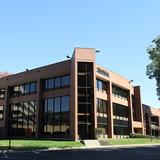
At Sanford-Brown College-Vienna, our mission is to offer career-focused programs that have been designed to prepare you with the knowledge, skills and confidence to pursue a satisfying future in your area of interest. Our faculty and staff are devoted to helping you achieve your personal and professional goals. SBC-Vienna's instructors are selected, not only for their academic credentials but also for their commitment to the educational success of each student who comes through our doors. Committed to diversity in our student body, faculty, and administrative staff, SBC-Vienna provides a rich environment for study that reflects the global reality in which we all live, work, and play. Day, evening and online schedules are available, as are opportunities to participate in Career Clubs, the Honor Society, internships in your professional field and community service.
School Highlights
Sanford-Brown College-Tysons Corner served 29 students (97% of students were full-time).
The college's student-teacher ratio of 7:1 was lower than the state community college average of 37:1.
Minority enrollment was 99% of the student body (majority Black), which was more than the state average of 55%.
Note: Data may not be displayed on any public-facing website or service that replicates or resembles a college search or review portal without prior written permission. See our Terms of Service.
Note: Data may not be displayed on any public-facing website or service that replicates or resembles a college search or review portal without prior written permission. See our Terms of Service.
Note: Data may not be displayed on any public-facing website or service that replicates or resembles a college search or review portal without prior written permission. See our Terms of Service.
Note: Data may not be displayed on any public-facing website or service that replicates or resembles a college search or review portal without prior written permission. See our Terms of Service.
Note: Data may not be displayed on any public-facing website or service that replicates or resembles a college search or review portal without prior written permission. See our Terms of Service.
Note: Data may not be displayed on any public-facing website or service that replicates or resembles a college search or review portal without prior written permission. See our Terms of Service.
Note: Data may not be displayed on any public-facing website or service that replicates or resembles a college search or review portal without prior written permission. See our Terms of Service.
Note: Data may not be displayed on any public-facing website or service that replicates or resembles a college search or review portal without prior written permission. See our Terms of Service.
Note: Data may not be displayed on any public-facing website or service that replicates or resembles a college search or review portal without prior written permission. See our Terms of Service.
Note: Data may not be displayed on any public-facing website or service that replicates or resembles a college search or review portal without prior written permission. See our Terms of Service.
Note: Data may not be displayed on any public-facing website or service that replicates or resembles a college search or review portal without prior written permission. See our Terms of Service.
Note: Data may not be displayed on any public-facing website or service that replicates or resembles a college search or review portal without prior written permission. See our Terms of Service.
Median Earnings 10 Years After Entry (measured in 2014-2015, in 2017 dollars)
Points are in the dollars of their own College Scorecard release, and the colleges behind the state line differ by period. The lines do not show inflation-adjusted growth.
Median Earnings 10 Years After Entry Trends (2008-2015)
Note: Data may not be displayed on any public-facing website or service that replicates or resembles a college search or review portal without prior written permission. See our Terms of Service.
Note: Data may not be displayed on any public-facing website or service that replicates or resembles a college search or review portal without prior written permission. See our Terms of Service.
Note: Data may not be displayed on any public-facing website or service that replicates or resembles a college search or review portal without prior written permission. See our Terms of Service.
Note: Data may not be displayed on any public-facing website or service that replicates or resembles a college search or review portal without prior written permission. See our Terms of Service.
Source: 2015 (or latest year available) Integrated Postsecondary Education Data System (IPEDS)
Short-term training has more funding options, but speed is only one consideration. Compare immediate job preparation with documented degree pathways, remaining coursework, future costs, and realistic plans for returning.
New investment is expanding technical training, but funding alone should not determine your major. Learn how to evaluate funded programs, student access, career fit, and benefits for your entering class.
A community college program tied to one major employer can offer valuable training. Learn how to weigh specialized skills, local job dependence, and your options if that employer changes course.