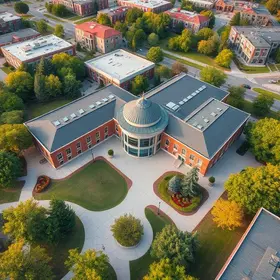
School Highlights
DeVry University-Kentucky served 122 students (52% of students were full-time).
Minority enrollment was 12% of the student body (majority Black and American), which was less than the state average of 28%.
School Overview
DeVry University-Kentucky
(KY) Community College Avg.
Carnegie Classification
Item not available
Associate's Colleges
Institution Level
Less than 2 yrs
At least 2 but less than 4 years
Institution Control
Private, for profit
Public
Student Body
Total Enrollment
122 students
3,274 students
# Full-Time Students
64 students
1,128 students
# Part-Time Students
58 students
2,146 students
# Enrollment Undergraduate
180 students
2,618 students
# Full-Time Undergraduate Students
122 students
1,102 students
# Part-Time Undergraduate Students
58 students
2,146 students
% American Indian/Alaskan
6%
n/a
% Black
6%
10%
% White
88%
72%
Diversity Score
0.22
0.46
Average Graduate Earnings (10 Years)
$51,500
$29,400
Tuition & Financial Aid
Private State Tuition Fees
$16,888
$13,988
% Students Receiving Some Financial Aid
100%
97%
Median Debt for Graduates
$39,007
$10,595
Median Debt for Dropouts
$9,500
$4,983
Source: 2013 (or latest year available) Integrated Postsecondary Education Data System (IPEDS)
Frequently Asked Questions
How much does DeVry University-Kentucky cost?
DeVry University-Kentucky's private state tuition is approximately $16,888.
Recent Articles

Will Your Community College GPA Follow You After Transfer?
Will your community college GPA follow you after transfer? Learn how university grades, transcripts, scholarships, graduate admissions, and academic standing may be affected by your previous college performance.

The Transfer Catalog-Year Trap: What Students Must Check
Could university requirements change before you transfer? Learn how catalog years, continuous enrollment, and degree rules affect your pathway, and what students should verify before choosing university courses.

Transfer Agreements: Admission vs. Your Major
Does your transfer agreement guarantee admission to your major? Discover what happens when universities accept transfer students but restrict entry to specific academic programs and degrees after admission.