- As a unit of the University System of Georgia and a two-year institution, Coastal Georgia Community College has as its mission to provide pre-baccalaureate programs of study for transfer, to provide preparation for immediate employment in a variety of technical program areas, to provide assistance to students who are academically under-prepared for college level study, and provide lifelong learning opportunities for workforce development and career enhancement as well as personal development.
School Highlights
Quick Facts (26-27)
- Enrollment: 3,468 students
- In-state tuition: $4,510
- Out-state tuition: $12,566
- Acceptance Rate: 98%
- Student-teacher ratio: 30:1
- Minority enrollment: 40%
- Source: Integrated Postsecondary Education Data System (IPEDS)
School Overview
Student Body
Showing 2012–2025. Full 19-year historical data available below ↓
Showing 2012–2025. Full 19-year historical data available below ↓
Showing 2012–2025. Full 19-year historical data available below ↓
Showing 2012–2025. Full 19-year historical data available below ↓
Showing 2010–2025. Full 19-year historical data available below ↓
Showing 2008–2025. Full 19-year historical data available below ↓
Showing 2008–2025. Full 19-year historical data available below ↓
Showing 2010–2025. Full 19-year historical data available below ↓
Showing 2011–2025. Full 19-year historical data available below ↓
Tuition & Financial Aid
Showing 2008–2025. Full 19-year historical data available below ↓
Showing 2012–2025. Full 19-year historical data available below ↓
Showing 2008–2020. Full 14-year historical data available below ↓
Showing 2008–2020. Full 14-year historical data available below ↓
Showing 2012–2025. Full 19-year historical data available below ↓
School Notes
- Coastal Georgia Community College, University System of Georgia, offers courses in programs designed to provide opportunities in three areas: two-year associate degree programs which prepare students to transfer to senior colleges and universities; one and two-year career programs which prepare students for immediate employment; and developmental and remedial courses for students who need to refresh or strengthen their academic background. Coastal Georgia Community College serves the needs of the community by offering select courses at several different sites throughout the service area including Camden County, Fort Stewart in Hinesville,and Savannah. Bachelor's and master 's degrees from Armstrong Atlantic State University,Georgia Southern University, and Valdosta State University are also obtainable in certain degree programs through our Brunswick Center. The campus, of 193 acres, has been carefully planted with trees and shrubs indigenous to the area. The southern pine is very much in evidence. Graceful palms, stately live oaks, hollies, and a variety of small shrubs add to the beauty of the campus. Coastal Georgia Community College was founded in 1961 by the Regents of the University System of Georgia as a non-residential college to offer pre-baccalaureate degrees. In 1972, the Regents of the University System of Georgia and the State Board of Education agreed to fund jointly a vocational technical division at Coastal Georgia Community College in order to preclude the necessity of building a separate vocational technical institute. This agreement calls for equal emphasis on career programs and university parallel programs. Thus, from 1972 Coastal Georgia Community College began to function as a comprehensive community college to serve the needs of coastal Georgia. In 1986, the Regents authorized the creation of the Brunswick Center to provide baccalaureate and master's degrees in collaboration with other units of the University System. Coastal Georgia Community is accredited by the Commission on Colleges of the Southern Association of Colleges and Schools to award the Associate of Arts degree, the Associate of Science degree, and the Associate of Applied Science degree.
Frequently Asked Questions
How much does College of Coastal Georgia cost?
What is the acceptance rate of College of Coastal Georgia?
Nearby Schools
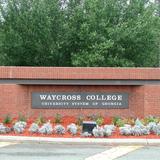
Waycross, GA 31503
(912) 287-5818
Waycross, GA 31503
(912) 449-7600
Jacksonville, FL 32202
(904) 633-8100
Savannah, GA 31406
(912) 201-8000
Jacksonville, FL 32207
(904) 398-4141
Recent Articles