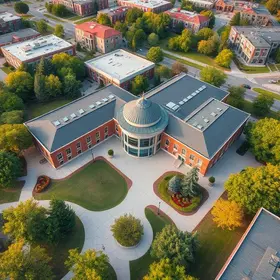
- Camelot College continues its emphasis on educational excellence and job placement and is established as a vital post-secondary institution in the Southern Region.
School Highlights
Camelot College serves 161 students (100% of students are full-time).
The college's student-teacher ratio of 15:1 is lower than the state community college average of 38:1.
Minority enrollment is 98% of the student body (majority Black), which is more than the state average of 58%.
Quick Facts (26-27)
- Enrollment: 161 students
- Student-teacher ratio: 15:1
- Minority enrollment: 98%
- Source: Integrated Postsecondary Education Data System (IPEDS)
Top Rankings
Camelot College ranks among the top 20% of public schools in Louisiana for:
Category
Attribute
Completion Rates
Debt For Students
School Overview
The teacher population of 11 teachers has stayed relatively flat over five years.
Camelot College
(LA) Community College Avg.
Carnegie Classification
Not applicable, not in Carnegie universe (not accredited or nondegree-granting)
Associate's--Public Suburban-serving Multicampus
Institution Level
Less than 2 years (below associate)
At least 2 yrs but < 4 yrs
Institution Control
Private for-profit
Public
Total Faculty
11 staff
18 staff
Number of Programs Offered
3
6
School Motto
With God all things are possible.
Student Body
The student population of Camelot College has stayed relatively flat over five years.
The student-teacher ratio of 15:1 has stayed the same over five years.
The Camelot College diversity score of 0.17 is less than the state average of 0.65. The school's diversity has stayed relatively flat over five years.
Total Enrollment
161 students
678 students
Student-Teacher Ratio
15:1
38:1
# Full-Time Students
161 students
270 students
# Enrollment Undergraduate
161 students
315 students
# Full-Time Undergraduate Students
161 students
270 students
Total Dormitory Capacity
55 students
228 students
% Hispanic
1%
5%
% Black
91%
40%
% White
2%
42%
% Two or more races
3%
2%
% Non Resident races
3%
1%
Diversity Score
0.17
0.65
College Completion Rate (Students who graduate in less than 4 years)
37%
32.91%
Average Graduate Earnings (10 Years)
$18,300
$31,100
Tuition & Financial Aid
% Students Receiving Some Financial Aid
98%
90%
Median Debt for Graduates
$9,500
$12,000
Median Debt for Dropouts
$4,750
$5,500
Source: 2025 (or latest year available) Integrated Postsecondary Education Data System (IPEDS) , School Administrators
School Notes
- Camelot College was founded by Ronnie L. Williams on May 1, 1986 out of his sincere desire to provide education and career skill training to unemployed and underemployed people in the business and medical industries. Camelot College's first classes began on May 12, 1986 in Baton Rouge, Louisiana at 2618 Wooddale Boulevard, through a classroom training contract with the Job Training Partnership Administration. They were licensed by the Louisiana State Department of Education on August 28, 1986. We are presently providing short-term job-specific training in Medical Assistant, Computer Data Processing, Cosmetology and Paralegal Studies. Camelot college has been a pioneer over the past fifteen years in assisting students to become qualified for career jobs in only ten months. Thousands of graduates from Camelot College are now employed and living successful lives because they made the decision to attend Camelot College. The college is nationally accredited as a business school by the Accrediting Council for Independent Colleges and Schools.
Frequently Asked Questions
What is Camelot College's ranking?
Camelot College ranks among the top 20% of community college in Louisiana for: Highest completion rates and Least debt for graduating students.
In what neighborhood is Camelot College located?
Camelot College is located in the Lobdell And Woodale neighborhood of Baton Rouge, LA. There are 2 other community '.colleges.' located in Lobdell And Woodale.
Recent Articles

Can Your Two-Year Degree Really Be Finished in Four Semesters?
Learn how to test whether a two-year community college degree can actually be completed in four semesters by checking prerequisites, course rotations, availability, sequencing, and hidden scheduling barriers.

Program Seat Test: Are You Really Admitted to Your Major?
Learn how to determine whether community college acceptance includes admission to your intended major, and evaluate selective programs, prerequisites, seat limits, deadlines, waitlists, and backup options before enrolling.

Build Your Community College First-Semester Stress Test
Build a realistic first-semester stress test before registration by checking course load, work hours, commuting, finances, family duties, study time, and support systems before your schedule becomes unmanageable later.