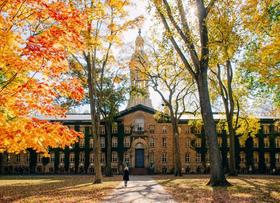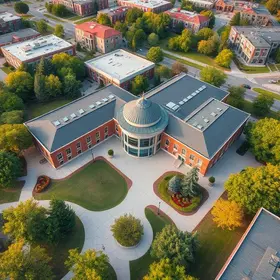
Students no longer need to attend a four-year university to obtain a bachelor's degree. More community colleges nationwide have "graduated" from issuing associate's to bachelor's degrees. Community college courses cost a mere fraction of public or private university options - which means that students who earn bachelor's degrees at their community college can save tens of thousands of dollars while pursuing their educational goals.
Unfortunately, not everyone in academia supports community colleges issuing bachelor's degrees. Critics are concerned that universities will experience a drop in student enrollment, which will ultimately lead to a loss of revenues. The debate is becoming increasingly heated, with educational leaders and community members divided on allowing community colleges to issue bachelor's degrees.
The Growing Fight for Four-Year Degrees
Community colleges in a dozen states nationwide have already gained the right to issue bachelor's degrees, and more campuses are looking for the same privileges.
For example, as News Day reveals, Michigan is fighting loudly against state restrictions that prevent community colleges from offering 4-year degrees. As Michigan's state representative John Walsh asserts, community colleges could offer improved job training opportunities for the future of Michigan's auto workers if local campuses could issue 4-year degrees. Subsequently, Walsh introduced a new bill that would permit community colleges to offer 4-year degrees in nursing, cement technology, and culinary arts. If the bill is approved, the large number of unemployed workers in the state could have opportunities to secure bachelor's degrees accessibly and affordably.
Could Community College Bachelor's Degrees Fend Off the Recession?
Political experts assert that granting residents access to 4-year degrees at affordable community colleges can help stimulate the economy and workforce. To illustrate the dramatic difference, the full-time tuition cost for Detroit-based Oakland Community College is just over $900 per semester. In contrast, nearby Oakland University costs over $4,000 per semester! This adds to a dramatic savings of over $6,000 annually per student.
Possibly leading the path for increased community college powers, President Obama spoke directly to Michigan residents during his July 14th visit to local Macomb Community College. Obama said, "The nation's economic future depends on building a skilled workforce." Specifically, Obama argued that the jobs needed in the future workforce will not be filled without accessible education and training (offered by community colleges). With this philosophy, granting 4-year degrees at the community college level could help build a stronger foundation for tomorrow's economy.
The Defensive Strike to Stop Community College Access
Many university leaders are harshly opposed to community schools offering 4-year degrees. In explicitly examining the conflicts arising in Michigan, 15 of the state's public universities oppose giving community colleges the right to issue bachelor's degrees.
According to university leaders, community colleges are attempting to overstep their boundaries and missions. They should only offer post-high school education and vocational training. It should solely be the university's mission to issue bachelor's degrees.
Michael Hansen, President of the Michigan Community College Association, reveals that university leaders "See it as an invasion of their turf... (however) We're not about taking fish out of their net. We're about growing the net."
Many university leaders are concerned that community colleges are threatening their student enrollment, which would lower their tuition revenues. Adding to the threat of competition, university leaders are also afraid of losing financial support from the state. In Michigan's case, university budgets have already experienced severe cuts. If community colleges are added to the pool of 4-year schools, leaders could face even more significant budget setbacks, with the funding for bachelor's degree institutions further divided.
While the debate heats up in Michigan, many states have already granted their community colleges the ability to issue bachelor's degrees. In Florida, Indiana, Georgia, Minnesota, Hawaii, New Mexico, Nevada, New York, Oklahoma, North Dakota, Vermont, Texas, Washington, and West Virginia, community college students can earn a bachelor's degree right on campus. California and Arizona are expected to follow suit shortly.
Questions? Contact us on Facebook. @communitycollegereview