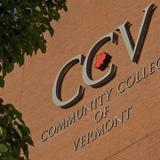
Vermont Technical College was a public technical college in Vermont. Its main residential campuses were located in Randolph Center and Williston. In addition, there were regional campuses distance sites, and nursing campuses in locations throughout the state.
School Highlights
Vermont State University serves 5,093 students (58% of students are full-time).
The college's student-teacher ratio of 19:1 is same as the state community college average of 19:1.
Minority enrollment is 19% of the student body (majority Hispanic and Black), which is less than the state average of 22%.
Quick Facts (26-27)
Enrollment: 5,093 students
In-state tuition: $12,860
Out-state tuition: $23,708
Acceptance Rate: 82%
Student-teacher ratio: 19:1
Minority enrollment: 19%
Source: Verified school update
School Overview
The teacher population of 272 teachers has stayed relatively flat over five years.
Vermont State University
(VT) Community College Avg.
Carnegie Classification
Specialized Institutions—Schools of engineering and technology
Associates Colleges
Institution Level
Four or more years
Four or more years
Institution Control
Public
Private not-for-profit
Total Faculty
272 staff
191 staff
School Motto
Freedom & Unity
Student Body
The student population of Vermont State University has grown by 235% over five years.
The student-teacher ratio of 19:1 has increased from 6:1 over five years.
The Vermont State University diversity score of 0.34 is less than the state average of 0.38. The school's diversity has grown by 64% over five years.
Total Enrollment
5,093 students
3,163 students
Student-Teacher Ratio
19:1
19:1
# Full-Time Students
2,950 students
2,052 students
# Part-Time Students
2,143 students
1,111 students
# Enrollment Undergraduate
4,108 students
2,778 students
# Full-Time Undergraduate Students
2,840 students
2,111 students
# Full-Time Graduate Students
110 students
73 students
# Part-Time Undergraduate Students
1,268 students
667 students
# Part-Time Graduate Students
875 students
444 students
% Asian
2%
2%
% Hispanic
4%
5%
% Black
3%
4%
% White
81%
78%
% Two or more races
3%
4%
% Non Resident races
2%
1%
% Unknown races
5%
6%
Diversity Score
0.34
0.38
College Completion Rate (Students who graduate in 4 years or more than 4 years)
0.5442%
n/a
Tuition & Financial Aid
The public in-state tuition of $12,860 is more than the state average of $6,570. The in-state tuition has declined by 20% over four years.
The public out-state tuition of $23,708 is more than the state average of $12,054. The out-state tuition has declined by 19% over four years.
In-State Tuition Fees
$12,860
$6,570
Out-State Tuition Fees
$23,708
$12,054
Tuition Notes
$10,704 for in-state undergraduates
% Students Receiving Some Financial Aid
80%
99%
Median Debt for Graduates
$13,000
$19,042
Median Debt for Dropouts
$9,500
$5,500
Acceptance Rate
82%
82%
SAT Total Avg.
1,375
1,434
SAT Reading
455
510
SAT Math
485
489
SAT Writing
435
435
ACT Total Avg.
62
61
ACT Composite
22
21
ACT English
19
19
ACT Math
21
21
Sports
Colors
Green and Gold
School Mascot
Spartans, Badgers, Hornets, And Knights
Source: 2025 (or latest year available) Integrated Postsecondary Education Data System (IPEDS) , School Administrators
Will your community college GPA follow you after transfer? Learn how university grades, transcripts, scholarships, graduate admissions, and academic standing may be affected by your previous college performance.
Could university requirements change before you transfer? Learn how catalog years, continuous enrollment, and degree rules affect your pathway, and what students should verify before choosing university courses.
Does your transfer agreement guarantee admission to your major? Discover what happens when universities accept transfer students but restrict entry to specific academic programs and degrees after admission.