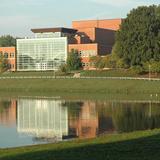
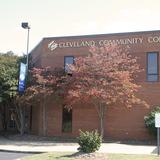
Spartanburg Technical College is a public, suburban, two-year comprehensive, open-admission institution of higher education serving the citizens of the upstate counties of Spartanburg, Cherokee and Union in South Carolina. The College advances economic development of the region through programs, services and partnerships that address emerging and continuing employment needs in a rapidly changing global environment. The College promotes lifelong learning and helps students reach their personal and professional goals.
School Highlights
Spartanburg Community College serves 6,653 students (35% of students are full-time).
The college's student-teacher ratio of 28:1 is lower than the state community college average of 29:1.
Minority enrollment is 45% of the student body (majority Black), which is less than the state average of 48%.
Quick Facts (26-27)
Enrollment: 6,653 students
In-state tuition: $4,896
Out-state tuition: $7,956
Student-teacher ratio: 28:1
Minority enrollment: 45%
Source: Integrated Postsecondary Education Data System (IPEDS)
Note: Data may not be displayed on any public-facing website or service that replicates or resembles a college search or review portal without prior written permission. See our Terms of Service.
The student population of Spartanburg Community College has grown by 61% over five years.
The student-teacher ratio of 28:1 has increased from 11:1 over five years.
The Spartanburg Community College diversity score of 0.62 is less than the state average of 0.63. The school's diversity has grown by 12% over five years.
Note: Data may not be displayed on any public-facing website or service that replicates or resembles a college search or review portal without prior written permission. See our Terms of Service.
Note: Data may not be displayed on any public-facing website or service that replicates or resembles a college search or review portal without prior written permission. See our Terms of Service.
Note: Data may not be displayed on any public-facing website or service that replicates or resembles a college search or review portal without prior written permission. See our Terms of Service.
Note: Data may not be displayed on any public-facing website or service that replicates or resembles a college search or review portal without prior written permission. See our Terms of Service.
Note: Data may not be displayed on any public-facing website or service that replicates or resembles a college search or review portal without prior written permission. See our Terms of Service.
Note: Data may not be displayed on any public-facing website or service that replicates or resembles a college search or review portal without prior written permission. See our Terms of Service.
Note: Data may not be displayed on any public-facing website or service that replicates or resembles a college search or review portal without prior written permission. See our Terms of Service.
Note: Data may not be displayed on any public-facing website or service that replicates or resembles a college search or review portal without prior written permission. See our Terms of Service.
Note: Data may not be displayed on any public-facing website or service that replicates or resembles a college search or review portal without prior written permission. See our Terms of Service.
Note: Data may not be displayed on any public-facing website or service that replicates or resembles a college search or review portal without prior written permission. See our Terms of Service.
Note: Data may not be displayed on any public-facing website or service that replicates or resembles a college search or review portal without prior written permission. See our Terms of Service.
College Completion Rate (Students who graduate in less than 4 years)
Note: Data may not be displayed on any public-facing website or service that replicates or resembles a college search or review portal without prior written permission. See our Terms of Service.
Note: Data may not be displayed on any public-facing website or service that replicates or resembles a college search or review portal without prior written permission. See our Terms of Service.
Tuition & Financial Aid
The public in-state tuition of $4,896 is less than the state average of $5,692. The in-state tuition has declined by 18% over four years.
The public out-state tuition of $7,956 is less than the state average of $10,568. The out-state tuition has declined by 18% over four years.
Note: Data may not be displayed on any public-facing website or service that replicates or resembles a college search or review portal without prior written permission. See our Terms of Service.
Note: Data may not be displayed on any public-facing website or service that replicates or resembles a college search or review portal without prior written permission. See our Terms of Service.
Note: Data may not be displayed on any public-facing website or service that replicates or resembles a college search or review portal without prior written permission. See our Terms of Service.
Note: Data may not be displayed on any public-facing website or service that replicates or resembles a college search or review portal without prior written permission. See our Terms of Service.
Note: Data may not be displayed on any public-facing website or service that replicates or resembles a college search or review portal without prior written permission. See our Terms of Service.
Source: 2025 (or latest year available) Integrated Postsecondary Education Data System (IPEDS) , School Administrators
School Notes
Spartanburg Technical College has been a leading provider of
technical higher education in beautiful upstate South Carolina
since the mid 1960s. We now offer over 60 programs of study. Being
your community college is a privilege. In order for you to compete
in today's work force, we want to provide you with education you
need and want at an affordable cost. Whether it's an associate's
degree in a technical field, the first two years of a bachelor's
degree through our University Transfer Program, a certification
course for employment, or a continuing education class for personal
enrichment, we strive to meet your lifelong learning goals.
Academic Programs offered by Spartanburg Technical College includes
Transitional Studies, Dental Assisting, Radiation Therapy,
University Transfer, Early Childhood Radiography, Horticulture,
Math Department, Respiratory Care, Computer Technology, Health Unit
Coordinating, Surgical Technology, Accounting, Pharmacy Technician,
Pre-Occupational Therapy Assistant (Phase I), Culinary Arts,
Interpreting, Commercial Graphics, Automotive Technology,
Industrial Electronics, Machine Tool, Management, Therapeutic
Massage, Civil Engineering Technology, Electronics Engineering
Technology, Medical Laboratory Technology, Mechanical Engineering
Technology, Medical Assisting, Social Sciences, Welding, HVAC,
Science Department, Humanities, Arts and Language Department,
Office Systems, General Engineering Technology, Associate Degree in
Nursing, Engineering Graphics Technology, Phlebotomy Technician and
Pre-Physical Therapy Assistant (Phase I). This is a partial listing
of Academic Programs offered by Spartanburg Technical College. Each
year over 15,000 citizens utilize our services for credit and
non-credit classes. Through today's technology, we offer a variety
of course delivery: everything from traditional classroom settings
on our main campus, technical instruction at your work place, or
virtual instruction using the Internet.
Frequently Asked Questions
How much does Spartanburg Community College cost?
Spartanburg Community College's tuition is approximately $4,896 for In-State students and $7,956 for Out-State students.
Learn how to test whether a two-year community college degree can actually be completed in four semesters by checking prerequisites, course rotations, availability, sequencing, and hidden scheduling barriers.
Learn how to determine whether community college acceptance includes admission to your intended major, and evaluate selective programs, prerequisites, seat limits, deadlines, waitlists, and backup options before enrolling.
Build a realistic first-semester stress test before registration by checking course load, work hours, commuting, finances, family duties, study time, and support systems before your schedule becomes unmanageable later.
Quick Facts (26-27)
Enrollment: 6,653 students
In-state tuition: $4,896
Out-state tuition: $7,956
Student-teacher ratio: 28:1
Minority enrollment: 45%
Source: Integrated Postsecondary Education Data System (IPEDS)