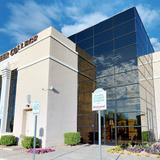
Le Cordon Bleu College of Culinary Arts in Las Vegas was established in January 2003 to bring a renowned culinary curriculum to a city with a booming culinary and hospitality industry. Our culinary programs are designed to help students pursue their passions and prepare them for these professional opportunities. Each student at our Las Vegas college receives a comprehensive, challenging education in classic culinary techniques combined with modern innovations and the latest in global cuisine. They learn through demonstration by chef instructors followed by hands-on, practical application. Curriculum includes important theoretical concepts and industry-relevant general education courses. Students also benefit from smaller class size in a creative, supportive community. Cooking in Las Vegas, a culinary hub, provides our students a variety of unique experiences while studying in this exciting city.
School Highlights
Le Cordon Bleu College of Culinary Arts-Las Vegas serves 587 students (100% of students are full-time).
The college's student-teacher ratio of 37:1 is higher than the state community college average of 31:1.
Minority enrollment is 65% of the student body (majority Black), which is less than the state average of 66%.
Quick Facts (26-27)
Enrollment: 587 students
Private-state tuition: $13,447
Student-teacher ratio: 37:1
Minority enrollment: 65%
Source: Integrated Postsecondary Education Data System (IPEDS)
School Overview
The teacher population of 16 teachers has stayed relatively flat over five years.
Le Cordon Bleu College of Culinary Arts-Las Vegas
(NV) Community College Avg.
Carnegie Classification
Item not available
Associate's Colleges: High Career & Technical-Mixed Traditional/Nontraditional
Institution Level
At least 2 but less than 4 years
At least 2 but less than 4 years
Institution Control
Private, for profit
Private for-profit
Year Founded
1895
Total Faculty
16 staff
32 staff
Student Body
The student population of Le Cordon Bleu College of Culinary Arts-Las Vegas has stayed relatively flat over five years.
The student-teacher ratio of 37:1 has stayed the same over five years.
The Le Cordon Bleu College of Culinary Arts-Las Vegas diversity score of 0.75 is more than the state average of 0.74. The school's diversity has declined by 9% over five years.
Note: Data may not be displayed on any public-facing website or service that replicates or resembles a college search or review portal without prior written permission. See our Terms of Service.
Note: Data may not be displayed on any public-facing website or service that replicates or resembles a college search or review portal without prior written permission. See our Terms of Service.
Note: Data may not be displayed on any public-facing website or service that replicates or resembles a college search or review portal without prior written permission. See our Terms of Service.
Note: Data may not be displayed on any public-facing website or service that replicates or resembles a college search or review portal without prior written permission. See our Terms of Service.
Note: Data may not be displayed on any public-facing website or service that replicates or resembles a college search or review portal without prior written permission. See our Terms of Service.
Note: Data may not be displayed on any public-facing website or service that replicates or resembles a college search or review portal without prior written permission. See our Terms of Service.
Note: Data may not be displayed on any public-facing website or service that replicates or resembles a college search or review portal without prior written permission. See our Terms of Service.
Note: Data may not be displayed on any public-facing website or service that replicates or resembles a college search or review portal without prior written permission. See our Terms of Service.
Note: Data may not be displayed on any public-facing website or service that replicates or resembles a college search or review portal without prior written permission. See our Terms of Service.
Note: Data may not be displayed on any public-facing website or service that replicates or resembles a college search or review portal without prior written permission. See our Terms of Service.
Note: Data may not be displayed on any public-facing website or service that replicates or resembles a college search or review portal without prior written permission. See our Terms of Service.
Median Earnings 10 Years After Entry (measured in 2014-2015, in 2017 dollars)
Points are in the dollars of their own College Scorecard release, and the colleges behind the state line differ by period. The lines do not show inflation-adjusted growth.
Median Earnings 10 Years After Entry Trends (2012-2013)
Note: Data may not be displayed on any public-facing website or service that replicates or resembles a college search or review portal without prior written permission. See our Terms of Service.
Tuition & Financial Aid
The private state tuition of $13,447 is less than the state average of $14,315. The private state tuition has stayed relatively flat over four years.
Note: Data may not be displayed on any public-facing website or service that replicates or resembles a college search or review portal without prior written permission. See our Terms of Service.
Note: Data may not be displayed on any public-facing website or service that replicates or resembles a college search or review portal without prior written permission. See our Terms of Service.
Note: Data may not be displayed on any public-facing website or service that replicates or resembles a college search or review portal without prior written permission. See our Terms of Service.
Source: 2025 (or latest year available) Integrated Postsecondary Education Data System (IPEDS)
Already have a bachelor's degree? Learn how to evaluate whether a community college certificate will improve your career prospects, skills, and earning potential.
Discover whether Workforce Pell Grants can fully cover short community college certificates, how awards are calculated, and which expenses students may still need to pay.
Learn what happens when community college financial aid arrives after classes begin, including tuition holds, enrollment risks, textbook expenses, refund timelines, and steps to protect your education.
Quick Facts (26-27)
Enrollment: 587 students
Private-state tuition: $13,447
Student-teacher ratio: 37:1
Minority enrollment: 65%
Source: Integrated Postsecondary Education Data System (IPEDS)