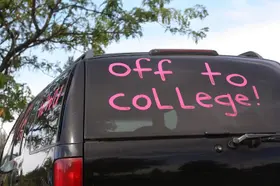
Education is one of the essential components to breaking the poverty cycle, according to studies. However, college completion rates for students from low-income households continue to be some of the most dismal rates nationwide. According to Spotlight on Poverty, just 34 percent of students from the lowest income bracket will even enroll in higher education. Of that number, only 11 percent will graduate with some degree. Clearly, this is not the pathway to the American Dream that our country’s leaders have envisioned.
If college completion rates are critical to raising families out of poverty in the U.S., something must be done to ensure more students from poor families are able to finish their education. This is the goal of a new three-year initiative from the Center for Law and Social Policy (CLASP) and the American Association of Community Colleges, in cooperation with the Open Society Foundations and the Ford, Lumina, Annie E. Casey, and Kresge Foundations. The Foundation Center reports that the Benefits Access for College Completion initiative is up and ready to roll at seven community colleges across the country.
About the Benefits Access for College Completion Initiative
The Benefits Access for College Completion initiative is the latest coordination to improve college completion rates by targeting low-income students. According to the website for CLASP, this initiative is designed to point low-income students to the services that will provide the financial support they need to make it through their college years. The initiative will help colleges create sustainable programs and policies to support those students by steering them toward the public programs that offer that financial support.
The goal of the initiative through 2014 is to determine whether participation in these public programs will help students remain in school until they earn their degrees. The program was created in response to a growing number of low-income college students who reported dropping out of school to meet their financial obligations and support their families. By providing that support while students are in school through programs they may already qualify for, the hope is that the initiative will close the financial gap that presents significant obstacles to completion for some college students.
This video from PBS reports on initiatives to help low-income students at community college.
Participating Schools
Benefits Access for College Completion involves a $4.84 million grant that will be shared among the seven community colleges chosen to implement the initial stage of the program. Those seven colleges are listed in the Community College Times and include:
- Gateway Community and Technical College (Kentucky)
- Skyline College (California)
- Northampton Community College (Pennsylvania)
- Cuyahoga Community College (Ohio)
- LaGuardia Community College (New York)
- Macomb Community College (Michigan)
- Lake Michigan Community College (Michigan)
The initiative was launched at the beginning of the current school year and will run through 2014. At the end of the implementation period, those involved with the initiative will share successful strategies with other schools and policymakers.
“We applaud these schools for taking an informed and proactive look at how they can help those students most in need of financial and public support to pursue their college and career goals while dealing with work and family pressures,” Walter Bumphus, president of the American Association of Community Colleges, told the Community College Times. “These benefits, including health insurance, food and child care, as well as financial aid, can help them to complete credentials and get into well-paying jobs.”
Details of the Initiative
The initiative encompasses a number of steps for implementation, which include:
- Colleges forming partnerships with state and local agencies that provide financial services
- Creating information for students that explains the various financial assistance programs available in the community
- Developing centers on the college campus that will direct students to the financial assistance they need
- Educating faculty and staff to assistance programs available to increase awareness of students
- Finding ways to fund staff members on campus who will be able to screen students for some financial benefits available
- Informing students of support available through regular meetings with college advisors and financial aid counselors
“In today’s economy, it’s more important than ever that students have the supports to earn a higher education so that they can land better jobs and support their families,” Evelyn Ganzglass, director of workforce development for CLASP, told Foundation Center. “Rising college costs mean an education is increasingly out of reach for millions. By combining traditional student financial aid with public supports, students are better positioned to get by and complete their education. And when more students earn credentials, more employers have the skilled workers they need, and the labor market is able to stay competitive.”
This video offers a look at the low-income student initiative at Tidewater Community College.
At the end of the three-year period, participating schools will be evaluated to see if completion rates among low-income students improve. The assessment will also examine whether students can graduate faster and earn high-paying jobs after graduation.
Lehigh Valley Live reports that the average community college student attending school full-time during the previous school year had around $6,000 in unmet needs throughout the academic year. Around two-thirds of community college students had to work more than 20 hours a week to support themselves while they were going to school. More than half had to opt for part-time schooling so they could work at the same time.
These factors have played a significant role in poor completion rates for low-income college students in the past. This initiative hopes that by removing some of these significant financial obstacles, more students will be able to complete their college education and finally break the cycle of poverty once and for all.
Questions? Contact us on Facebook. @communitycollegereview