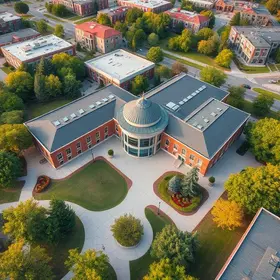
Riverside City College

4800 Magnolia Avenue
Riverside, CA 92506
Top-Ranked (2026-27): View Rankings
  • RCC has been the community's college of choice for nearly nine decades. The College offers 100+ programs leading to an associate's degree, career certificate or transfer to a four-year college or university. Each semester, more that 30,000 students take classes online or at one of RCC's campuses or education centers.

School Highlights

Riverside City College serves 21,730 students (26% of students are full-time).
The college's student-teacher ratio of 48:1 is higher than the state community college average of 44:1.
Minority enrollment is 87% of the student body (majority Hispanic), which is more than the state average of 77%.

Quick Facts (26-27)

  • Enrollment: 21,730 students
  • In-state tuition: $1,426
  • Out-state tuition: $7,366
  • Student-teacher ratio: 48:1
  • Minority enrollment: 87%
  • Source: Integrated Postsecondary Education Data System (IPEDS)

Top Rankings

Riverside City College ranks among the top 20% of public schools in California for:

Category
Attribute
Community Size

School Overview

The teacher population of 449 teachers has declined by 40% over five years.
Riverside City College
(CA) Community College Avg.
Carnegie Classification
Associate's Colleges
Associate's Colleges: High Transfer-Mixed Traditional/Nontraditional
Institution Level
At least 2 but less than 4 years
Institution Control
Public
Public
Year Founded
1916
Campus Size
108 acres
Total Faculty
449 staff
72 staff
School Calendar

Student Body

The student population of Riverside City College has grown by 8% over five years.
The student-teacher ratio of 48:1 has increased from 28:1 over five years.
The Riverside City College diversity score of 0.52 is less than the state average of 0.71. The school's diversity has declined by 9% over five years.
Total Enrollment
21,730 students
6,838 students

Showing 2012–2025. Full 19-year historical data available below ↓

Student-Teacher Ratio
48:1
44:1
# Full-Time Students
5,755 students
1,022 students

Showing 2012–2025. Full 19-year historical data available below ↓

# Part-Time Students
15,975 students
5,816 students

Showing 2012–2025. Full 19-year historical data available below ↓

# Enrollment Undergraduate
21,730 students
2,055 students
# Full-Time Undergraduate Students
5,755 students
967 students

Showing 2013–2025. Full 19-year historical data available below ↓

# Part-Time Undergraduate Students
15,975 students
5,850 students
% Asian
6%
12%

Showing 2008–2025. Full 19-year historical data available below ↓

% Hispanic
67%
46%

Showing 2008–2025. Full 19-year historical data available below ↓

% Black
8%
7%

Showing 2008–2025. Full 19-year historical data available below ↓

% White
13%
23%

Showing 2010–2025. Full 19-year historical data available below ↓

% Two or more races
4%
5%
% Unknown races
1%
6%
Diversity Score
0.52
0.71

Showing 2011–2025. Full 19-year historical data available below ↓

College Completion Rate (Students who graduate in less than 4 years)
33%
42%

Showing 2015–2025. Full 19-year historical data available below ↓

Average Graduate Earnings (10 Years)
$34,700
$34,300

Tuition & Financial Aid

The public in-state tuition of $1,426 is more than the state average of $1,238. The in-state tuition has stayed relatively flat over four years.
The public out-state tuition of $7,366 is more than the state average of $6,634. The out-state tuition has declined by 27% over four years.
In-State Tuition Fees
$1,426
$1,238
Out-State Tuition Fees
$7,366
$6,634
Tuition Notes
$1,380 per year
% Students Receiving Some Financial Aid
79%
85%

Showing 2012–2025. Full 19-year historical data available below ↓

Median Debt for Graduates
$8,000
$10,500

Showing 2008–2020. Full 14-year historical data available below ↓

Median Debt for Dropouts
$4,750
$6,272

Showing 2008–2020. Full 14-year historical data available below ↓

Source: 2025 (or latest year available) Integrated Postsecondary Education Data System (IPEDS) , School Administrators

School Notes

  • Riverside Community College has always been this community's college. One of the oldest two-year colleges in California. RCC traces its heritage back to 1916, to a time when Poly High School sat on what is now the Riverside City Campus. Located in the City of Riverside, the campus opened in 1916 on the site of the former Poly High School and today serves more than 19,000 students each semester. Students attending the City Campus can choose to earn an associate's degree, transfer to a four-year college or university or earn a career certificate that prepares them to enter the workforce. Thanks to strong programs in liberal arts and science, athletics, and performing arts, and home to the School for Nursing, RCC is one of California's leading community colleges and is a landmark in downtown Riverside. It is also home to the RCC Chancellor's Office and the Board of Trustees. Just as the Riverside City Campus is a focal point for education, athletic and performing arts activities, we believe that the RCC Alumni House will become a focal point for special alumni, college and community events. Reflected within the house are the heritage of Riverside, the Wood Streets, and RCC. Riverside Community College is a California public community college, fully accredited by the Western Association of Schools and Colleges.

Frequently Asked Questions

How much does Riverside City College cost?
Riverside City College's tuition is approximately $1,426 for In-State students and $7,366 for Out-State students.
What is Riverside City College's ranking?
Riverside City College ranks among the top 20% of community college in California for: Largest student body and Least debt for graduating students.
In what neighborhood is Riverside City College located?
Riverside City College is located in the Wood Streets neighborhood of Riverside, CA.

Recent Articles

Required Course Full? Avoid Community College Degree Delays
Learn how a full required course can delay graduation, how to navigate waitlists, and how to find approved alternatives that protect your community college degree timeline and financial aid eligibility.
Catalog-Year Rules: Community College Graduation Requirements
Understand how catalog years determine community college graduation requirements, how enrollment breaks and major changes affect eligibility, and what to verify before choosing courses or switching to a newer catalog.
What If Your Community College Program Closes?
Learn what happens when your community college discontinues your program before graduation, including teach-out options, credit transfers, financial aid implications, student protections, and practical steps to finish your degree successfully.

Quick Facts (26-27)

  • Enrollment: 21,730 students
  • In-state tuition: $1,426
  • Out-state tuition: $7,366
  • Student-teacher ratio: 48:1
  • Minority enrollment: 87%
  • Source: Integrated Postsecondary Education Data System (IPEDS)

Related School Videos

Did You Know?

Riverside County, CA community colleges have a diversity score of 0.56, which is lower than the national average of 0.74. The most diverse community college in Riverside County, CA is Young Americans College of the Performing Arts. Read more about community college diversity statistics in the USA.

Quick Links