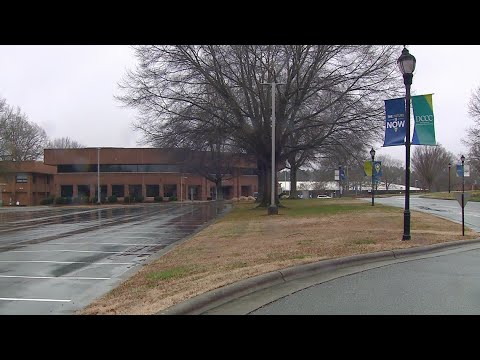
- Davidson County Community College provides quality educational programs and services to prepare people for enhanced employment and educational opportunities.
School Highlights
Davidson-Davie Community College serves 4,305 students (37% of students are full-time).
The college's student-teacher ratio of 24:1 is higher than the state community college average of 21:1.
Minority enrollment is 36% of the student body (majority Black and Hispanic), which is less than the state average of 50%.
Quick Facts (26-27)
- Enrollment: 4,305 students
- In-state tuition: $2,438
- Out-state tuition: $8,582
- Student-teacher ratio: 24:1
- Minority enrollment: 36%
- Source: Integrated Postsecondary Education Data System (IPEDS)
School Overview
The teacher population of 176 teachers has declined by 55% over five years.
Davidson-Davie Community College
(NC) Community College Avg.
Carnegie Classification
Associate's Colleges
Associate's Colleges
Institution Level
At least 2 but less than 4 years
At least 2 but less than 4 years
Institution Control
Public
Public
Year Founded
1963
Campus Size
97 acres
Total Faculty
176 staff
129 staff
School Calendar
School Motto
Your Future is Here!
Student Body
The student population of Davidson-Davie Community College has grown by 14% over five years.
The student-teacher ratio of 24:1 has increased from 9:1 over five years.
The Davidson-Davie Community College diversity score of 0.55 is less than the state average of 0.68. The school's diversity has grown by 26% over five years.
Total Enrollment
4,305 students
2,143 students
Showing 2012–2025. Full 19-year historical data available below ↓
Student-Teacher Ratio
24:1
21:1
# Full-Time Students
1,613 students
650 students
Showing 2012–2025. Full 19-year historical data available below ↓
# Part-Time Students
2,692 students
1,493 students
Showing 2012–2025. Full 19-year historical data available below ↓
# Enrollment Undergraduate
4,305 students
1,887 students
# Full-Time Undergraduate Students
1,613 students
650 students
Showing 2013–2025. Full 19-year historical data available below ↓
# Part-Time Undergraduate Students
2,692 students
1,522 students
% Asian
2%
3%
Showing 2008–2025. Full 19-year historical data available below ↓
% Hispanic
12%
14%
Showing 2010–2025. Full 19-year historical data available below ↓
% Black
14%
22%
Showing 2008–2025. Full 19-year historical data available below ↓
% White
64%
50%
Showing 2010–2025. Full 19-year historical data available below ↓
% Two or more races
4%
3%
% Non Resident races
1%
1%
% Unknown races
3%
6%
Diversity Score
0.55
0.68
Showing 2011–2025. Full 19-year historical data available below ↓
College Completion Rate (Students who graduate in less than 4 years)
36%
37%
Showing 2015–2025. Full 19-year historical data available below ↓
Average Graduate Earnings (10 Years)
$28,000
$27,500
Tuition & Financial Aid
The public in-state tuition of $2,438 is less than the state average of $3,915. The in-state tuition has grown by 23% over four years.
The public out-state tuition of $8,582 is less than the state average of $9,508. The out-state tuition has grown by 30% over four years.
In-State Tuition Fees
$2,438
$3,915
Out-State Tuition Fees
$8,582
$9,508
Tuition Notes
$4,288.00 for 16 or more credit hours for Non-Residential/Out-of-state Tuition.
% Students Receiving Some Financial Aid
76%
79%
Showing 2013–2025. Full 19-year historical data available below ↓
Median Debt for Graduates
$11,548
$11,865
Median Debt for Dropouts
$9,250
$5,846
Source: 2025 (or latest year available) Integrated Postsecondary Education Data System (IPEDS) , School Administrators
School Notes
- Davidson County Community College was chartered in 1958 as an Industrial Education Center designed to provide adults the education and skills needed to move from an agricultural to a manufacturing-based economy. In 1965, the institution was chartered as Davidson County Community College. The Associate in Arts and Associate in Science were added to the existing Associate in Applied Science, Diploma, and Certificate offerings. College transfer courses were added in 1966. Since then, the Davidson Campus has grown to 11 buildings and two emergency services training facilities on approximately 97 acres. Today, DCCC serves approximately 16,000 students each year on the Davidson and Davie campuses and its two satellite centers. With over 50 curriculum programs, the campus continues to grow and expand its educational programs and services. DCCC began offering classes at the Uptown Lexington Education Center May 2004 in a building leased from BB&T at 20 East First Street. Offering curriculum, continuing education, and GED classes, the satellite center is popular with students who enjoy the environment in a smaller class setting and the convenience of the location. The center was made possible by community partners including BB&T, City of Lexington, Davidson Vision, DCCC, Friends of the Project, Lexcom, and Uptown Lexington, Inc. Davidson County Community College provides a variety of curriculum programs that lead to associate degrees, diplomas, or certificates. Some programs are offered during the evening as well as during the day. Diploma programs can generally be completed in three semesters on a full-time basis. Certificate programs may be completed in one or two semesters on a full-time or part-time basis. Both are designed to prepare students for employment, and courses earned often count toward a higher credential. Programs are offered in Applied Technology, Arts & Sciences, Health Technology and Public Service Technology. We provide quality instructional programs and services and wide variety of extracurricular activitiesin a close-knit, nurturing, family environment. Graduates gain new skills while earning a diploma, certificate, or degree and establish a firm foundation for future educational pursuits. Those who transfer to four-year colleges or universities are well prepared for the next step of their journey.
Frequently Asked Questions
How much does Davidson-Davie Community College cost?
Davidson-Davie Community College's tuition is approximately $2,438 for In-State students and $8,582 for Out-State students.
What schools are Davidson-Davie Community College often compared to?
Davidson-Davie Community Collegeis often viewed alongside schools like Forsyth Technical Community College by visitors of our site.
Nearby Schools
The nearest community college to Davidson-Davie Community College is Guilford Technical Community College (12.5 miles away)
School
Location
Miles
Quick Facts
601 E. Main Street
Jamestown, NC 27282
(336) 334-4822
Jamestown, NC 27282
(336) 334-4822
12.5 miles
Enrollment: 11,485 students Student-teacher ratio: 25:1 In-state tuition: $2,489 Out-state tuition: $8,633 Minority enrollment: 64%
2100 Silas Creek Pky
Winston-Salem, NC 27103
(336) 723-0371
Winston-Salem, NC 27103
(336) 723-0371
16.3 miles
Enrollment: 9,099 students Student-teacher ratio: 19:1 In-state tuition: $2,056 Out-state tuition: $6,688 Minority enrollment: 58%
Randolph Community College
Public
629 Industrial Park Ave
Asheboro, NC 27205
(336) 633-0200
Asheboro, NC 27205
(336) 633-0200
20.6 miles
Enrollment: 2,814 students Student-teacher ratio: 17:1 Acceptance rate: 40% In-state tuition: $1,816 Out-state tuition: $6,424 Minority enrollment: 37%
1333 Jake Alexander Blvd, South
Salisbury, NC 28146
(704) 216-7222
Salisbury, NC 28146
(704) 216-7222
27.6 miles
Enrollment: 7,028 students Student-teacher ratio: 20:1 In-state tuition: $3,860 Out-state tuition: $9,748 Minority enrollment: 49%
Montgomery Community College
Public
1011 Page St
Troy, NC 27371
(910) 898-9600
Troy, NC 27371
(910) 898-9600
37.6 miles
Enrollment: 1,184 students Student-teacher ratio: 17:1 In-state tuition: $2,409 Out-state tuition: $8,553 Minority enrollment: 52%
Recent Articles

Required Course Full? Avoid Community College Degree Delays
Learn how a full required course can delay graduation, how to navigate waitlists, and how to find approved alternatives that protect your community college degree timeline and financial aid eligibility.

Catalog-Year Rules: Community College Graduation Requirements
Understand how catalog years determine community college graduation requirements, how enrollment breaks and major changes affect eligibility, and what to verify before choosing courses or switching to a newer catalog.
What If Your Community College Program Closes?
Learn what happens when your community college discontinues your program before graduation, including teach-out options, credit transfers, financial aid implications, student protections, and practical steps to finish your degree successfully.