
Updated
|
The Attack on Repeating Classes: Heed these Warnings
If you are considering repeating community college courses, think again. Community colleges are starting to put limitations on repeated courses, and these classes could impact your financial aid as well.

Community colleges have always been safe havens where struggling students can bring themselves up to academic par before transferring to a four-year university. In some cases, this might mean repeating a course a number of times before getting the required grade to advance to the next level. However, budget constrictions are impacting repeat classes for students across the country, with some left wondering how they will complete their community college program. We will take a look at both sides of this issue to find out how institutions are struggling to balance their commitment to student achievement with their bottom line.

This video explains what to do when you fail a class.

California

Setting Limits

California is one of the first to look into setting limits on repeat courses at community colleges across the state. According to a report at Inside Higher Ed, the California Community Colleges Chancellor's Office is looking into the feasibility of limiting the number of times students can repeat courses within their college system. Currently, a small number of California community college students may repeat a class as many as five times or more during their college career.

A spokesman for the chancellor's office, Terri Carbaugh, told Inside Higher Ed that the office was looking into the feasibility of a regulation limiting the number of times students can retake courses to save taxpayer dollars. The office would like

. . .read more

Careers: Firefighting Training

Updated
|
Careers: Firefighting Training
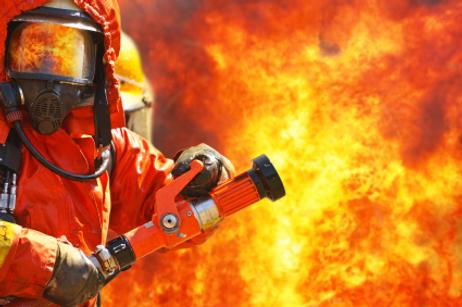
Today's community colleges are playing a critical role in firefighting training, even for those who have not yet been hired by their local fire department.

Firefighting has traditionally been a career that trains applicants on the job, once they pass basic physical and mental testing. However, as the career field becomes more competitive, more and more fire departments are looking for applicants with some sort of post-secondary training – even an associate's degree in fire science. Community colleges are quickly rising to answer the call, providing state-of-the-art training facilities to prepare new firefighters for the rigors and diversity of the job.

About the Firefighting Profession

According to the U.S. Bureau of Labor Statistics, the job of a firefighter involves hazardous conditions and long, irregular hours. Despite the demands of the job, this industry is expected to see keen competition for available jobs, since many qualified applicants are interested in becoming firefighters. In addition to rigorous training which applicants must undergo, physical and medical exams must also be passed to ensure applicants are healthy enough for the job. Ongoing training is a must in this industry, as new firefighting and first aid techniques are developed all the time.

Because many senior firefighters are nearing retirement age, younger workers are being asked to take on leadership roles within many departments. To prepare these new firefighters for their positions, departments are teaming up with some community colleges across the country to provide the highest quality of training possible. We have examples of just a few of these programs going on around the nation.

Mesa Offers Virtual Emergency Training

An article in the

. . .read more

Wiser and Older: The Movement to Enroll Community College Students Over the Age of 50

Updated
|
Wiser and Older: The Movement to Enroll Community College Students Over the Age of 50
Who says college is just for the 18 - 22 year old crowd? In fact, more community colleges are recruiting students over the age of 50 - and for good reason!

The current economic conditions of this country have resulted in more adults working well into their retirement years. Unfortunately, not every individual in this demographic is properly prepared to find success in a career in the later years of life. To help this sector of our population become more marketable and to utilize the resources of our older population to the fullest, the Plus 50 Initiative was developed. This initiative is designed to help Americans over the age of 50 train for new careers and piggyback on skills they already have to make them even more attractive in today's marketplace.

Purpose of the Plus 50 Program

The Plus 50 Initiative was started by the American Association of Community Colleges (AACC) to help adults in this age bracket find the best community college programs for their needs. The initiative, according to the website, provides benchmarks and showcases programs around the country that specifically cater to the over-50 learner. These campus programs are used for everything from preparing seniors for volunteer opportunities to offering training and retraining in specific career industries.

The initiative began in response to the realization that more than 78 million baby boomers are creeping into retirement age. Of that number, a large majority plan to work into their retirement years – either on a full-time or part-time basis. A significant number admit they do not feel ready for retirement from an

. . .read more

Healthcare Careers: Optician

Updated
|
Healthcare Careers: Optician
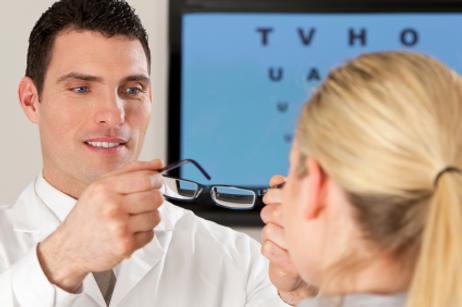
From learning to interpret prescriptions accurately to understanding the latest trends in eyewear fashion, community college optician training equips students with the expertise needed to excel in the optical industry. Whether you are a recent high school graduate or a career changer looking for a fulfilling and rewarding profession, these programs offer a clear path to success.

In the hunt for jobs that can survive in any economic climate, vision care has slowly but surely come to the forefront. Adults of all ages are discovering that careers as dispensing optician offer job stability and a decent salary after just a few short years of training. Whether you are just starting out after high school or looking for a job change after years in the workforce, we have the facts to help you decide whether a career in optician is the right choice for you.

What is Opticianry?

Once a patient receives a prescription for glasses or contacts from an optician or ophthalmologist, the dispensing optician is responsible for creating the eyewear for the patient's specific needs. This professional uses a host of diagnostic equipment to measure the cornea's thickness, width, and curvature to fit contact lenses precisely to the patient. In some cases, the dispensing optician will be responsible for cutting the lenses and placing them into the frames, and adding tinting or protective coating to the lenses themselves.

Once the eyewear is complete, the dispensing optician meets with the patient once again to ensure the glasses fit properly and make adjustments as needed. These employees might also help clients who need repairs to their glasses or educate them about appropriate care of their eyewear. Some also perform administrative duties, such as maintaining a database of customer prescriptions and tracking inventory and sales.

This video explains optician training.

. . .read more

Cursing in the Classroom: Professor Ousted for Swearing

Updated
|
Cursing in the Classroom: Professor Ousted for Swearing
In a Hawaii community college philosophy course, a professor used profanity to get students' attention and inspire independent thought, but the efforts may have backfired.

Philosophy courses are designed to make students think, challenge their beliefs and help them arrive at theories and dogmas that will support them throughout life. One professor in Hawaii uses a rather colorful means of jumpstarting the process in his philosophy courses at Hawaii Community College. He throws a few expletives into his first few lectures to get students to sit up and take notice – and think for themselves. However, his out-of-the-box teaching style may have lost him his job.

About the Professor

According to a report at Inside Higher Ed, Daniel Petersen has been teaching philosophy courses at Hawaii Community College and the University of Hawaii at Hilo for 21 years. He begins his classes with the phrase, "Shit happens," to introduce the idea of free will and determinism. Petersen says his approach grabs the student's attention in the first few moments of the class and tunes them into the subject matter so they engage more readily.

"I do what I do to wake students up," Petersen told the Star-Advertiser. "It makes them stand up and take notice. I know many of them are very religious. It makes them sit up and think a bit. But I've never sworn at a student." Petersen emphasizes that he has never directed his profanity directly at a student but has used a smattering of four-letter words in the context of his lectures for this precise purpose.

This video offers some ethical standards in

. . .read more

Recent Articles

How to Judge Community College AI Skills Training
Learn how to evaluate whether community college AI training delivers skills employers recognize by checking curriculum, projects, credentials, faculty, partnerships, job postings, assessments, and graduate outcomes before enrolling.
International or Undocumented Student? Check 5 Policies
International and undocumented community college applicants face different rules. Before applying, verify admission eligibility, tuition classification, financial aid, employment restrictions, and transfer requirements to avoid costly surprises later on campus.
Should You Accept Your Math Placement or Challenge It?
Learn when to accept your community college math placement, when to challenge it, and how transcripts, test scores, major requirements, and academic readiness can guide your decision confidently.