Garden City Community College

801 Campus Dr
Garden City, KS 67846
Top-Ranked (2026-27): View Rankings
  • Garden City Community College exists to produce positive contributors to the economic and social well-being of society.

School Highlights

Garden City Community College serves 2,079 students (55% of students are full-time).
The college's student-teacher ratio of 22:1 is lower than the state community college average of 28:1.
Minority enrollment is 67% of the student body (majority Hispanic), which is more than the state average of 41%.

Quick Facts (26-27)

  • Enrollment: 2,079 students
  • In-state tuition: $2,720
  • Out-state tuition: $3,328
  • Student-teacher ratio: 22:1
  • Minority enrollment: 67%
  • Source: Integrated Postsecondary Education Data System (IPEDS)

Top Rankings

Garden City Community College ranks among the top 20% of public schools in Kansas for:

Category
Attribute
Affordability

School Overview

The teacher population of 96 teachers has declined by 62% over five years.
Garden City Community College
(KS) Community College Avg.
Carnegie Classification
Associate's Colleges
Institution Level
At least 2 but less than 4 years
Institution Control
Public
Public
Year Founded
1919
Campus Size
63 acres
Total Faculty
96 staff
50 staff
School Calendar

Student Body

The student population of Garden City Community College has grown by 11% over five years.
The student-teacher ratio of 22:1 has increased from 7:1 over five years.
The Garden City Community College diversity score of 0.65 is more than the state average of 0.61. The school's diversity has stayed relatively flat over five years.
Total Enrollment
2,079 students
1,446 students

Showing 2012–2025. Full 19-year historical data available below ↓

Student-Teacher Ratio
22:1
28:1
# Full-Time Students
1,140 students
531 students

Showing 2013–2025. Full 19-year historical data available below ↓

# Part-Time Students
939 students
915 students

Showing 2012–2025. Full 19-year historical data available below ↓

# Enrollment Undergraduate
2,079 students
1,376 students
# Full-Time Undergraduate Students
1,140 students
529 students

Showing 2013–2025. Full 19-year historical data available below ↓

# Part-Time Undergraduate Students
939 students
915 students
Total Dormitory Capacity
540 students
365 students

Showing 2010–2025. Full 19-year historical data available below ↓

% American Indian/Alaskan
1%
1%

Showing 2010–2025. Full 19-year historical data available below ↓

% Asian
2%
3%

Showing 2008–2025. Full 19-year historical data available below ↓

% Hispanic
48%
16%

Showing 2008–2025. Full 19-year historical data available below ↓

% Black
8%
9%

Showing 2010–2025. Full 19-year historical data available below ↓

% White
33%
59%

Showing 2010–2025. Full 19-year historical data available below ↓

% Two or more races
3%
4%
% Non Resident races
3%
2%
% Unknown races
2%
6%
Diversity Score
0.65
0.61

Showing 2011–2025. Full 19-year historical data available below ↓

College Completion Rate (Students who graduate in less than 4 years)
42%
42%

Showing 2015–2025. Full 19-year historical data available below ↓

Average Graduate Earnings (10 Years)
$35,500
$34,000

Tuition & Financial Aid

The public in-state tuition of $2,720 is less than the state average of $3,402. The in-state tuition has declined by 21% over four years.
The public out-state tuition of $3,328 is less than the state average of $4,296. The out-state tuition has declined by 17% over four years.
In-State Tuition Fees
$2,720
$3,402
Out-State Tuition Fees
$3,328
$4,296
% Students Receiving Some Financial Aid
88%
90%

Showing 2012–2025. Full 19-year historical data available below ↓

Median Debt for Graduates
$7,000
$9,071

Showing 2008–2020. Full 14-year historical data available below ↓

Median Debt for Dropouts
$4,500
$5,467

Showing 2008–2020. Full 14-year historical data available below ↓

Sports

School Mascot
Broncbuster
Source: 2025 (or latest year available) Integrated Postsecondary Education Data System (IPEDS) , School Administrators

School Notes

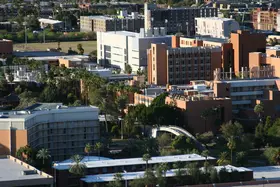
  • The educational philosophy of the college calls for the institution to accept students as they are, to test them, to counsel them into appropriate programs and to assist them in attaining the highest possible level of achievement through educational, personal and social experiences. The first four community colleges in Kansas were established in 1919, and GCCC is one of two from that group which still exist. It was created by county-wide election on April 1, 1919, and opened in September of the same year. GCCC initially shared facilities in Sabine Hall and Calkins Hall in the 100 block of Buffalo Jones Avenue with Garden City High School, and opened with a first class of less than three dozen students. The present 14-building, 63-acre campus at 801 Campus Drive was designed between July, 1965 and January, 1966. Garden City Community College is officially accredited by the North Central Association of Colleges and Schools. In addition, the GCCC Nursing Program is accredited by the Kansas State Board of Nursing and the National League for Nursing Accrediting Commission (NLNAC).

Frequently Asked Questions

How much does Garden City Community College cost?
Garden City Community College's tuition is approximately $2,720 for In-State students and $3,328 for Out-State students.
What is Garden City Community College's ranking?
Garden City Community College ranks among the top 20% of community college in Kansas for: Least expensive tuition and Average community college minority breakdown.

Recent Articles

Required Course Full? Avoid Community College Degree Delays
Learn how a full required course can delay graduation, how to navigate waitlists, and how to find approved alternatives that protect your community college degree timeline and financial aid eligibility.
Catalog-Year Rules: Community College Graduation Requirements
Understand how catalog years determine community college graduation requirements, how enrollment breaks and major changes affect eligibility, and what to verify before choosing courses or switching to a newer catalog.
What If Your Community College Program Closes?
Learn what happens when your community college discontinues your program before graduation, including teach-out options, credit transfers, financial aid implications, student protections, and practical steps to finish your degree successfully.

Quick Facts (26-27)

  • Enrollment: 2,079 students
  • In-state tuition: $2,720
  • Out-state tuition: $3,328
  • Student-teacher ratio: 22:1
  • Minority enrollment: 67%
  • Source: Integrated Postsecondary Education Data System (IPEDS)

Related School Videos

Did You Know?

For Kansas public community colleges, the average tuition is approximately $3,402 per year for in-state students and $4,296 for out-of-state students. For private community colleges, the average yearly tuition is approximately $17,451 per year. Read more about average community college tuition costs across the country.

The average community college acceptance rate in Kansas is 85%. Read more about national community college acceptance rates.

Kansas community colleges have a diversity score of 0.61, which is lower than the national average of 0.74. The most diverse community college in Kansas is Kansas City Kansas Community College. Read more about community college diversity statistics in the USA.

Quick Links