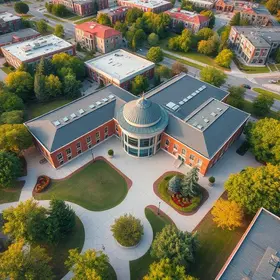
- The Fashion Institute of Design & Merchandising-Sa focused curriculum integrates creative and leadership skills to develop graduates for the global industries of Fashion, Visual Arts, Interior Design, and Entertainment. Combined with these skills, FIDM graduates value ethical choices, demonstrate an awareness of cultural diversity, communicate effectively, think critically, and possess the knowledge of technology essential to their professions.
School Highlights
FIDM-Fashion Institute of Design & Merchandising-San Francisco served 113 students (87% of students were full-time).
The college's student-teacher ratio of 4:1 was lower than the state community college average of 44:1.
Minority enrollment was 67% of the student body (majority Asian and Hispanic), which was less than the state average of 77%.
School Overview
FIDM-Fashion Institute of Design & Merchandising-San Francisco
(CA) Community College Avg.
Carnegie Classification
Not applicable, not in Carnegie universe (not accredited or nondegree-granting)
Associate's Colleges: High Transfer-Mixed Traditional/Nontraditional
Institution Level
Four or more years
At least 2 but less than 4 years
Institution Control
Private for-profit
Public
Total Faculty
32 staff
72 staff
Student Body
Total Enrollment
113 students
6,838 students
Showing 2008–2023. Full 17-year historical data available below ↓
Student-Teacher Ratio
4:1
44:1
# Full-Time Students
98 students
1,022 students
Showing 2008–2023. Full 17-year historical data available below ↓
# Part-Time Students
15 students
5,816 students
Showing 2008–2023. Full 17-year historical data available below ↓
# Enrollment Undergraduate
113 students
2,055 students
# Full-Time Undergraduate Students
98 students
967 students
Showing 2010–2023. Full 17-year historical data available below ↓
# Part-Time Undergraduate Students
15 students
5,850 students
% American Indian/Alaskan
1%
n/a
% Asian
21%
12%
% Hispanic
18%
46%
% Black
5%
7%
% White
33%
23%
Showing 2008–2023. Full 17-year historical data available below ↓
% Hawaiian
4%
n/a
% Two or more races
3%
5%
% Non Resident races
7%
1%
% Unknown races
8%
6%
Diversity Score
0.80
0.71
Showing 2010–2023. Full 17-year historical data available below ↓
College Completion Rate (Students who graduate in less than 4 years)
58%
31%
College Completion Rate (Students who graduate in 4 years or more than 4 years) (Year 2023)
67%
43%
Average Graduate Earnings (10 Years)
$41,800
$34,300
Tuition & Financial Aid
Private State Tuition Fees
$29,930
$18,639
% Students Receiving Some Financial Aid
86%
85%
Showing 2010–2023. Full 17-year historical data available below ↓
Median Debt for Graduates
$14,165
$10,500
Showing 2008–2020. Full 14-year historical data available below ↓
Median Debt for Dropouts
$5,500
$6,272
Showing 2008–2020. Full 14-year historical data available below ↓
Acceptance Rate
32%
82%
Showing 2011–2023. Full 14-year historical data available below ↓
Source: 2023 (or latest year available) Integrated Postsecondary Education Data System (IPEDS)
Frequently Asked Questions
How much does FIDM-Fashion Institute of Design & Merchandising-San Francisco cost?
FIDM-Fashion Institute of Design & Merchandising-San Francisco's private state tuition is approximately $29,930.
What is the acceptance rate of FIDM-Fashion Institute of Design & Merchandising-San Francisco?
The acceptance rate of FIDM-Fashion Institute of Design & Merchandising-San Francisco is 32%, which is lower than the state average of 82%.
In what neighborhood is FIDM-Fashion Institute of Design & Merchandising-San Francisco located?
FIDM-Fashion Institute of Design & Merchandising-San Francisco is located in the Union Square neighborhood of San Francisco, CA.
Recent Articles

Will Your Community College GPA Follow You After Transfer?
Will your community college GPA follow you after transfer? Learn how university grades, transcripts, scholarships, graduate admissions, and academic standing may be affected by your previous college performance.

The Transfer Catalog-Year Trap: What Students Must Check
Could university requirements change before you transfer? Learn how catalog years, continuous enrollment, and degree rules affect your pathway, and what students should verify before choosing university courses.

Transfer Agreements: Admission vs. Your Major
Does your transfer agreement guarantee admission to your major? Discover what happens when universities accept transfer students but restrict entry to specific academic programs and degrees after admission.