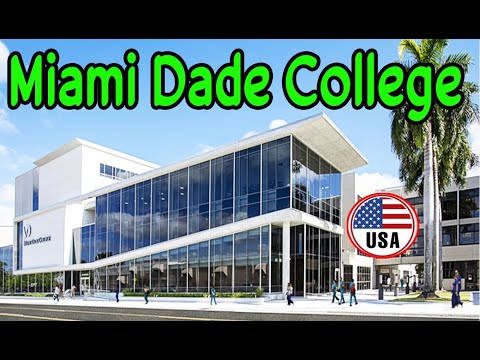
Miami Dade College

300 NE 2nd Avenue
Miami, FL 33132
Top-Ranked (2026-27): View Rankings
  • The mission of Miami Dade College is to provide accessible, affordable, high quality education by keeping the learner's needs at the center of decision-making and working in partnership with its dynamic, multi-cultural community.

School Highlights

Miami Dade College serves 58,941 students (40% of students are full-time).
The college's student-teacher ratio of 41:1 is higher than the state community college average of 31:1.
Minority enrollment is 96% of the student body (majority Hispanic), which is more than the state average of 67%.

Quick Facts (26-27)

  • Enrollment: 58,941 students
  • In-state tuition: $3,486
  • Out-state tuition: $12,015
  • Acceptance Rate: 93%
  • Student-teacher ratio: 41:1
  • Minority enrollment: 96%
  • Source: Integrated Postsecondary Education Data System (IPEDS)

Top Rankings

Miami Dade College ranks among the top 20% of public schools in Florida for:

Category
Attribute
Community Size

School Overview

The teacher population of 1,421 teachers has declined by 67% over five years.
Miami Dade College
(FL) Community College Avg.
Carnegie Classification
Associate's Colleges
Not applicable, not in Carnegie universe (not accredited or nondegree-granting)
Institution Level
Four or more years
At least 2 but less than 4 years
Institution Control
Public
Private not-for-profit
Year Founded
1960
Total Faculty
1,421 staff
39 staff
School Calendar

Student Body

The student population of Miami Dade College has grown by 26% over five years.
The student-teacher ratio of 41:1 has increased from 12:1 over five years.
The Miami Dade College diversity score of 0.48 is less than the state average of 0.74. The school's diversity has stayed relatively flat over five years.
Total Enrollment
58,941 students
1,014 students

Showing 2012–2025. Full 19-year historical data available below ↓

Student-Teacher Ratio
41:1
31:1

Showing 2008–2025. Full 19-year historical data available below ↓

# Full-Time Students
23,296 students
559 students

Showing 2013–2025. Full 19-year historical data available below ↓

# Part-Time Students
35,645 students
455 students

Showing 2012–2025. Full 19-year historical data available below ↓

# Enrollment Undergraduate
58,941 students
661 students
# Full-Time Undergraduate Students
23,296 students
552 students

Showing 2013–2025. Full 19-year historical data available below ↓

# Part-Time Undergraduate Students
35,645 students
482 students
% Asian
1%
3%

Showing 2008–2025. Full 19-year historical data available below ↓

% Hispanic
70%
32%

Showing 2008–2025. Full 19-year historical data available below ↓

% Black
16%
20%

Showing 2008–2025. Full 19-year historical data available below ↓

% White
4%
33%

Showing 2010–2025. Full 19-year historical data available below ↓

% Two or more races
1%
4%
% Non Resident races
7%
3%
% Unknown races
1%
5%
Diversity Score
0.48
0.74

Showing 2011–2025. Full 19-year historical data available below ↓

College Completion Rate (Students who graduate in 4 years or more than 4 years)
45%
45%
Average Graduate Earnings (10 Years)
$34,300
$30,800

Tuition & Financial Aid

The public in-state tuition of $3,486 is more than the state average of $3,280. The in-state tuition has grown by 22% over four years.
The public out-state tuition of $12,015 is more than the state average of $10,578. The out-state tuition has grown by 24% over four years.
In-State Tuition Fees
$3,486
$3,280
Out-State Tuition Fees
$12,015
$10,578
Tuition Notes
$1,418.64 per term (12 credits)
% Students Receiving Some Financial Aid
86%
85%

Showing 2013–2025. Full 19-year historical data available below ↓

Median Debt for Graduates
$9,500
$10,286

Showing 2010–2020. Full 14-year historical data available below ↓

Median Debt for Dropouts
$6,500
$5,500

Showing 2008–2020. Full 14-year historical data available below ↓

Acceptance Rate
93%
90%

Sports

Colors
Blue and White
Source: 2025 (or latest year available) Integrated Postsecondary Education Data System (IPEDS) , School Administrators

School Notes

  • Established in 1959; opened September 1960, Miami Dade College, a state-supported college with eight campuses and numerous outreach centers,is the largest institution of higher education in the United States and one of the most highly regarded colleges in the nation. It is governed by a seven-member District Board of Trustees and a college president. Miami Dade College offers more than 150 associate's degrees. Some of these provide the first two years of college before transferring to a four-year college or university to earn a bachelor's degree. Others are two-year programs designed for immediate job entry. We offer 50 fast-track vocational training programs, as well as a full complement of adult education classes, GED preparation classes, and classes for fun and recreation. Some of our newest programs are Histologic Technology, Computer Engineering Technology, Marketing Management, Telecommunications Engineering Technology, Veterinary Technology, and Dental Office Management, to name a few. Our campuses and additional centers are conveniently located throughout Miami-Dade County. Many of our classes can also be taken from home or work through a variety of distance education options including Independent Studies, Life Lab, Open College and Virtual College.

Frequently Asked Questions

How much does Miami Dade College cost?
Miami Dade College's tuition is approximately $3,486 for In-State students and $12,015 for Out-State students.
What is the acceptance rate of Miami Dade College?
The acceptance rate of Miami Dade College is 93%, which is higher than the state average of 90%.
What is Miami Dade College's ranking?
Miami Dade College ranks among the top 20% of community college in Florida for: Average community college minority breakdown and Largest student body.
In what neighborhood is Miami Dade College located?
Miami Dade College is located in the Downtown Miami neighborhood of Miami, FL.

Recent Articles

Licensure Pass Rates: What Students Should Check
Learn how to evaluate licensure pass rates before enrolling in community college career programs, compare exam results, identify warning signs, and choose training that supports professional licensing and employment goals.
Do Your Transfer Credits Count Toward Your Major?
A college course may transfer without counting toward your major. Learn how to check degree requirements, identify elective credits, avoid graduation delays, and protect your community college transfer plan.
Transfer With 45 Credits, 60 Credits, or a Degree?
Should you transfer with 45 credits, 60 credits, or an associate degree? Compare university requirements, tuition savings, graduation timelines, and transfer benefits to choose the best path for your goals.

Quick Facts (26-27)

  • Enrollment: 58,941 students
  • In-state tuition: $3,486
  • Out-state tuition: $12,015
  • Acceptance Rate: 93%
  • Student-teacher ratio: 41:1
  • Minority enrollment: 96%
  • Source: Integrated Postsecondary Education Data System (IPEDS)

Related School Videos

Did You Know?

The average community college acceptance rate in Miami-Dade County, FL is 74%. Read more about national community college acceptance rates.

Miami-Dade County, FL community colleges have a diversity score of 0.37, which is lower than the national average of 0.74. The most diverse community college in Miami-Dade County, FL is Miami Media School. Read more about community college diversity statistics in the USA.

Quick Links