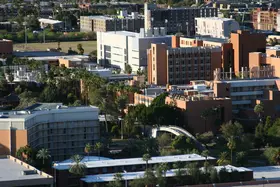
- For over 50 years, RETS Tech Center has enabled thousands of students to achieve their professional and personal goals in business, medical, and technology related industries.
School Highlights
Fortis College-Centerville serves 547 students (99% of students are full-time).
The college's student-teacher ratio of 7:1 is lower than the state community college average of 31:1.
Minority enrollment is 50% of the student body (majority Black), which is more than the state average of 38%.
Quick Facts (26-27)
- Enrollment: 547 students
- Private-state tuition: $17,201
- Student-teacher ratio: 7:1
- Minority enrollment: 50%
- Source: Integrated Postsecondary Education Data System (IPEDS)
School Overview
The teacher population of 83 teachers has grown by 20% over five years.
Fortis College-Centerville
(OH) Community College Avg.
Carnegie Classification
Associate's Colleges
Baccalaureate/Associate's Colleges
Institution Level
At least 2 but less than 4 years
At least 2 but less than 4 years
Institution Control
Private for-profit
Private not-for-profit
Campus Size
9 acres
Total Faculty
83 staff
24 staff
Student Body
The student population of Fortis College-Centerville has stayed relatively flat over five years.
The student-teacher ratio of 7:1 has stayed the same over five years.
The Fortis College-Centerville diversity score of 0.59 is more than the state average of 0.58. The school's diversity has stayed relatively flat over five years.
Total Enrollment
547 students
612 students
Showing 2012–2025. Full 19-year historical data available below ↓
Student-Teacher Ratio
7:1
31:1
# Full-Time Students
541 students
342 students
Showing 2012–2025. Full 19-year historical data available below ↓
# Part-Time Students
6 students
270 students
# Enrollment Undergraduate
547 students
565 students
# Full-Time Undergraduate Students
541 students
342 students
Showing 2012–2025. Full 19-year historical data available below ↓
# Part-Time Undergraduate Students
6 students
402 students
% American Indian/Alaskan
1%
n/a
% Asian
1%
3%
% Hispanic
3%
6%
% Black
40%
16%
Showing 2008–2025. Full 19-year historical data available below ↓
% White
50%
62%
Showing 2010–2025. Full 19-year historical data available below ↓
% Two or more races
5%
4%
Diversity Score
0.59
0.58
Showing 2011–2025. Full 19-year historical data available below ↓
College Completion Rate (Students who graduate in less than 4 years)
49%
59%
Showing 2012–2025. Full 19-year historical data available below ↓
Average Graduate Earnings (10 Years)
$31,400
$31,700
Tuition & Financial Aid
The private state tuition of $17,201 is more than the state average of $13,751. The private state tuition has grown by 16% over four years.
Private State Tuition Fees
$17,201
$13,751
% Students Receiving Some Financial Aid
92%
91%
Showing 2012–2025. Full 19-year historical data available below ↓
Median Debt for Graduates
$13,380
$18,562
Showing 2008–2020. Full 14-year historical data available below ↓
Median Debt for Dropouts
$6,855
$6,516
Showing 2008–2020. Full 14-year historical data available below ↓
Source: 2025 (or latest year available) Integrated Postsecondary Education Data System (IPEDS) , School Administrators
School Notes
- RETS Tech Center believes that the value of an education should be measured by the career it prepares a student for. Comprehensive career services are essential to helping guide students in their career choice, and graduates in their job search. RETS Tech Center provide hands-on training for the most in demand careers. RETS Tech Center provides education solutions for people just like you. RETS gives you the personalized attention you deserve to achieve your career and educational goals. RETS Tech Center offers degree and program in Computer Office and Business Technology, Electronic Engineering Technology, Heating, Ventilating, AC and Refrigeration, Medical Assisting, Medical Coding Specialist, Practical Nursing, Associate Degree in Nursing, Paralegal and Travel & Tourism. RETS Tech Center is accredited by the Accrediting Commission of Career Schools and Colleges of Technology (ACCSCT).
Frequently Asked Questions
How much does Fortis College-Centerville cost?
Fortis College-Centerville's private state tuition is approximately $17,201.
Recent Articles

Required Course Full? Avoid Community College Degree Delays
Learn how a full required course can delay graduation, how to navigate waitlists, and how to find approved alternatives that protect your community college degree timeline and financial aid eligibility.

Catalog-Year Rules: Community College Graduation Requirements
Understand how catalog years determine community college graduation requirements, how enrollment breaks and major changes affect eligibility, and what to verify before choosing courses or switching to a newer catalog.

What If Your Community College Program Closes?
Learn what happens when your community college discontinues your program before graduation, including teach-out options, credit transfers, financial aid implications, student protections, and practical steps to finish your degree successfully.