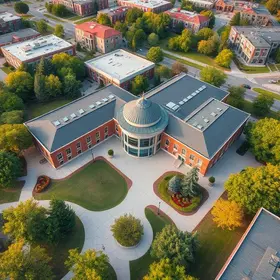
School Highlights
Dewey University-Hato Rey serves 386 students (65% of students are full-time).
The college's student-teacher ratio of 11:1 is lower than the state community college average of 23:1.
Minority enrollment is 100% of the student body (majority Hispanic), which is less than the state average of 98%.
Quick Facts (2026)
- Enrollment: 386 students
- In-state tuition: $5,475
- Out-state tuition: $5,475
- Student-teacher ratio: 11:1
- Minority enrollment: 100%
- Source: Integrated Postsecondary Education Data System (IPEDS)
Top Rankings
Dewey University-Hato Rey ranks among the top 20% of public schools in Puerto Rico for:
Category
Attribute
School Resources
School Overview
The teacher population of 35 teachers has declined by 50% over five years.
Dewey University-Hato Rey
(PR) Community College Avg.
Carnegie Classification
Special Focus Four-Year: Other Health Professions Schools
Item not available
Institution Level
Less than 2 yrs
Four or more years
Institution Control
Public
Private not-for-profit
Total Faculty
35 staff
34 staff
School Calendar
Student Body
The student population of Dewey University-Hato Rey has declined by 26% over five years.
The student-teacher ratio of 11:1 has increased from 8:1 over five years.
The Dewey University-Hato Rey diversity score of 0.00 is equal to the state average of 0.00. The school's diversity has stayed relatively flat over five years.
Total Enrollment
386 students
386 students
Student-Teacher Ratio
11:1
23:1
# Full-Time Students
250 students
295 students
# Part-Time Students
136 students
83 students
# Enrollment Undergraduate
145 students
373 students
# Full-Time Undergraduate Students
145 students
286 students
# Full-Time Graduate Students
105 students
105 students
% Hispanic
100%
93%
Diversity Score
0.00
0.00
College Completion Rate (Students who graduate in 4 years or more than 4 years)
67%
38%
Average Graduate Earnings (10 Years)
$19,100
$20,600
Tuition and Acceptance Rate
The public in-state tuition of $5,475 is more than the state average of $2,169. The in-state tuition has declined by 21% over four years.
The public out-state tuition of $5,475 is more than the state average of $2,801. The out-state tuition has declined by 21% over four years.
In-State Tuition Fees
$5,475
$2,169
Out-State Tuition Fees
$5,475
$2,801
% Students Receiving Some Financial Aid
100%
98%
Median Debt for Graduates
$5,167
$5,167
Median Debt for Dropouts
$3,382
$3,500
Source: 2025 (or latest year available) Integrated Postsecondary Education Data System (IPEDS) , School Administrators
School Notes
- Dewey University es una institucin de educacin superior que crea y promueve un ambiente acadmico propicio al desarrollo intelectual y cultural de nuestros estudiantes, uniendo tecnologa, anlisis crtico, investigacin y destrezas de comunicacin. Esto, con la finalidad de prepararlos para integrarse, efectivamente, a una sociedad altamente competitiva y cambiante, fijando en ellos las bases para su continuo desarrollo personal, intelectual y profesional en un contexto de aprecio por el conocimiento y la tica profesional.
Frequently Asked Questions
How much does Dewey University-Hato Rey cost?
Dewey University-Hato Rey's tuition is approximately $5,475 for In-State students and $5,475 for Out-State students.
What is Dewey University-Hato Rey's ranking?
Dewey University-Hato Rey ranks among the top 20% of community college in Puerto Rico for: Average community college minority breakdown and Percent of students receiving financial aid.
Recent Articles

Credit for Prior Learning: When Life Experience Can Shorten Your Degree
Learn how Credit for Prior Learning (CPL) can help community college students earn college credit for military service, work experience, certifications, and prior learning, reducing both the time and cost of earning a degree.

The Working Student Schedule Test: Can You Balance College and a Job?
Discover how to evaluate whether your work schedule is compatible with community college before classes begin, and learn practical strategies that help working students stay on track toward graduation.

Stop-Out Risk: How to Choose a Community College That Helps You Finish
Learn how to identify community colleges that actively reduce stop-out risk through proactive advising, financial support, transfer pathways, flexible scheduling, and student success services, helping you stay enrolled, complete your credential, and achieve your long-term educational goals.