
The earnings include former students who attended, whether or not they graduated.
The colleges with the highest median earnings are listed below (where data is available).



Median Earnings Range: $40,974
$62,752
Rhode Island Community Colleges by Median Earnings 10 Years After Entry (measured in 2022-2023, in 2024 dollars)
College
Median Earnings
Location
Rank: #11.
IYRS School of Technology & Trades
Private not-for-profit
Median Earnings: $62,752
449 Thames St
Newport, RI 02840
(401) 848-5777
Newport, RI 02840
(401) 848-5777
Rank: #22.
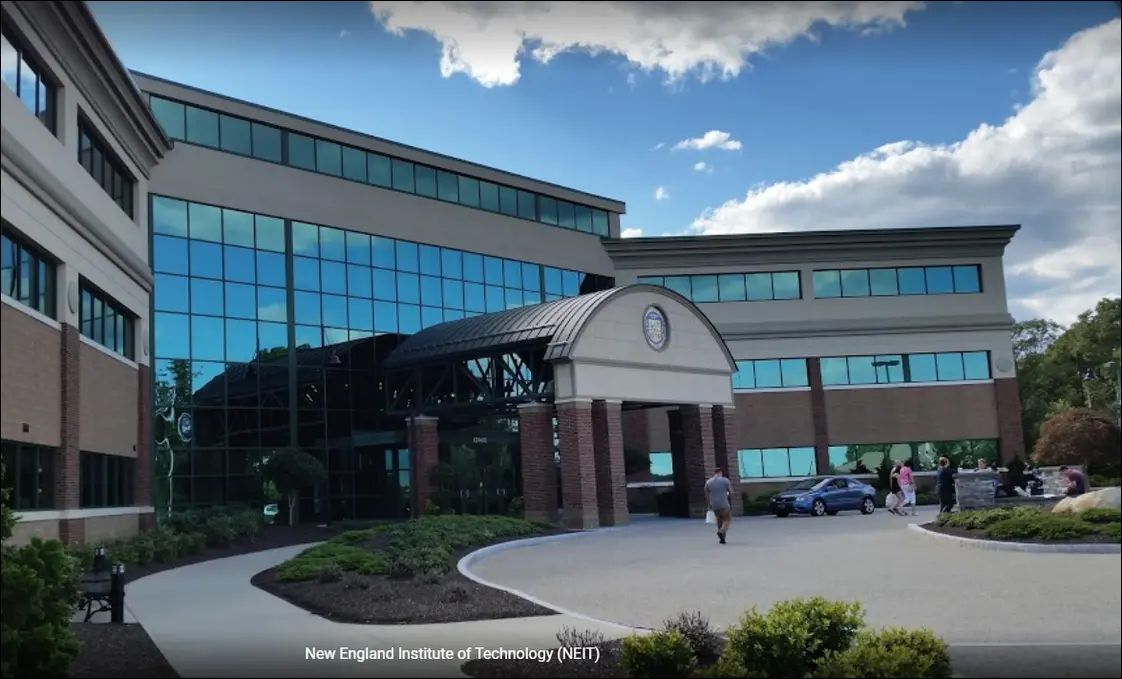
New England Institute of Technology 
Private not-for-profit
Median Earnings: $60,289
One New England Tech Boulevard
East Greenwich, RI 02818
(401) 739-5000
East Greenwich, RI 02818
(401) 739-5000
Rank: #33.
Median Earnings: $47,965
400 East Ave
Warwick, RI 02886
(401) 825-1000
Warwick, RI 02886
(401) 825-1000
Rank: #44.
Lincoln Technical Institute-Lincoln
Private for-profit
Median Earnings: $40,974
622 George Washington Hwy
Lincoln, RI 02865
(401) 334-2430
Lincoln, RI 02865
(401) 334-2430
Frequently Asked Questions
Which community colleges in Rhode Island have the highest median earnings 10 years after entry?
The community colleges in Rhode Island with the highest median earnings 10 years after entry include IYRS School of Technology & Trades, New England Institute of Technology and Community College of Rhode Island.
Recent Articles
Is a Community College Certificate Worth It After a Degree?
Already have a bachelor's degree? Learn how to evaluate whether a community college certificate will improve your career prospects, skills, and earning potential.
Can Workforce Pell Cover Your Entire Certificate?
Discover whether Workforce Pell Grants can fully cover short community college certificates, how awards are calculated, and which expenses students may still need to pay.

When Community College Financial Aid Arrives Late
Learn what happens when community college financial aid arrives after classes begin, including tuition holds, enrollment risks, textbook expenses, refund timelines, and steps to protect your education.