
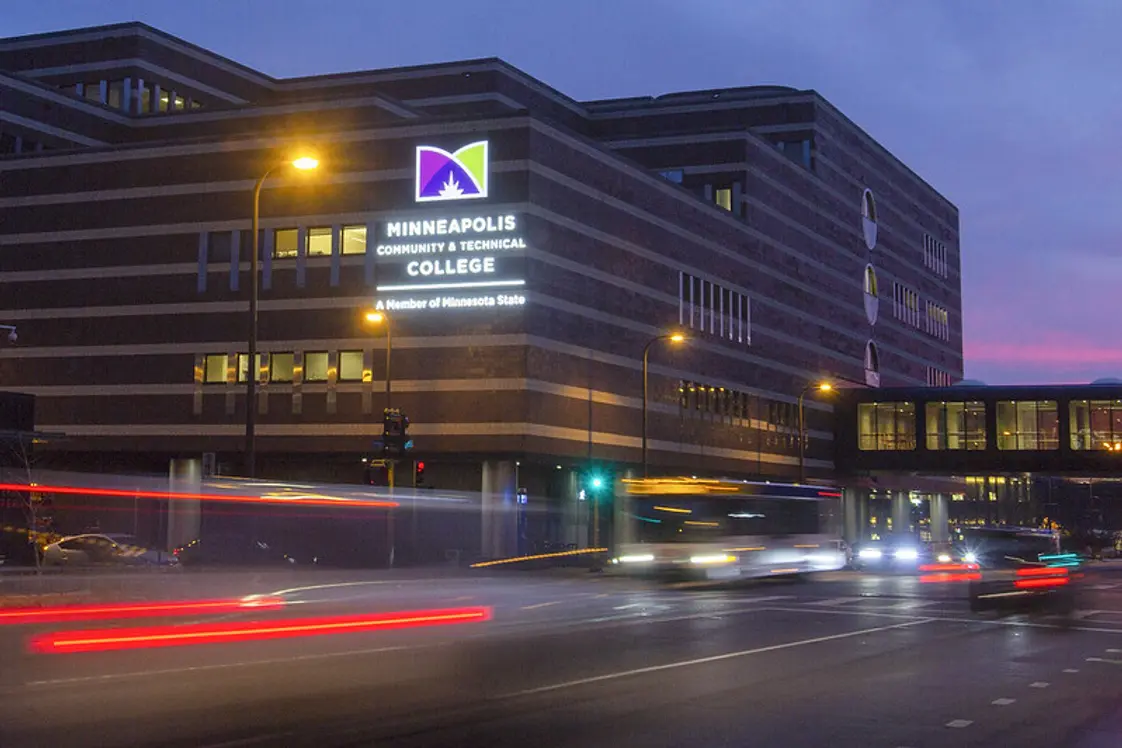
For the 2026-27 school year, there are 2 community colleges serving 6,897 students in the neighborhood of Central Minneapolis, Minneapolis, MN.
Minority enrollment is 67% of the student body (majority Black).
The student:teacher ratio of 48:1 is more than the state average of 36:1.



Community Colleges in the Neighborhood of Central Minneapolis, Minneapolis, MN (2026-27)
College
Location
Quick Facts
Globe University-Minneapolis
Private, for profit
IDS Center, 80 South 8th Street, Suite 51
Minneapolis, MN 55402
(612) 455-3000
Minneapolis, MN 55402
(612) 455-3000
Enrollment: 164 students Student-teacher ratio: 27:1 Private-state tuition: $13,440 Minority enrollment: 70%
1501 Hennepin Ave
Minneapolis, MN 55403
(612) 659-6000
Minneapolis, MN 55403
(612) 659-6000
Enrollment: 6,733 students Student-teacher ratio: 48:1 In-state tuition: $5,350 Out-state tuition: $5,350 Minority enrollment: 67%
Frequently Asked Questions
How many community colleges are located in the neighborhood of Central Minneapolis, Minneapolis, MN?
There are 2 community colleges serving 6,897 students in the neighborhood of Central Minneapolis, Minneapolis, MN.
How diverse are community colleges in the neighborhood of Central Minneapolis, Minneapolis, MN?
Community colleges in the neighborhood of Central Minneapolis, Minneapolis, MN have approximately 67% minority enrollment, with the majority being Black.
Recent Articles

Online vs. Hybrid vs. HyFlex: Understanding Community College Course Formats
Learn what online, hybrid, HyFlex, synchronous, and asynchronous course labels really mean at community colleges, including attendance, meeting, testing, and participation requirements students should verify before registering today.

Working Student Schedule Test: Night and Online Community College Programs
Learn how working students can test whether a community college program is truly available at night or online, including labs, prerequisites, exams, internships, advising, and course rotations.

Is the Employer Advisory Board Real or Ceremonial?
Learn how to evaluate a community college employer advisory board, verify industry participation, identify meaningful employer influence, and determine whether career connections can benefit students after graduation today.