
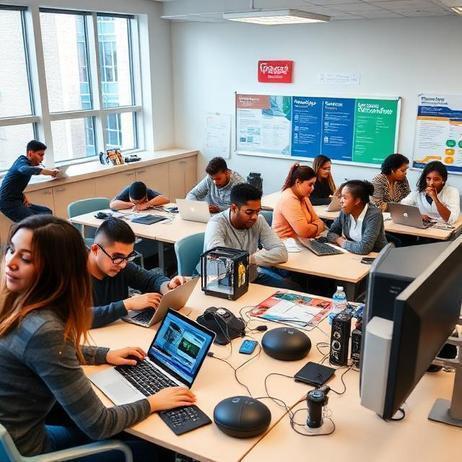
Community colleges continue to reshape higher education in 2026. As tuition prices at four-year universities rise and employers prioritize workforce-ready skills, millions of students are turning to community colleges for affordable, flexible, and career-focused education.
Today’s community colleges serve recent high school graduates, adult learners, career changers, veterans, and transfer students alike. They offer everything from associate degrees and workforce certificates to fully online programs and guaranteed university transfer pathways.
According to the National Center for Education Statistics, community colleges enroll a substantial share of undergraduate students nationwide, reinforcing their role as one of the most accessible entry points into higher education.
This updated A to Z guide explains the major concepts, trends, and opportunities shaping community colleges in 2026.
A–C: Access, Affordability, and Credentials
A: Access
Community colleges remain among the most accessible institutions in higher education. Most schools maintain open-admissions policies, allowing students with a high school diploma or GED to enroll without the highly competitive admissions requirements common at four-year universities.
This accessibility benefits:
- First-generation college students
- Adult learners
- Students returning after academic interruptions
- Working professionals seeking new skills
B: Budget-Friendly Education
Affordability remains one of the biggest reasons students choose community colleges.
The average tuition at public two-year colleges continues to cost significantly less than tuition at four-year institutions, according to the College Board.
Many states have also expanded tuition-free or “last-dollar” scholarship programs in 2026, helping eligible students graduate with minimal debt.
Families researching costs should also read:
- Community Colleges Are More Important Than Ever in 2026
- A to Z of Community College Certificates and Courses
C: Credentials
Community colleges offer a broad range of credentials, including:
| Credential Type | Typical Length | Primary Goal |
| Associate of Arts (AA) | 2 years | University transfer |
| Associate of Science (AS) | 2 years | STEM or transfer preparation |
| Associate of Applied Science (AAS) | 2 years | Career entry |
| Certificate Programs | 6–18 months | Workforce skills |
| Industry Certifications | Varies | Specialized employment training |
Short-term workforce credentials have expanded rapidly in healthcare, cybersecurity, advanced manufacturing, and skilled trades.
D–F: Dual Enrollment, Flexibility, and Financial Aid
D: Dual Enrollment
Dual enrollment programs continue growing nationwide. High school students can now earn college credit while completing high school coursework, often reducing both college costs and time-to-degree.
Many states expanded dual-credit funding in 2025 and 2026 as part of broader college-readiness initiatives.
E: Educational Flexibility
Flexibility is one of the defining strengths of community colleges.
Students can choose from:
- Evening classes
- Weekend schedules
- Fully online programs
- Hybrid learning models
- Accelerated courses
- Competency-based education
This flexibility supports students balancing employment, parenting responsibilities, or military service.
F: Financial Aid
Financial aid access improved after recent FAFSA simplification efforts. Students can apply for grants, loans, work-study opportunities, and institutional scholarships through the Federal Student Aid system.
In many cases, Pell Grants and state aid substantially reduce tuition costs for low-income students.
G–I: Guided Pathways, Graduation, and Inclusivity
G: Guided Pathways
Many community colleges now use “guided pathways” systems to help students complete programs more efficiently.
These structured academic plans help students:
- Choose majors earlier
- Reduce unnecessary credits
- Improve graduation timelines
- Transfer more successfully
Guided pathways have become central to student-success initiatives nationwide.
H: Hybrid and Online Learning
Online learning remains a major component of community college education in 2026.
Many institutions now offer:
- Fully online associate degrees
- Virtual tutoring
- Digital advising
- Remote student support services
- Mobile-friendly coursework
Students seeking flexibility increasingly view online community colleges as a practical alternative to traditional campus attendance.
I: Inclusivity
Community colleges serve one of the most diverse student populations in higher education.
They support:
- First-generation students
- Low-income families
- International students
- Veterans
- Students with disabilities
- Adult learners returning to education
This inclusivity remains one of the sector’s defining strengths.
J–L: Job Training, Local Impact, and Lifelong Learning
J: Job Training
Career preparation continues to drive enrollment growth.
Community colleges partner closely with regional employers to design workforce programs aligned with local labor-market needs.
Popular career-focused programs include:
- Nursing
- HVAC technology
- Cybersecurity
- Automotive technology
- Artificial intelligence support
- Supply chain logistics
The U.S. Bureau of Labor Statistics projects strong long-term demand across many technical and healthcare occupations commonly supported by community college training.
K: K–12 Partnerships
Community colleges increasingly collaborate with local school districts through:
- Early college programs
- Career academies
- College readiness initiatives
- Technical education partnerships
These programs create smoother transitions from high school to postsecondary education.
L: Lifelong Learning
Community colleges no longer serve only traditional college-age students.
Many campuses now emphasize lifelong learning opportunities for:
- Mid-career professionals
- Retirees
- Adults changing industries
- Workers pursuing certifications
This trend reflects broader workforce shifts requiring ongoing reskilling and upskilling.
M–O: Majors, Online Degrees, and Open Admissions
M: Majors and Programs
Students can explore a wide range of majors before committing to a long-term career path.
Common academic and workforce programs include:
- Business administration
- Computer science
- Criminal justice
- Early childhood education
- Liberal arts
- Nursing
- Data analytics
N: Non-Credit Programs
Non-credit courses continue expanding in popularity.
These programs support:
- Professional development
- Continuing education
- Technical training
- Personal enrichment
Many workforce-oriented non-credit programs can be completed in months rather than years.
O: Open Admissions
Open-access admissions remain central to the community college mission.
However, colleges increasingly combine accessibility with stronger advising and placement systems designed to improve long-term student outcomes.
P–R: Placement Reform, Programs, and Transfer Pathways
P: Placement Reform
Traditional placement testing continues declining nationwide.
Instead, many colleges now use:
- High school GPA
- Coursework history
- Multiple-measures placement systems
This shift helps reduce unnecessary remedial coursework and accelerates degree progress.
Q: Quality and Accreditation
Accreditation remains essential when selecting a community college.
Students should confirm that institutions hold recognized regional accreditation to ensure:
- Credit transferability
- Financial aid eligibility
- Academic quality standards
R: Transfer Pathways
Transfer opportunities remain one of the strongest advantages of community colleges.
Many states maintain articulation agreements that allow students to complete general education coursework before transferring to four-year universities.
Students considering this route may also find these resources helpful:
S–U: Student Support, Student Life, and Upskilling
S: Student Support Services
Modern community colleges offer extensive support systems beyond academics.
Services often include:
- Tutoring centers
- Career counseling
- Food pantries
- Mental health support
- Childcare assistance
- Technology loan programs
These resources help improve retention and graduation outcomes.
T: Technology Integration
Artificial intelligence and digital learning tools are becoming increasingly common in 2026 classrooms.
Community colleges are using AI-driven advising systems, adaptive learning software, and virtual simulation labs to improve instruction and personalize support.
U: Upskilling and Workforce Reskilling
Short-term credential programs continue expanding as workers seek rapid career advancement.
Industries increasingly value targeted skill development over traditional degree pathways alone, especially in fast-changing technical fields.
V–Z: Vocational Education, Value, and Zero-Debt Opportunities
V: Vocational Education
Career and technical education remains a cornerstone of community colleges.
Hands-on training programs frequently lead directly to employment in fields such as:
- Welding
- Culinary arts
- Emergency medical services
- Construction technology
- Advanced manufacturing
W: Workforce Alignment
Employers increasingly rely on community colleges to develop local talent pipelines.
Many colleges now work directly with industry partners to design curriculum around real-world hiring needs.
X: The “X-Factor” of Community Colleges
Community colleges often provide advantages larger universities cannot easily match:
- Smaller class sizes
- Personalized advising
- Flexible scheduling
- Strong local employer connections
- Lower overall costs
For many students, these factors significantly improve academic success.
Y: Year-Round Learning
Many campuses now offer accelerated year-round schedules that help students graduate more quickly.
Winter intersessions, summer terms, and condensed online courses provide additional flexibility.
Z: Zero-Debt Potential
One of the strongest arguments for community colleges remains the possibility of graduating with little or no student debt.
Students can reduce costs through:
- Lower tuition rates
- Living at home
- State scholarship programs
- Transfer pathways
- Employer tuition assistance
For families concerned about college affordability in 2026, community colleges continue to offer one of the strongest educational values in American higher education.
Key Community College Trends in 2026
Several major trends are shaping the future of community colleges this year:
- Expansion of short-term workforce credentials
- Growth in online and hybrid learning
- Increased employer partnerships
- Stronger transfer agreements with universities
- Expanded state investment in tuition-free programs
- Greater use of AI-powered student support systems
Frequently Asked Questions
Are community colleges worth attending in 2026?
Yes. Community colleges remain one of the most affordable and flexible higher education options, especially for transfer students and career-focused learners.
Can students transfer from a community college to a university?
Absolutely. Many students complete their first two years at a community college before transferring to a four-year institution.
Do community colleges offer online degrees?
Yes. Many colleges now provide fully online associate degrees and certificate programs.
Are community colleges only for recent high school graduates?
No. Community colleges serve students of all ages, including working adults, veterans, and career changers.
Conclusion
Community colleges continue to evolve in 2026, combining affordability, flexibility, workforce preparation, and university transfer opportunities into one accessible educational model.
Whether students want to launch a career quickly, save money before transferring to a university, or gain new professional skills, community colleges remain one of the most practical pathways in higher education today.
This updated A to Z guide demonstrates why community colleges continue to play a vital role in helping students achieve educational and career success in an increasingly complex economy.