
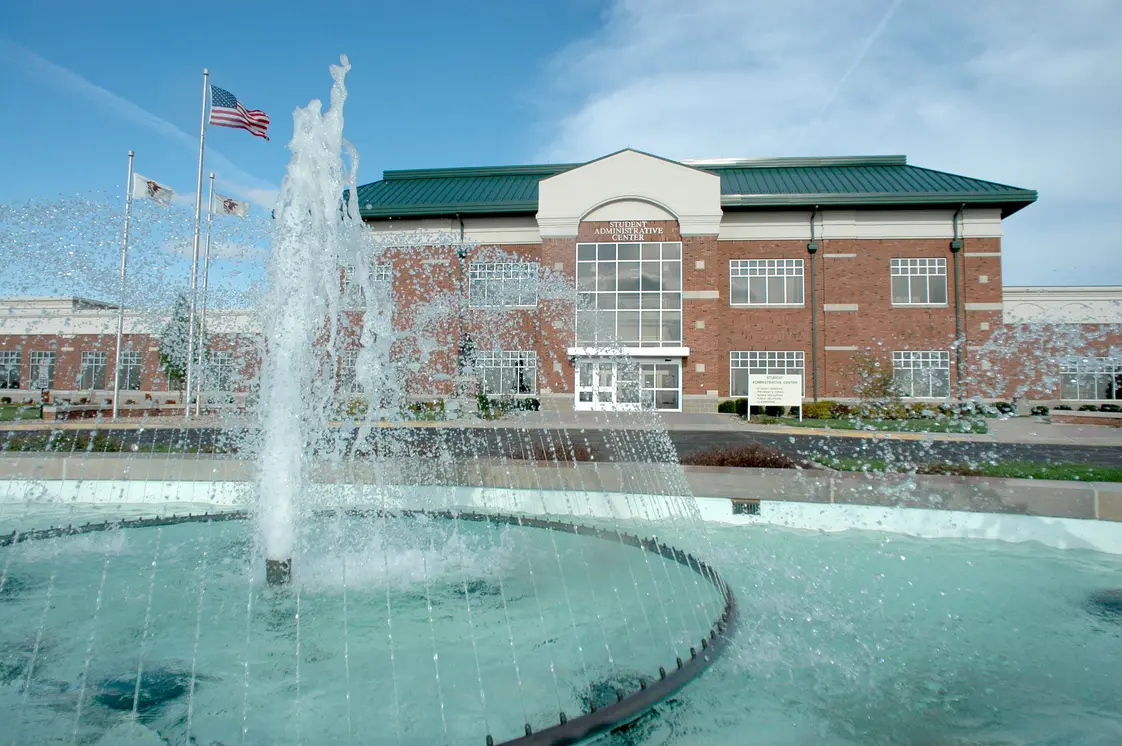
For the 2026-27 school year, there are 2 community colleges serving 2,049 students in 62305, IL.
Minority enrollment is 14% of the student body (majority Black and Hispanic).
The student:teacher ratio of 17:1 is less than the state average of 33:1.



Community Colleges in 62305, IL (2026-27)
College
Location
Quick Facts
Blessing Rieman College of Nursing and Health Sciences
Private not-for-profit
3609 North Marx Drive
Quincy, IL 62305
(217) 228-5520
Quincy, IL 62305
(217) 228-5520
Enrollment: 193 students Student-teacher ratio: 5:1 Private-state tuition: $12,027 Minority enrollment: 14%
John Wood Community College 
Public
1301 S 48th Street
Quincy, IL 62305
(217) 224-6500
Quincy, IL 62305
(217) 224-6500
Enrollment: 1,856 students Student-teacher ratio: 23:1 In-state tuition: $7,290 Out-state tuition: $7,290 Minority enrollment: 14%
Frequently Asked Questions
How many community colleges are located in 62305 Illinois?
There are 2 community colleges serving 2,049 students in 62305 Illinois.
How diverse are community colleges in 62305 Illinois?
Community colleges in 62305 Illinois have approximately 14% minority enrollment, with the majority being Black and Hispanic.
Recent Articles

Will Your Community College GPA Follow You After Transfer?
Will your community college GPA follow you after transfer? Learn how university grades, transcripts, scholarships, graduate admissions, and academic standing may be affected by your previous college performance.

The Transfer Catalog-Year Trap: What Students Must Check
Could university requirements change before you transfer? Learn how catalog years, continuous enrollment, and degree rules affect your pathway, and what students should verify before choosing university courses.

Transfer Agreements: Admission vs. Your Major
Does your transfer agreement guarantee admission to your major? Discover what happens when universities accept transfer students but restrict entry to specific academic programs and degrees after admission.