Work-Study Opportunities for Spring 2026: How to Find a Job Before Classes Start
For many college students and families, work-study opportunities for Spring 2026 will play a critical role in making higher education affordable. While work-study programs are often associated with the fall semester, an increasing number of students rely on work-study opportunities for Spring 2026 to cover living expenses, reduce student loan borrowing, and gain meaningful work experience.
Planning ahead is essential. Students who wait until classes begin often find that the best work-study opportunities for Spring 2026 are already filled. By understanding how the program works and taking early action, students can position themselves for success well before the spring term starts.
This guide explains what families should know about work-study opportunities for Spring 2026, where to find them, and how to secure a position before classes begin.
Understanding Work-Study Opportunities for Spring 2026
The Federal Work-Study Program is a need-based financial aid program administered by colleges and universities. It allows eligible students to earn money through part-time employment while enrolled in school. Work-study opportunities for Spring 2026 typically include both on-campus and approved off-campus positions, often related to community service or a student’s academic interests.
While funding is awarded annually through the Free Application for Federal Student Aid, many institutions allocate remaining funds to spring-only students or to those whose circumstances have changed. As a result, work-study opportunities for Spring 2026 remain available, but competition can be strong.
According to the U.S. Department of Education, students who apply early and communicate with their financial aid offices are significantly more likely to secure work-study positions that align with their schedules and goals.
Why Securing a Job Before Classes Start Matters
Finding work-study opportunities for Spring 2026 before the semester begins offers several advantages.
Students who line up employment early can:
Begin earning wages immediately when the semester starts
Balance work hours with academic demands more effectively
Access a broader range of positions
Reduce stress during the first weeks of classes
From an institutional perspective, colleges prefer students who are proactive. Hiring managers often fill work-study roles during winter break to ensure smooth operations in January. Students who delay may find that remaining work-study opportunities for Spring 2026 are limited or less flexible.
Eligibility Requirements for Work-Study Opportunities for Spring 2026
Eligibility for work-study opportunities for Spring 2026 depends on several factors, most importantly demonstrated financial need.
Key eligibility considerations include:
Completion of the FAFSA for the 2025–2026 academic year
Enrollment in an eligible degree or certificate program
Satisfactory academic progress
Availability of institutional work-study funds
Not all students who qualify for financial aid receive work-study awards. Funding levels vary by institution, and priority is often given to students who applied early. Families should review financial aid award letters carefully to confirm whether work-study opportunities for Spring 2026 are included.
When to Start Looking for Spring 2026 Positions
Timing is critical when pursuing work-study opportunities for Spring 2026. The most successful students begin their search months in advance.
Recommended timeline:
| Timeframe | Action Step |
|---|---|
| October–November 2025 | Confirm FAFSA status and work-study eligibility |
| November–December 2025 | Contact the financial aid office and review job postings |
| December 2025 | Submit applications and schedule interviews |
| January 2026 | Finalize paperwork and begin employment |
Students who follow this timeline are far more likely to secure preferred work-study opportunities for Spring 2026, particularly positions with academic departments or campus offices.
Where to Find Work-Study Opportunities for Spring 2026
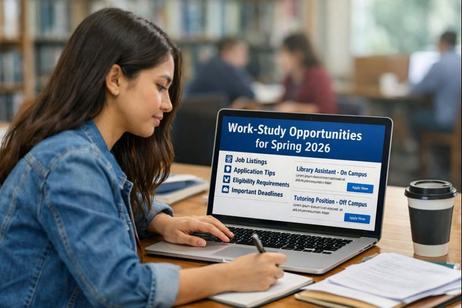
Most colleges centralize work-study job listings through online portals. These platforms are typically accessible through the student portal or career services website.
Common sources for work-study opportunities for Spring 2026 include:
Campus career centers
Financial aid office job boards
Academic departments
Campus libraries and administrative offices
Approved nonprofit and community organizations
Some institutions also host virtual job fairs in late fall or early winter, specifically highlighting work-study opportunities for Spring 2026.
On-Campus vs. Off-Campus Work-Study Positions
Work-study opportunities for Spring 2026 generally fall into two categories. Understanding the differences can help students choose roles that best fit their needs.
On-campus positions often include library assistants, office aides, IT support staff, and research assistants. These roles are typically convenient and flexible around class schedules.
Off-campus positions are usually with nonprofit organizations, schools, or community agencies. These work-study opportunities for Spring 2026 may offer valuable professional experience, particularly for students pursuing education, healthcare, or social services.
How to Apply Strategically
Applying for work-study opportunities for Spring 2026 should be treated like a professional job search. Even though positions are part-time, employers expect reliability and preparedness.
Students should:
Prepare a concise resume tailored to each role
Write brief, professional cover emails
Highlight relevant coursework or skills
Respond promptly to interview requests
Career services offices can often review resumes and conduct mock interviews. Taking advantage of these resources can significantly improve outcomes when applying for work-study opportunities for Spring 2026.
Expert Insights on Early Preparation
Financial aid administrators consistently emphasize early planning. The National Association of Student Financial Aid Administrators advises students to communicate directly with their institutions rather than relying solely on job boards.
Experts note that students who ask targeted questions about work-study opportunities for Spring 2026 are more likely to learn about unposted positions or upcoming openings. Faculty members and department administrators can also serve as valuable contacts.
Balancing Academics and Work-Study Employment
One of the primary benefits of work-study opportunities for Spring 2026 is flexibility. Federal guidelines limit the number of hours students can work, helping ensure academics remain the priority.
Best practices include:
Limiting work to 10–15 hours per week
Scheduling shifts around core classes
Communicating availability clearly with supervisors
Monitoring academic performance throughout the semester
Parents and educators often view work-study opportunities for Spring 2026 as a structured way for students to build responsibility without compromising academic success.
Common Mistakes to Avoid
Students sometimes miss out on work-study opportunities for Spring 2026 due to avoidable errors.
Common pitfalls include:
Waiting until January to begin the search
Failing to complete required financial aid documents
Applying without reviewing job descriptions
Ignoring emails from financial aid or employers
Avoiding these mistakes can make the difference between securing meaningful work-study opportunities for Spring 2026 and missing out entirely.
The Long-Term Value of Work-Study Experience
Beyond wages, work-study opportunities for Spring 2026 offer long-term benefits. Students often develop professional skills, build campus relationships, and gain references for future employment.
Research from the American Council on Education suggests that students who participate in work-study programs are more likely to persist and graduate. For many families, work-study opportunities for Spring 2026 represent both financial support and educational enrichment.
Final Thoughts for Families and Students
Work-study opportunities for Spring 2026 remain one of the most practical ways for students to offset college costs while gaining experience. Success depends on early action, clear communication, and thoughtful planning.
By understanding eligibility, starting the search early, and applying strategically, students can secure work-study opportunities for Spring 2026 that support both their financial needs and academic goals. For parents and educators, encouraging proactive preparation can help students make the most of this valuable program.