Community colleges have increasingly positioned themselves as direct pathways to employment, and employer partnerships have become one of their strongest selling points. College websites frequently promote relationships with hospitals, manufacturers, technology companies, logistics firms, and public agencies, suggesting that students who enroll in certain programs gain a competitive advantage in the job market.
For many students, especially those pursuing career and technical education, these partnerships can be a deciding factor when choosing a college. The promise is appealing: learn the skills employers need today, gain real workplace experience before graduation, and transition smoothly into a full-time career.
The reality, however, is more nuanced. Some employer partnerships create genuine hiring pipelines that consistently place graduates into rewarding careers. Others provide valuable educational experiences but are less likely to lead directly to employment. Understanding the difference helps students evaluate colleges based on measurable outcomes rather than marketing language alone. As discussed in Community College Review's article on the future of community colleges, workforce preparation has become one of the defining missions of today's two-year institutions.
What Is an Employer Partnership?
An employer partnership is an ongoing collaboration between a community college and one or more businesses or organizations. Rather than operating independently, colleges work with employers to ensure academic programs reflect current workforce needs.
These relationships often extend well beyond recruiting events. Employers may advise faculty on curriculum updates, provide internships or apprenticeships, donate modern equipment, sponsor student projects, or participate in classroom instruction. The strongest partnerships allow employers to influence how programs evolve as industries adopt new technologies and practices.
Because labor markets change rapidly, especially in healthcare, advanced manufacturing, cybersecurity, logistics, and renewable energy, employers increasingly rely on colleges to prepare graduates with practical skills that can be applied immediately in the workplace.
Why Employer Partnerships Matter
Today's employers are looking for more than academic credentials. They want graduates who understand workplace expectations, possess technical competencies, and have already demonstrated their abilities in professional environments.
Community colleges are uniquely positioned to meet these expectations because they often serve regional industries. Local employers know the colleges, participate in advisory committees, and frequently hire graduates from the same programs year after year. This close relationship allows colleges to adapt quickly when workforce needs change.
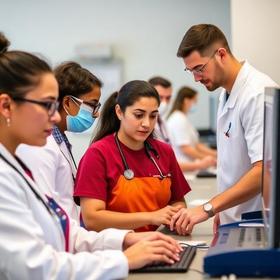
Students benefit as well. Instead of waiting until graduation to begin building professional connections, they may interact with employers throughout their education. Career exploration, networking opportunities, internships, and workplace learning become part of the educational experience rather than activities reserved for the final semester.
Community College Review's article on work-based learning and apprenticeships explains how these experiences increasingly form the foundation of career-focused education.
What a Genuine Hiring Pipeline Looks Like
Not every employer partnership results in jobs, but the strongest collaborations share several common characteristics.
-
Employers play an active role in shaping academic programs.
Rather than simply recruiting graduates, they work alongside faculty to identify emerging skills, recommend new technologies, and ensure coursework reflects current industry standards. Healthcare providers may advise nursing faculty on updated clinical procedures, while manufacturers may recommend additional training in robotics or automation. -
Meaningful partnerships include structured workplace experiences.
Students gain valuable professional experience through internships, clinical rotations, cooperative education, or registered apprenticeships that complement classroom instruction. These experiences allow students to apply their knowledge while building professional relationships before graduation. -
Successful partnerships demonstrate consistency.
Employers return each year because previous graduates have met or exceeded expectations. Over time, these relationships become self-sustaining as businesses recognize the quality of graduates and colleges continue producing workforce-ready professionals.
When Employer Partnerships Become Marketing
Although employer partnerships can provide significant advantages, prospective students should recognize that not every partnership represents a direct hiring pipeline.
Some colleges promote partnerships that involve occasional guest speakers, participation in career fairs, or membership on advisory boards. While these activities certainly enrich academic programs, they do not necessarily translate into internships or employment opportunities.
Similarly, displaying the logos of well-known companies on promotional materials does not guarantee that graduates regularly secure positions with those organizations. A partnership may simply involve collaborative discussions or limited educational initiatives rather than ongoing recruitment.
Students should therefore look beyond promotional language and seek evidence that partnerships produce measurable outcomes.
Questions Prospective Students Should Ask
When visiting campuses or speaking with admissions representatives, students should ask detailed questions about employer relationships.
- Rather than asking whether partnerships exist, ask which employers regularly hire graduates from the program.
- Ask whether internships are guaranteed or competitive.
- Inquire how many students complete apprenticeships each year.
- Find out what percentage of graduates obtain employment within six months.
Colleges with strong workforce outcomes generally provide specific answers supported by data. They can identify employers that consistently recruit graduates and explain how students gain workplace experience before completing their degrees.
Students can also learn more by reading Community College Review's guide to career services at community colleges, which explains how career centers support students throughout the job search process.
Examples of Employer Partnerships in Action
Across the United States, many community colleges are expanding employer partnerships in innovative ways.
The Alamo Colleges District has developed workforce initiatives that align educational programs with regional industry needs, particularly in healthcare, advanced manufacturing, and skilled trades. By collaborating closely with employers, the district helps ensure graduates possess the skills companies are actively seeking.
Similarly, Houston Community College has expanded apprenticeship and workforce development initiatives through collaborations with industry partners. These programs provide students with opportunities to gain practical experience while preparing for careers in high-demand sectors such as construction, transportation, and advanced manufacturing.
These examples demonstrate that the most effective employer partnerships involve continuous collaboration rather than one-time recruiting events.
How Students Can Verify Partnership Claims
Fortunately, students have several ways to determine whether employer partnerships produce meaningful career outcomes.
Graduate employment reports often reveal how quickly students find jobs after completing their programs. Internship placement statistics can demonstrate whether workplace learning opportunities are widely available or limited to a small number of students. Accreditation reports and state workforce data also provide useful information about program quality and graduate success.
Students can also consult the U.S. Bureau of Labor Statistics to review employment outlooks for hundreds of occupations. Those interested in apprenticeship opportunities can explore the U.S. Department of Labor's Apprenticeship Program, which provides information about registered apprenticeships across numerous industries.
Combining these resources with conversations with faculty, current students, and recent graduates provides a much clearer picture than marketing materials alone.
Looking Beyond the Marketing
Employer partnerships have become one of the defining characteristics of modern community colleges, and for good reason. When developed thoughtfully, they help students build professional skills, expand their networks, and enter the workforce with valuable experience already on their résumés.
However, not every partnership delivers the same results. Students should evaluate whether employers actively influence curriculum, provide meaningful workplace experiences, and consistently hire graduates from the programs they support. Those indicators are far more important than the number of corporate logos displayed on a college's website.
As Community College Review has consistently emphasized in its workforce-focused coverage, choosing a college should involve looking beyond promotional claims and focusing instead on outcomes that can be measured. Employer partnerships can be a powerful advantage, but the strongest hiring pipelines are built on sustained collaboration, shared goals, and a demonstrated record of helping students launch successful careers.